The money was supposed to be used to create modern art. And it was — but not in the way a Danish museum expected when it gave an artist the equivalent of $84,000. In return, it received two empty canvases.
The artist, Jens Haaning, says the blank canvases make up a new work of art — titled "Take the Money and Run" — that he calls a commentary on poor wages. One thing it's not, he says, is a theft.
Pepe Espaliú was an artist from Cordoba who made various art from paintings to sculptures and public actions. He was diagnosed with AIDS in 1990, and up until 1993 when he died, he focused on drawing attention to those affected by AIDS. The Reina Sofía had a small exhibition of some of his work in 1994, in which the work on display had a lot of symbolism about his condition and suffering.
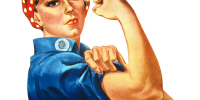
It’s been a historic year for women. There are more serving in Congress than ever before, and a record number are currently running for president in 2020. But even with these significant gains, women—both in the U.S. and around the world—can still find gender equality elusive.
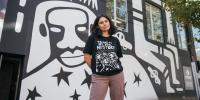
The sneaker brand Converse has commissioned an indigenous artist in Australia to create a gigantic mural with a surprising twist. The Melbourne mural plays homage to indigenous urban identity and was painted with a special type of pollution-absorbing paint that “cleans the air,” according to the agency behind the project, Amplify.
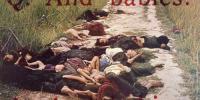
Ronald Haeberle took a color photograph of the bloody corpses of men, women, and children after the Mai Lai Massacre during the Vietnam War in in March 1968, initially publishing it in Life magazine. Later the image was used by the Art Worker's Coalition to create the infamous poster, "And babies.," which superimposed "Q: And babies? A: And babies" in red letter across the top and bottom of the image.
In 2017, the political party Ahora Buenos Aires (Now Buenos Aires) was running in the legislative election for the first time. It is not easy being a small left-wing party in the City of Buenos Aires, therefore imagination is an essential part of a campaign if you want to get the attention of the media and voters.
After J.Cole posted a song that implies that Noname can get her message across to a wider audience if she changes her tone, she releases another song in response. However, instead of explicitly responding to his critique, she uses the controversy to shed light on the death of Black female activist Oluwatoyin Salau, who was killed by her assaulter.
Social distancing guidelines didn’t stop members of Refuse Fascism Philly from criticizing President Donald Trump’s response to the coronavirus pandemic on Saturday.
Rather than march as a crowd through Center City, a handful of protesters from the group, which has repeatedly called for Trump’s removal, drove their cars through Philadelphia before arriving at the Trump National Golf Club in Pine Hill, N.J.