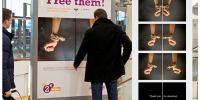
Develop an interactive poster that revolutionises the act of giving. It calls on people to donate, accepts credit cards and shows every donor what their donation does.
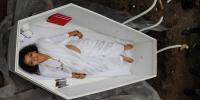
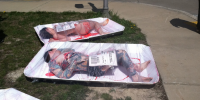
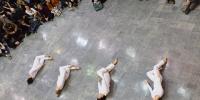
Naked members of the animal rights group PETA (People for the Ethical Treatment of Animals) impersonated cellophane-wrapped meat packages in a pro-vegan demonstration demonizing the way the meat industry treats animals in front of a Vancouver slaughterhouse.
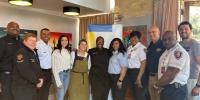
Food transcends language—it brings people together, bridges cultures, and tells stories words cannot. In early March, the Razom Advocacy team, alongside renowned Ukrainian chef Olia Hercules, embarked on a journey through Louisiana—visiting Shreveport and New Orleans—to foster connections, celebrate Ukrainian culture, express gratitude to local first responders, and advocate for Ukraine.
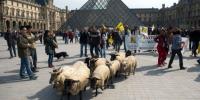
Twelve sheep and a sheepdog walk into the Louvre.
If it sounds like the beginning of a joke, it’s not. In Paris Friday, French farmers protesting European Union agricultural policy herded a flock of sheep down the steps of the Louvre’s famous glass pyramid entrance and then into the museum itself. The protesters were from the Peasants’ Confederation and were fighting against subsidy cuts the EU is proposing that could hurt small farms.
"In a world where artists do themselves no financial favours by voicing critical political sentiments, Björk’s iconoclastic position and perspective is almost unique. Despite having made zero concessions to commerciality in her music, she has sold millions of albums, and remains as vital today as she was a quarter of a century ago.
Cheril Linett is a female artist from Chile, with a background in performance art and stage performance, who primarily focuses her artwork on feminist issues in Chile, especially ones involving violence, murder, hate crime and different kinds of oppression and assault, but also creates artwork reflecting issues in other parts of Latin America.
"A Night of Philosophy and Ideas is a thinker’s lollapalooza. The free, 12-hour weekend lyceum at the Brooklyn Public Library includes spirited debate, live music, theater, performance art pieces, and film screenings. At any given hour, five or six different events will be taking place simultaneously. Visitors are encouraged to come and go as the spirit moves them.
Children in marginalized communities often lack access to healthy foods, especially fresh fruits and vegetables. Poor nutrition, in turn, has significant negative impacts on a child’s health and ability to focus in school. Learning and academic achievement often plummet.
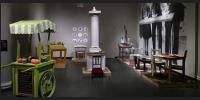
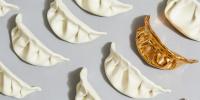
Stephanie H. Shih is a Brooklyn-based ceramist who explores Asian American identity through clay interpretations of grocery items. The ceramicist has created life-size painted clay Sriracha bottles, Pocky cartons, soy sauce gallons, and instant ramen as part of a series Shih conceived in 2018 called Oriental Grocery, to explore nostalgic foods of the Chinese American diaspora.
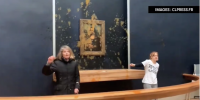
Leonardo da Vinci's Mona Lisa (around 1503-19) was attacked at the Musée du Louvre, in Paris, today by environmental activists who threw soup over the world's most-recognised and most-viewed painting. The celebrated portrait, which has been protected by security glass for the past 70 years, was not damaged in the attack.
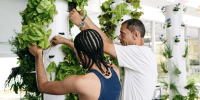
Desi is giving all she has to the project Women In the Making (WIM). From rooftop farming and summer education, to her radio show and online presence. She is an advocate for better health, food, and policy in Brooklyn, and nurturing young activists.
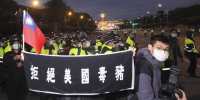
President of Taiwan, leader of the Democratic Progressive Party(DDP), Tsai Ing-wen, at a press conference with no early forecast on August 28, 2020, announcing that from January 1, 2021, American pigs containing ractopamine (Ractopamine) will be opened for those over 30 months old U.S. cattle are imported. Furthermore, the administrative order has only a 7-day notice period.
The user muchachafanzine on instagram is an activist who writes a "decolonial native xicana feminist fanzine". They are an online activist and they spread their message through their page, the zine, and through merchandise. Daisy Salinas began Muchacha Fanzine as a feminist punk zine in 2011. Over the years, Muchacha has grown into a larger, submission-based compilation of work by marginalized voices from around the world.
Since the 1980s, revitalizing the economy has always been the country's development strategy. Although China's economy has grown rapidly in just twenty years, attracting worldwide attention, environmental destruction has also become a problem. For example, the Fu Nan River in Chengdu, like many rivers nationwide, is severely polluted.
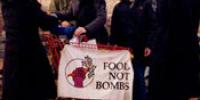
New York City Food Not Bombs
Food Not Bombs--NYC is now working out of a kitchen provided by the Catholic Worker: 36 East First Street, between First and Second Avenues.
Every Sunday they start cooking around 1:00pm and are in Tompkins Square Park to serve around 3:30pm.
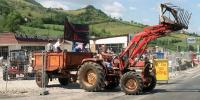
José Bové, a sheep farmer/activist in Aveyron in the Midi-Pyrénées region of France, is a modern day Astérix, a mythical Gaul who drubbed foreign intruders centuries ago. In Bové's case, the intruder was McDonald's, the American fast food chain.
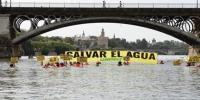
A protest on June 18, 2022 took place in the Guadalquivir River in Seville, where fifty Greenpeace activists used their bodies and environment to stage a demonstrative performance, highlighting the water crisis that the Andalusian region is predicted to face as a result of anthropogenic climate change. The area is at extreme risk of increased temperatures and pervasive droughts, which will impact the river that is the subject of the demonstration.
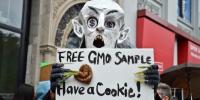
MonsterSanto extolls the virtues of GMO's while his Money Head Clones offer the crowd free samples. President Bomblast entertains the crowd attempting to juggle Peace, Jobs, and Truth. A food fight breaks out.
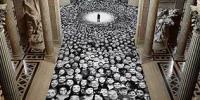
After winning the TED Prize on March 2, 2011, the French-artist JR launched the Inside Out Project, in his first TED Talk. Using his own artistic practice as inspiration, this participatory platform helps individuals and communities to make a statement by displaying large-scale black and white portraits in public spaces. Through their “Actions,” communities around the world have sparked collaborations and conversations.
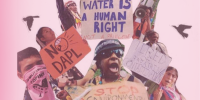
Share Your Water Story invites every global citizen to participate in a creative conversation around the different ways in which water impacts our lives. The project encourages people to contribute original expression of any kind via online platforms on the global justice issue of water and sanitation.
In 2016 an eye-catching sparrow was spotted in Scotland. The bird had ingested feed pellets from a nearby salmon farm, turning its feathers pink. Cramped in underwater feedlots, farmed salmon have no access to the prey that colour their flesh in the wild. Instead, they are fed artificial colourants mixed with supplements, drugs, and hormones, causing them to relentlessly produce the additive-filled flesh that fills supermarket shelves.
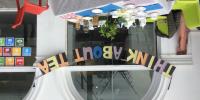
We built a conversation space where members of the public were invited to enjoy a free cup of tea. We used a vertical garden which spelled out the word 'TEA' in easily available plants and herbs that can be used to make tea.
IT’S 7 AM, and a thin layer of mist still hovers over the harbor in Talamone as fisherman Paolo Fanciulli stretches out his nets. Pulling them out of a plastic tub, he examines them section by section, setting the ripped ones aside to be repaired. It’s a time-consuming process—one that’s occupied men from this tiny village on the coast of Tuscany for centuries.