The 9,000 bottles of water on display at an art gallery in Beijing last month appeared identical to those of Nongfu Spring, one of China’s most popular spring water brands, with one jarring difference. Inside each bottle was brown, murky groundwater collected from a Chinese village.
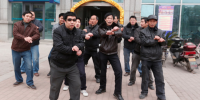
In early January, constructions workers in Wuhan, China staged a Gangnam Style protest in front of their employer's building. Using the Gangnam Style dance, the men sought to bring media attention to their mounting unpaid wages.
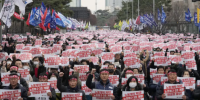
In Seoul, thousands of protestors who represent organized labor marched in Seoul on Saturday denouncing the governments attempt to force thousands of striking truckers back to work after they all walked out over a dispute in the price of freight.
World Microphone (世界麦克风) is an organization created by students (most of them are Chinese) located in London. The organization has an account in RED, which is a popular social media in China. It often holds interviews and movements on the street in London, talking about world culture, food, and travel. Then, it makes short videos based on these interviews and movements and posts the videos on RED.
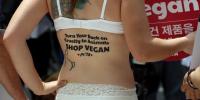
An animal rights activist sporting only a white bikini, bunny ears and tail has been spotted protesting against fur in Pyeongchang, South Korea, which is hosting the Winter Olympics 2018.
Ashley Fruno discussed the People for the Ethical Treatment of Animals' (Peta) stance on fur in front of the Olympic rings at the Alpensia Resort.
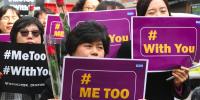
Young women in South Korea are fighting for a new future. The #MeToo movement which has highlighted sexual harassment and abuse around the world has taken a surprising hold in this socially conservative country.
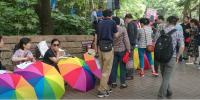
Sixth Tone - "A group of women trying to raise awareness of LGBT rights by advertising their single, gay sons and daughters at Shanghai’s “marriage market” were forced to disperse after a heated confrontation with other parents and security personnel.The so-called “marriage market” at Shanghai’s centrally located People’s Park draws a large crowd of parents who post signs each weekend describing their children in an effort to find a suitable partne
In November 2013, a group of 17 female students at Beijing Foreign Studies University sparked national debate when they staged a bold social media campaign in support of an upcoming performance of The Vagina Monologues, a feminist play by Eve Ensler.
“A Foreigner Makes Beijing’s Smog into Rings” has become a tittle used by a multitude of popular public accounts on Wechat, the most commonly used chatting app in China, which makes more and more Chinese netizens know the story of Daan Roosegaarde, a Dutch artist and “social designer”, who has been making effort to combine the energy saving technology with visually enjoyable art.
The “Occupy Men’s Toilets” movement, initiated by Chinese feminist activists including Li Tingting (Li Maizi) and Wu Rongrong, emerged in 2012 as a creative, non-violent protest against gender inequality in access to public facilities.
On Nov 24, 2013, more than 10 Chinese feminist activists sang the feminist song "Do You Hear Women Sing" in the cabin of Beijing Metro Line 13 (adapted from the famous song "Do You Hear the People Sing" in the musical "Les Miserables". Beijing has the most stringent control on society.
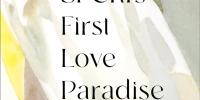
The author behind ‘The First Paradise of Fang Siqi,’ a novel that Han described as ‘a young girl falling in love with her rapist,’ has sent shockwaves through Taiwanese society.
On April 27, aspiring Taiwanese author Lin Yi Han committed suicide, leaving behind only her first, and sadly last, novel. The story, entitled “The First Love Paradise of Fang Siqi,” concerns the mental struggles of a young girl who is raped by her teacher.
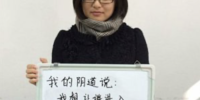
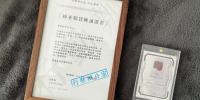
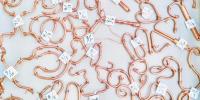
According to the World Health Organization, China is home to two-thirds of the world's women who wear IUD devices. This is a form of contraception that was developed after World War II, and in essence, comes from discrimination against women. In 2014, artist Zhou Wenjing made a work of IEDs, which was recently exhibited in Beijing.
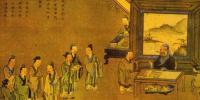
Rectification of names
"If language is not correct, then what is said is not what is meant;
if what is said is not what is meant, then what must be done remains undone;
if this remains undone, morals and art will deteriorate;
if justice goes astray, the people will stand about in helpless confusion.
Hence there must be no arbitrariness in what is said.
This matters above everything."
Confucius
“I performed at Tiananmen Square in 1989, 15 days before the crackdown. I sang A Piece of Red Cloth (一块红布), a tune about alienation. I covered my eyes with a red cloth to symbolize my feelings. The students were heroes. They needed me, and I needed them. After Tiananmen, however, authorities banned concerts. We performed instead at “parties,” unofficial shows in hotels and restaurants”.
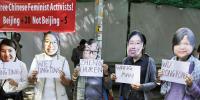
Nancy Lindisfarne and Jonathan Neale write: Five Chinese feminists have been arrested for planning to protest against sexual harassment. They face five to ten years in jail. This post explains the background to the case, and suggests ways that other activists around the world can show solidarity.
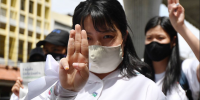
"Thai artists and art students are on the frontline of their country’s swelling pro-democracy movement, calling for reforms of Thailand’s military-backed government, and breaking both taboo and national law to criticise the nation’s monarchy.
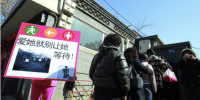
A minibus is parked on the side of the road with a series of pipelines wrapped around it. One end of the pipeline is connected to the exhaust port of the minibus, and the other end is put into the car, so that the exhaust gas can be directly introduced into the car, forming a " Street gas chamber".
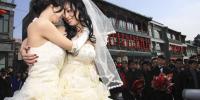
New Beijing, New Marriage is a documentary shot by Fan Popo, a Chinese gay rights activist in 2009. The film recorded that a gay couple and a lesbian couple, who were volunteers instead of real homosexual couples, were having their wedding photos taken at Qianmen Street on Valentine’s Day. Qianmen Street is a crowded and famous shopping street in Beijing.
On the small island of Teshima in Japan’s Seto Inland Sea, Multibasket – No One Wins invites visitors to reconsider competition, collaboration, and the intersection of art and play.
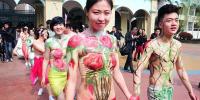
Ten couples covered in body paint wearing only their underwear have celebrated their “naked weddings” at Hangzhou Paradise amusement park in Zhejiang province. The couples, some of whom have been married for many years, said they were rejecting modern Chinese values, which place greater value on money than love. In China, a naked wedding involves a couple marrying without owning a house or car.
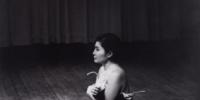
In Cut Piece—one of Yoko Ono’s early performance works—the artist sat alone on a stage, dressed in her best suit, with a pair of scissors in front of her. The audience had been instructed that they could take turns approaching her and use the scissors to cut off a small piece of her clothing, which was theirs to keep. Some people approached hesitantly, cutting a small square of fabric from her sleeve or the hem of her skirt.