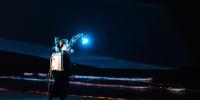
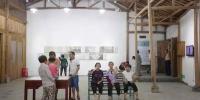
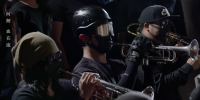
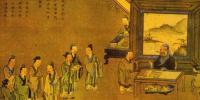
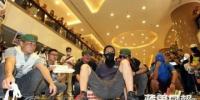
China's only seaside theater festival has been held in the resort town of Aranya in north China's Hebei Province. Artists from around the world traveled there to take deep dive into the world of dramatic performance. For theatergoers, there were interactive activities including cross-border installations such as seaside talks, environmental drama readings, screenings, theater houses, parades and bonfires by the sea.
The Guardian
By Tania Branigan
In the opaque world of Chinese censorship, a few red lines shine through the murk. One of the clearest is: no gossip about top political leaders, their families or internal party affairs.
For his latest project, Mark Manzi found himself outside of his comfort zone. For the Amsterdam-based photographer and designer, People of Japan was an attempt to break from his photography-first portfolio. “In the past, my work was very image-focused, whereas with this book I wanted to scan objects, collect receipts, record noises, add copy, and really create something visually striking,” he says.
World Microphone (世界麦克风) is an organization created by students (most of them are Chinese) located in London. The organization has an account in RED, which is a popular social media in China. It often holds interviews and movements on the street in London, talking about world culture, food, and travel. Then, it makes short videos based on these interviews and movements and posts the videos on RED.
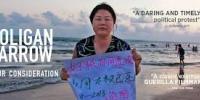
Nanfu Wang feels safe in New York. Surveillance, that essential preoccupation of the documentarian in America, is a chokehold from which she has been temporarily released. From her Brooklyn apartment, the Chinese filmmaker prepares for the release of her debut feature documentary, Hooligan Sparrow.
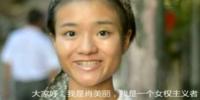
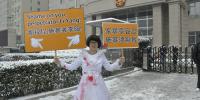
Xiao has organized and participated in a series of activities that combine performance art with a strong social message. Despite a well-known Chinese maxim expounding that women "hold up half the sky," feminism has largely been an underground movement in the country. Xiao and her cohorts' mission is to change that by taking up the cause in public, even if it means going to extreme and controversial lengths.
Just the other day, we were hearing about Samsung getting in legal trouble over patent violations with Apple. A federal court decision ruled that Samsung owes Apple more than $1 billion in restitution.
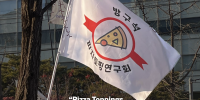
As South Koreans took to the streets this month demanding the ousting of their president, some found an unexpected outlet to express their fury: jokes and satire.
They hoisted banners and flags with whimsical messages about cats, sea otters and food. They waved signs joking that President Yoon Suk Yeol’s declaration of martial law had forced them to leave the comfort of their beds. Pictures of the flags spread widely on social media.
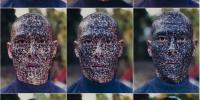
One of the most critical artists on the contemporary art scene is Zhang Huan. His works are of great social insight and unique in how he applies his artistic expression. He thus makes them an almost visual feast with a peek into the multilevel structure of modern society. One such work is the masterpiece "Family Tree," which shows how art can mould our social cognition through multilayered symbolism and profound imagery.
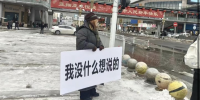
Feb 23 2024, on the streets in Henan, China, a girl holds a big sign with the black text "I've got nothing to say" on a white background, walking around in city center and malls. She live-streamed her walk and her account was banned after a few hours.
By NAZANIN LANKARANI
PARIS — Five years after his rise to the top of the Chinese contemporary art market, Yue Minjun has something new to smile about.
Best known for his large-scale paintings depicting his own smiling face, Mr. Yue, who is based in Beijing, has long been a star of the Chinese contemporary art scene, having achieved commercial success through a highly singular aesthetic.
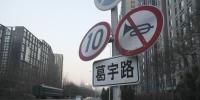
In 2017 Ge Yulu became a national sensation in China. That year, he submitted his final project as a student at the Central Academy of Fine Arts in Beijing, revealing the unnamed road in Beijing that he had claimed in 2014 as his own. Because the Lu character in his name means road, he erected a sign for Geyu Road that blended seamlessly into the setting.
Founded 19 years ago, the Beijing Queer Film Festival (aka Love Queer Cinema Week) is one of the grassroots film festivals in China focusing on independent queer film screenings and cultural exchange activities. We aim to expand public discussions on sexuality / gender identity / gender expression, we aim to give a platform to sexual and other minorities in China and the World, and we celebrate diversity.
20-year-old Ilyssa, from New York, sees communism as the only viable alternative, one that will improve the societal issues we currently face. “From a young age, I was very aware of the stark class differences that existed,” she says. “I grew up with a single mother in a very poor family.
Rectification of names
"If language is not correct, then what is said is not what is meant;
if what is said is not what is meant, then what must be done remains undone;
if this remains undone, morals and art will deteriorate;
if justice goes astray, the people will stand about in helpless confusion.
Hence there must be no arbitrariness in what is said.
This matters above everything."
Confucius
The action art performance themed "War on smog, we are taking action" was held by some environmental activists and volunteers on the commercial center and famous tourist spot Yangren Jie (Foreigners’ Street) in Nanan district, Chongqing municipality in Southwest China on Friday, Febuary 28.
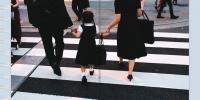
A mainland couple allowed their 2-year-old son to relieve himself by the road at Mangkok, Hong Kong and conflicted with local pedestrians who took photos of the child caused quite a stir among Chinese netizens. While the majority of mainland netizens show understanding for the couple, HongKongers think differently.
Song Dong's Waste Not consisted of a single installation comprising over 10,000 commonplace, domestic items of daily life that had been used and amassed by the artist’s mother (Zhao Xiangyuan) over fifty years.
Direct Cause: Students' freedom to enter and leave the campus has been restricted for two weeks, but the university has not even issued an official document, only a verbal rule of "not leaving the campus unless necessary."
Objective: To protest the arbitrary closure policy of Beijing Film Academy.
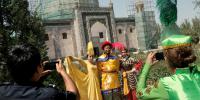
KASHGAR, China — They come for the camel rides, the chance to dress up like a conquering Qing dynasty soldier or to take selfies in front of one of the most historic Islamic shrines in Xinjiang, the sprawling region in China’s far northwest.
The Wuming Painting Collective, formed in Beijing during the Cultural Revolution (1966–1976), was a clandestine group of artists who defied the authoritarian control over art and expression. In a time when all art was harnessed as propaganda to glorify the state and Chairman Mao, Wuming artists turned their gaze toward everyday life, painting still lifes, street scenes, human figures, and most iconically, serene landscapes.
“There are many problems in rural areas. For example, agriculture is declining, no one is farming, traditional things are falling apart, farmers are brainwashed by the idea of urbanization, and they don’t like their hometown. They all want to move to the city.”Activist Ou Ning said. Rural construction is an important issue. As an activist, he chose Bishan village in Anhui, China as the field to start his experiment, which is “Bishan Project”.
A hundred days. That’s how long it took Xiao Meili to walk from Beijing, in the arid north, to the humid, central city of Changsha. Since September, the 24-year-old has been trekking south and west across the Chinese heartland, along rumbling highways, around construction sites, down dusty streets. She stops along the way to send letters to local officials. Her plea: China must change the way it handles sex abuse.
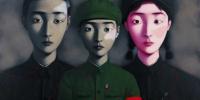
The immediate prototypes of Zhang Xiaogang’s Big Family series are formal group photographic portraits from the 1950’s and 60’s, including those of Zhang’s own family, a source of the painter’s “endless reveries.” From these old black-and-white pictures Zhang Xiaogang derived the series’ paradigmatic features: a subdued, nearly monochromatic palette; a thickly layered but flat surface, without overt evidence of brushwork; a general compositional restric