change
region
medium
issue
Anton
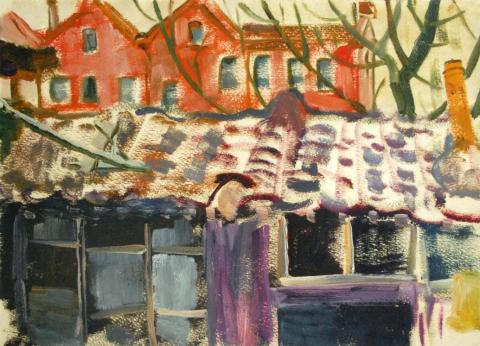
The Wuming Painting Collective, formed in Beijing during the Cultural Revolution (1966–1976), was a clandestine group of artists who defied the authoritarian control over art and expression. In a time when all art was harnessed as propaganda to glorify the state and Chairman Mao, Wuming artists turned their gaze toward everyday life, painting still lifes, street scenes, human figures, and most iconically, serene landscapes.
Their artworks, often small in size and painted en plein air, rejected the dominant styles of socialist realism and the political grandiosity of "red, bright, and shining" aesthetics. Instead, their art embraced subjectivity, intimacy, and freedom—offering a quiet but profound resistance against totalitarian ideology. The group’s very name, Wuming (“No Name”), reflected their need for anonymity in an era when informal gatherings could be criminalized as counter-revolutionary.
Wuming was composed of two generations of self-taught artists, many of whom came from politically persecuted families. Key members included Zhao Wenliang, Yang Yushu, Zhang Wei, Ma Kelu, and Shi Zhenyu. They risked their safety by meeting in secret, sharing banned books, and organizing underground exhibitions—most notably their first public show in Beihai Park in 1979, just after the Cultural Revolution ended.
Rather than loudly protesting, Wuming’s “apolitical” art was itself political, as a radical act of self-expression in an age of state-imposed silence. Their work carved out an alternative public space through beauty, friendship, and subtle defiance, making them one of the earliest examples of artistic activism in modern Chinese history.