Groups Build Parks From Parking Spaces 5 Favorite 

Practitioner: 

Date: 

Sep 20 2024

Location: 

World

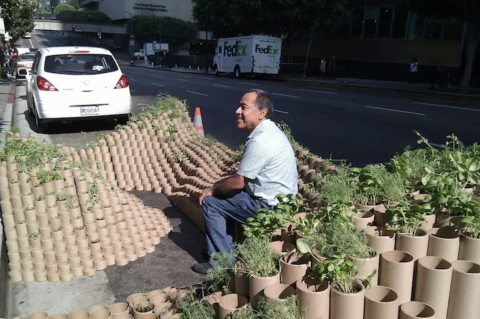
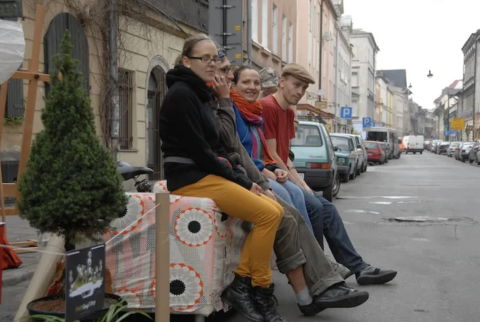
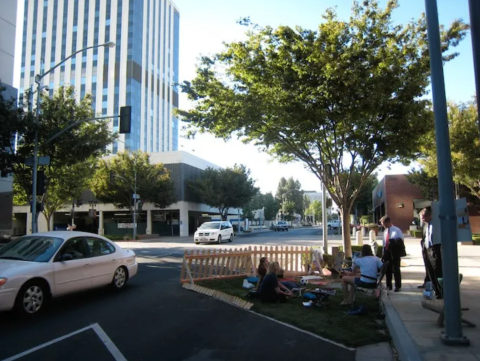
Originally a project of San Francisco-based art and design studio Rebar, Park(ing) Day participants from Tucson to Tehran set up temporary installations ranging from simple unrolled sod to art galleries and even free health clinics.

"In urban centers around the world, inexpensive curbside parking results in increased traffic, wasted fuel and more pollution," said Rebar’s Matthew Passmore. "The strategies that generated these conditions are not sustainable, nor do they promote a healthy, vibrant human habitat."

Over 50 spaces in New York City alone became miniature public parks, with participants tweeting and checking in on Foursquare. In Paris, the festivities lasted for two days and included bicycle tours of the different parks. And in Brisbane, knitters made trees and grass from yarn.

In order to participate, groups only had to fill out a license form from Rebar and abide by local rules and regulations. Luckily, most of them took tons of pictures, which we bring to you.
Posted by Serena Hou on

Staff rating: 

0

Effectiveness

How does this project help?

Timeframe For change

Park(ing) Day aims not merely to stage one-off guerrilla parks but to redefine how cities allocate curbside space, shifting from car dominance toward lasting, people-centered streets. By demonstrating the value of reclaiming a single parking spot—through mini-parklets, streeteries, and public-art installations—the movement seeks to influence urban policy and planning standards: embedding permanent parklet programs, pedestrian plazas, and flexible curb-use guidelines into municipal codes worldwide. Over time, Park(ing) Day aspires to normalize tactical urbanism as a routine element of city design, ensuring that every curb can serve social, ecological, and democratic functions.

Notes

Effectiveness Global Reach & Participation: Since its 2005 inception in San Francisco, Park(ing) Day has grown into a worldwide event engaging hundreds of cities across six continents, with thousands of participants reclaiming metered spots annually. Policy Adoption—Permanent Parklets: Inspired directly by Park(ing) Day prototypes, San Francisco’s Pavement to Parks (now Groundplay SF) launched a formal parklet program, yielding 300+ permanent parklets city-wide. Similar programs have sprung up in New York, Melbourne, and Bogotá. Institutional Recognition: The movement spurred the publication of The Parklet Book (Island Press) and an International Parklet Design Competition, drawing design professionals and city leaders into the conversation about curb-lane reallocation. Media & Public Awareness: Coverage in outlets like Wired (“Groups Build Parks From Parking Spaces”) and Streetsblog has amplified Park(ing) Day’s ethos, while local editions—such as Shanghai’s 2017 trial—demonstrate its cross-cultural adaptability. Together, these indicators show that Park(ing) Day’s blend of artful disruption and tactical urbanism has translated into tangible policy shifts, permanent public-space interventions, and a global discourse on making streets greener, safer, and more equitable.