change
medium
issue
region
Anton
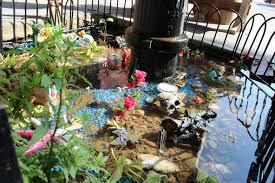
The Bed-Stuy Aquarium (also known as the Hancock Street Bed-Stuy Aquarium) is a makeshift goldfish pond located on a sidewalk in the Bedford-Stuyvesant, Brooklyn neighborhood of New York City. The pond, originally formed by a puddle from a leaky fire hydrant, garnered attention from locals and the press beginning at the time of its creation in August 2024. Local residents populated the shallow water with goldfish and colorful trinkets, transforming it into an unexpected community attraction. The project has since become the subject of both praise and criticism, with debates about animal welfare, urban beautification, and gentrification surrounding the installation.
The Department of Environmental Protection paved over the space around the hydrant in the morning on October 25, 2024. A new aquarium located next to the hydrant was built days later, replacing the original. It was closed that December after it was found it could not operate in winter conditions. There are plans to re-establish the aquarium in the spring of 2025.
The Bed-Stuy Aquarium was initiated in early August 2024 when Hajj-Malik Lovick, a lifelong resident of the Bedford-Stuyvesant neighborhood, and his friends Gav and Je-Quan Irving, decided to transform a puddle into an aquarium. This puddle, formed by a leaky hydrant, was initially an eyesore, but the founders fortified its edges with bricks and stones and introduced about 100 goldfish, purchased for $16 from a local pet store.
Since its inception, the Bed-Stuy Aquarium has drawn both praise and concern from residents and authorities. Many locals regard the pond as a public art project that has brought the community together, offering a space for neighbors to gather, converse, and enjoy a rare moment of tranquility in a bustling city. Visitors from across the city and beyond have come to see the fish, contributing to the aquarium's viral fame on social media.
The pond has also raised concerns regarding the welfare of the fish. Veterinarian Benjamin Rosenbloom, founder of Wet Pet Vet, has voiced strong opposition to keeping goldfish in such conditions, calling it animal abuse due to the shallow depth, temperature fluctuations, and the presence of chlorinated water.
The New York City Department of Environmental Protection (DEP) repeatedly shut off the hydrant feeding the pond due to concerns about water pressure and the risk of hindering firefighting operations. Despite these efforts, locals had reopened the hydrant to maintain the pond.
The Bed-Stuy Aquarium highlighted the broader social tensions surrounding gentrification in the neighborhood. Some long-term residents view the project as a symbol of unity and community resilience, while others, particularly newer residents, have raised concerns about animal welfare. In one notable incident, two residents attempted to remove some of the fish, citing cruelty, sparking a larger debate about the neighborhood's changing dynamics.
The founders of the aquarium, all long-time Bed-Stuy residents, describe the project as a truly local-led initiative—a site of resistance in the face of the rapid gentrification reshaping their neighborhood.
The committee behind the Bed-Stuy Aquarium has announced ambitious goals, including:
A permanent public aquarium on the same corner
A community center and after-school program that teaches students about science, ecology, and community building
A permanent third place for quiet movements, connecting with neighbors, and wide-ranging community benefits
Creating pathways for greater public interaction with our streets.
The committee has also announced loose plans to work with the NYC Department of Parks and Recreation to design a permanent aquarium set to launch in the spring of 2025.
Despite facing criticism, the Bed-Stuy Aquarium remains an emblem of community resilience and creativity. The committee continues to prioritize radical inclusivity, transparency, and community-driven values. Planned workshops, art builds, and educational programming aim to build the aquarium's role as a hub for connection and learning—a "public living room."