change
region
medium
issue
Anton
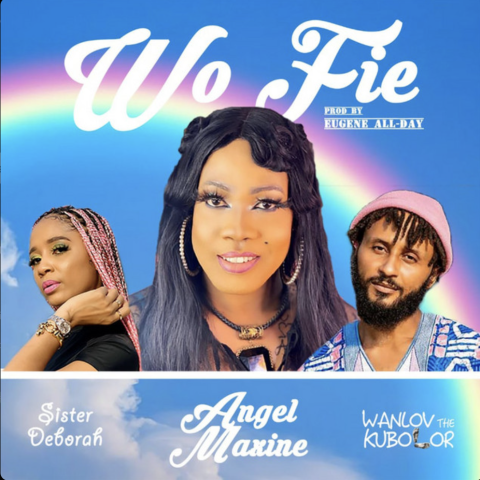
Can you finish the lyric? “Your driver could be LGBTQ, Your Tailor could be LGBTQ,…” If you can’t, you may be a part of the majority who doesn’t know about the song Wo Fie. However, for those in the LGBTQIA+ community, and followers of Ghanaian musician Angel Maxine, the song has become a Pride month anthem.
Angel Maxine, the first openly transgender musician in Ghana, released the song Wo Fie in 2021 alongside other Ghanaian musicians Sister Deborah and Wanlov. Together, they amassed widespread love when the final verse, sung by Sister Deborah, was clipped and shared all over social media platforms from X (formerly Twitter) to TikTok. The title Woe Fie originates from the Akan phrase “Ebi wo wo fie” which translates to “the same thing is in your home.”
So, when Sister Deborah lists the numerous people who surround us in our day-to-day lives including drivers, tailors, hairdressers, plumbers, etc. who could be a part of the queer community, they are informing Ghanaians, and everyone for that matter, that queer individuals are present in all aspects of our communities. Their message emphasizes that queerness is not distant nor abstract, but that queer people are integral members of our everyday lives that deserve recognition, understanding, and acceptance.
The release of the song came at a time wherein the rights of queer Ghanaians were at a heightened risk. Maxine said that her song was a response to the closure of the LGBT+ Rights office in Ghana which had also led to a rise in homophobia that she felt needed to be combatted. The message of her song and its timing reminds us that Pride month is not celebrated the same way internationally. Queer people outside of the Western world still face persecution by their governments such as in the case of Ghana.
Angel Maxine did not begin her activism with Woe Fie nor will it be her last. She has been increasingly vocal about Ghana’s recent anti-LGBTQIA+ bill this year. The bill would impose a maximum of five years in jail for either establishing or financing LGBTQIA+ groups. Sentences increase for those accused of involvement in LGBTQIA+ advocacy campaigns targeted towards children, carrying a sentence of up to 10 years. In an interview with Le Monde, Maxine said:
“If the law passes, I will go to prison. For five, maybe 10 years. A men’s prison, of course, and I’ll be forced into conversion therapy and hormone treatment. They will break me.”
She has always been outspoken about her activism for 20 years as a performer who aims to tackle homophobia through her music. Maxine had grown up in Ghana having to conceal her gender identity and sexual orientation. According to an interview she gave to the Global Citizen. The outside world that she saw was cruel to queer people before she came out and was further intensified recently when the recent Ghanaian anti-LGBTQIA+ bill became law.
Her advocacy has grown since then, stressing that the bill be removed completely so that Ghanaians can live in “harmony, peace, respect, and love for each other.” She believes that this hope, for a free Ghana regardless of sexual orientation and gender identity, is one that is conveyed through her music such as in Woe Fie.
Although her music is not widely publicised such as on Ghanaian radio, her song Woe Fie is mainly heard online, within queer gatherings, and in other safe areas such as within Ghanaian homes. Through its online popularity, her activism has garnered mass attention on platforms such as TikTok, resulting in Maxine receiving many messages in solidarity with her activism. Her activism as an openly trans woman in Ghana, for which she left the country over fears for her safety, challenged the status quo that many African countries with homophobic laws still uphold. She states in an interview with the Global Citizen
“I thought, “How can I send the message to people that your brother could be LGBTQ+, that your sister could be LGBTQ+, so show them love?” I wondered how I could tell Ghanaians and the world that LGBTQ+ people live everywhere and everywhere you go you can find an LGBTQ+ person. I thought about how I could, as a transgender musician, do something to send out my community’s message.”
Angel Maxine’s resistance against homophobia in Ghana, the continent, and internationally transcends her music. Her resistance starts with her living openly as a trans-Ghanian woman, unquestionably secure in her identity which she says no one dares to test anymore.