On your doorstep, or in their neighbourhood hotel, or the local tea shop, the media bring to you a world full of troubles. But along with that, they’ve had some consideration for your funny bone and give you a daily dose of laughter by publishing the work of some of the finest cartoonists in the country. “
On May 5 – World Cartoonist Day – here’s bringing you a glimpse of your favourite illustrators and what keeps them going.
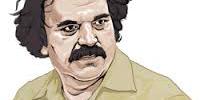
EP Unny
Under the moniker BomBaebs, Pankhuri Awasthi and Uppekha Jain rap about rape, cultural stereotypes, religious biases, and hypocrisy surrounding sexism and gender biases in India. They open the video with a disclaimer, warning that “This video doesn’t have any explicit or bannable content. It is just that the reality for women in India is Explicit.”
Alokananda Roy walked into Calcutta's Presidency Jail on International Women's Day, 2007. The Indian classical dancer had been invited to watch female inmates perform, but it was the men who caught her eye.
"They shook me," she says. "Their body language — it was as though they had no future, nothing to look forward to."
In late January 2009, a group of 40 members of right-wing Hindu group Sri Ram Sena attacked women and men in a pub in the Indian city of Mangalore. They were upset with the women for engaging in behavior they found immoral, claiming that the girls were disrespecting traditional Indian values. Video footage of the event spread across Youtube in India, sparking outrage among many at the attack on innocent women.
The Kiss of Love campaign in India is a non violent protest against moral policing. It started out as a Facebook page but gained momentum across India when a mob of conservative, right-wing party members attacked and demolished a coffee shop in Kozhikode, Kerala. Their grounds to do so was public display of affection by couples inside the coffee shop, which they saw as immoral activity.
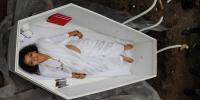
Meet To Sleep, a campaign started by Blank Noise, asks citizens from all across India to come to different public spaces like parks, and sleep there in order to take back free spaces without being afraid for their safety. The first meet was organised in November, 2014, in Bengaluru’s Cubbon Park. And since then there have been eleven meets across various cities including Jaipur, Pune, Mumbai, and Bengaluru.
In her peppy and helpful online video tutorial, Reshma Bano Quereshi promises to teach her viewers “how to get perfect red lips.”
But unlike the more than 200,000 other online videos dedicated to the application of lipstick, this one goes beyond plumping and priming.
The Kodaikanal Won't video by Chennai artist Sofia Ashraf, asking Unilver to 'clean up their mess' in connection with the Kodaikanal mercury dumping, has gone viral with over 783,533 views at the time of writing this, in just over two days. It has been shared on social media by prominent personalities such as Nandita Das, Varun Grover, Vishal Dadlani and was even praised by Nicki Minaj, on whose song Anaconda, the rap is based on.
The Voice of Dissent
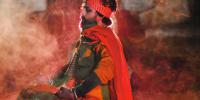
“I am not here to entertain you; I am here to disturb you. Those who are here for entertainment, I request them, please go.” It’s unusual, if not rare, for a live performer to begin by saying that to the audience. The compact of patronage that’s implicit is what Sambhaji Bhagat smashes right at the onset of his performance. For him, this art is a quest for the truth that will liberate the people he represents.
The latest in street art activism is confronting sexism in an unconventional, but wonderful, way.
Street artist, Elonë, from Karlsruhe, Germany, is paving her city with messages against sexism, street harassment and sexual abuse — all printed on menstrual pads.
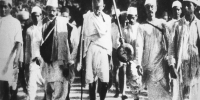
In 1930, the Indian National Congress adopted satyagraha (essentially, nonviolent protest) as their main tactic in their campaign for independence. Mahatma Gandhi was appointed to develop a plan of action; he proposed marching to the sea to make salt in defiance of the Salt Act of 1882.
With World Comics India, the organization he started, Sharad has pioneered a cheap and easy medium for poor people to communicate meaningfully on issues that are neglected by the conventional media. While the urban elite dominates public media, the grinding day-to-day concerns of millions are rarely heard. Layers of discrimination and abuse heaped on huge numbers of people keep their problems out of sight and out of mind.
The Propaganda Machine is a battle cry delivered in the language of extreme metal. On Sahil Makhija’s fourth solo album as Demonstealer, he takes aim at the right-wing politicians, racist nationalists, disinformation artists, and religious extremists who manipulate and exploit the masses, in his native India and all over the world. He doesn’t mince his words; just about every lyric on the album could easily be printed on a protest sign.
In 1989, playwright, actor, and activist Safdar Hashmi was fatally attacked by political thugs while performing a street play outside of Delhi. His death led to the founding of Sahmat, an influential artist collective that has taken a consistent stance against the threats of religious fundamentalism and sectarianism in India through a vibrant mix of high art and street culture.
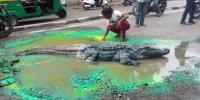
Baadal Nanjundaswamy, a Bangalore based artist who works at an advertising agency uses his art to embarrass the civic authorities into fixing the potholes that litter the roads of Bangalore.
Daku is an Indian graffiti artist that engages in street art with political and social meaning. Little else is known about the elusive artist, due to the illegal nature of his work. The name "Daku" literally translates to bandit or dacoit in Hindi.
ipaidabribe.com is an online tool that allows the users to report when they pay bribes, are asked to pay and refuse, and when they find an honest officer.
They have a well designed site with apps for mobile phones, and although it started in India it has now grown and you can select multiple countries on different continents.
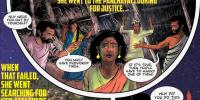
A new comic book with a female rape survivor as its "super hero" has been launched to focus attention on the problem of sexual violence in India.
Priya's Shakti, inspired by Hindu mythological tales, tells the story of Priya, a young woman and gang-rape survivor, and Goddess Parvati as they fight against gender crimes in India.
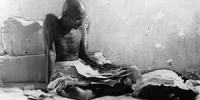
On September 16, 1932, in his cell at Yerwada Jail in Pune, Mohandas Karamchand Gandhi begins a hunger strike in protest of the British government’s decision to separate India’s electoral system by caste.