As the No. 59 bus hurtled down Ratchadamnoen Klang road in Bangkok's Old Town, its passengers diverted their attention from the intense midday heat to a small crowd on the concrete below. About 25 people were marching and chanting, photographers scuttling in front of them.
"Cats Against Cat Calling" began online as a movement under same slogan, powered through Hollaback! Hollaback! is an activist collective seeking to end street harassment. Working through a network of activists in various locations, Hollaback! encourages individuals to stand up for themselves against uncomfortable interactions in public.
Beating Cancer is a hard task. Cancer patients spend endless days in the hospital receiving a multitude of tolling treatments that we understand are necessary to save our lives. However, when you're a kid, it isn't always so easy to understand what's going on. As the chemo kills bad cancer cells, it also kills good cells in your body, which causes various unpleasant side effects.
Cheril Linett is a female artist from Chile, with a background in performance art and stage performance, who primarily focuses her artwork on feminist issues in Chile, especially ones involving violence, murder, hate crime and different kinds of oppression and assault, but also creates artwork reflecting issues in other parts of Latin America.
I must first come clean, I studied fine arts in high school from years nine to 12. Since my studies were concluded, I had never held a paintbrush again.
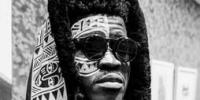
The story of an artist. Laolu Senbanjo grew up surrounded by the culture and mythology of the Yoruba, an ethnic group from the southwest of Nigeria, but he never imagined how it would influence the artist he is today. After a career as a human rights attorney, Senbanjo moved to New York City to pursue art full time. “With my art, I like to tell stories, I like to start a conversation,” says Senbanjo, but life as an artist in New York was tough.
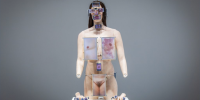
Filip Custic (Santa Cruz de Tenerife, Spain 1993) works across photography, performance and video to address themes around identity, body and our relationship with technology. Mirrors and screens are a recurring features, a reference to our age of image-obsession and selfies, and Custic also uses symbols, references to science, and art-historical borrowings in his art.
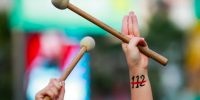
Parió Paula is an all women’s percussion group based in Lima, Peru. These women are truly artistic renegades defying the social norms of Lima’s predominantly male music scene. With a bold message on emphasizing female expression, these ladies have transformed their countless styles of drumming into something effective for their city.
(see full article and short documentary at link below)
“Misplaced Women?” is an art project-workshop by Tanja Ostojic in which she and project`s participants – artists , art students , cultural workers and activists: Nela Antonovic, Gorana Bacevac, Nadezda Kircanski, Tatjana Beljinac, Milica Jankovic, Tamara Bijelic, Irena Djukanovic, Bojana Radenovic, Marija Jevtic, Irena Mirkovic, Jelena Dinic, Sanja Solunac and Suncica Sido showed the everyday life activities that are characteristic for migrants, refugee
he Federal Trade Commission (FTC) is demanding Elon Musk turn over internal Twitter documents, including a list of the journalists who were behind the viral "Twitter Files."
The Wall Street Journal first reported Tuesday about more than a dozen letters the FTC sent to Twitter and its legal counsel as part of a probe looking into Musk's 2022 takeover of the tech giant.
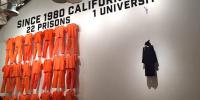
When you design an economy to be based on short term profit to the benefit of giant corporations, the results over the long term will be a country so hostile to human life that the unreasonable and unthinkable becomes an every day reality. Wealth inequality, mass poverty, a crumbling welfare state aside, the prison system perfectly illustrated the madness of the American capitalist system.
The structure teeters over fields of knee-high grass, looking like a cross between a camping tent and a giant wedding cake. Eleven stories of dark red wooden rooms, diminishing in size as they ascend, balance atop one another, seemingly held together by only the thicket of cords that stretches from the peak to the ground.
Shackles. Cotton. The Big House.
Americans tend to think of slavery in terms of chattel slavery. Plantation Slavery. Slavery where human beings are bought, sold, and owned. The kind outlawed in the United States by the Emancipation Proclamation in 1863.
Slavery as a relic of the 19th Century.
“Six of us lived, worked, slept in a 10-by-10 (foot) room without a bed, bathroom, or clean water,” Nasreen Sheikh remembers.
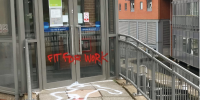
Graffiti art is particularly viewed as a powerful form of social protest, and the (illegal) act of defacing can be as important as the message itself. Artist Void One has been arrested on numerous occasions for his politically-charged interventions.
“I didn’t set out to make political art but art is a platform where I can vent my frustrations” – Void One.
For the completion of her residency as the NYU Steinhardt 2023-24 Scholar-in-Residence, Dominique Jackson collaborated with NYU students to honor the fem queen (trans women) and their historical meaning to not only ballroom but popular culture at large.
In 2004, the United Nations called the LRA crisis in northern Uganda the “most forgotten, neglected humanitarian emergency in the world.” Invisible Children was founded to change that and to fight against the false notion that our responsibility to each other stops at our own nations’ borders.
"Divided we are weak. Together we are strong."
Those were the words tweeted by openly gay football star Michael Sam, thanking his University of Missouri family for their support. He posted the message after arriving at the school and seeing a group of Mizzou students surrounding the perimeter in order to block out a Westboro Baptist Church protest.
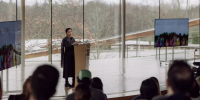
"Work-from-home lawyers and museum staff convened by webinar on 11 and 12 March, for an annual conference on Legal Issues in Museum Administration, hosted by the non-profit American Law Institute with the support of the Smithsonian Institution. This year’s focus was decidedly shaped by the Covid-19 pandemic, which has squeezed museums financially and pushed ever more museum activity into the digital realm.