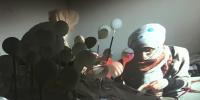
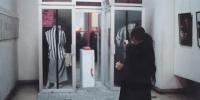
The Balloon Project, is a three-year-in-the-making Art Installation by Yan Kong in support of world refugees and migrants. It pays tribute to human spirit, courage and survival. The Balloon Project is a multimedia work incorporating mechanical engineering and visuals to fuse art and politics. 32 balloons inflate and deflate to simulate refugee and migrants' breathing while fleeing their countries to seek safety and freedom in the world.
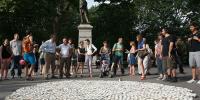
ŠTO TE NEMA is a public monument created as a response to Europe’s worst atrocity since World War II - the systematic killing of 8,372 Muslim men and boys in the UN-protected safe area of Srebrenica in Bosnia and Herzegovina in July of 1995.
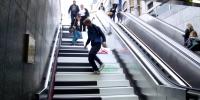
“Piano Stairs” is an interactive playful musical stairway installation created into the Odenplan underground station of Stockholm to make people use stairs more often than elevator. The project was part of a Wolkswagen initiative called “The fun theory” whose main objective and mission is to “change people’s behaviour for the better by making it fun to do.”
To state or chant ‘BLACK LIFE’S MATTER’ is not to say other lives don’t matter, it’s a reminder that four hundred years and counting, black lives didn’t matter enough. Not during the dark era of slave trade and its horrors on the African, not after slavery ended and blacks were left holding the short end of the stick.
Topless queer men light spliffs on the beach. A trans man injects testosterone on the toilet. Drag queens nonchalantly scroll through their phones and smoke. These are just some of the images that make up the new book from Leo Adef. Titled WARP, it’s comprised of photographs captured across four years spent in Barcelona's queer underworld
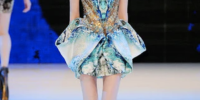
The upcoming year of fashion shows look set to be charged with climate change and environmental themes.
This year, more than ever before, we have seen that the business of fashion, at the highest levels, is responding to the push to take the very pressing issue of climate change and environmental damage seriously.
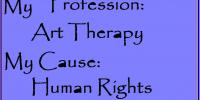
We demand that AATA respond to Karen Pence's stated commitment to our field by asking her to publicly take action for the rights of LGBTQIA people, Native people, Black and Brown people, Muslims, survivors of sexual assault, people with disabilities, immigrants, refugees and all people who are in danger as a result of the policies of the current administration.
"Iconography"
1235 Ocean Parkway
Brooklyn, NY 11230
May 27, 11 am – June 24, 7 pm
Tuesday – Saturday, 11 am – 7 pm
Please write to racc.ny@mail.ru or call (347) 662 1456
The artist is available for interviews
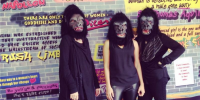
It’s women’s history month, and your favorite radical feminist avengers want you to go ape. The Guerrilla Girls have been making noise about gender and racial inequality in the art world since 1985. Fighting discrimination with a sense of humor and their signature faux fur, these masked feminists continue to challenge major museums to spotlight more women and artists of color.
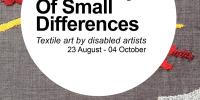
An exhibition of textile-based work by disabled artists, organised in protest at the inaccessibility of an exhibition by a popular artist, when it came to Leeds.
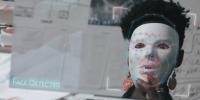
In 2015, MIT researcher Joy Buolamwini was developing a device called the Aspire Mirror. Onlookers would stare into a webcam and then see a reflection on their face of something that inspires them.
At least, that was the plan. But Buolamwini quickly noticed that the facial recognition software was struggling to track her face — until she put on a white mask.
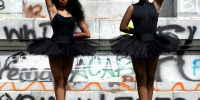
During the Black Lives Matter protests in Richmond, VA, the two fourteen-year-olds posed in a powerful photo in front of Confederate General Robert E. Lee’s statue. Ava had originally arranged an appointment with photographer Marcus Ingram, but as she and Kennedy posed in front of the graffiti-covered monument with their fists firmly jutted in the air, several photographers began snapping pictures.
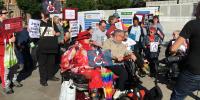
Disabled people gathered to protest at the site where a memorial to the Peterloo massacre in 1819 is being built. We are keen to have a memorial to Peterloo, but we want one we can be proud of, rather than the one under construction, which will be inaccessible to many disabled people.
Sing for Hope is bringing its renowned Sing for Hope Pianos back to the streets of New York City this summer. From June 5-25, as a celebration of the work Sing for Hope does in communities year-round, 60 Sing for Hope Pianos will be placed in parks and public spaces in high traffic locations across all five boroughs in New York for anyone and everyone to play.
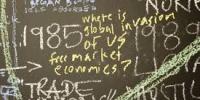
"SOA Cycle, and what it later became, which is called the Democracy Cycle, is a group of seven large works that approach the question of democracy. What is democracy? How is it constructed? How is it implemented? Is it something that is to be thought of in relation to its political influence? Or is it something that plays out in terms of cultural and social, and even emotional terms, for instance?
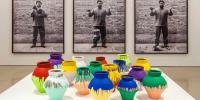
MIAMI — Officials at the recently inaugurated Pérez Art Museum Miami confirmed on Monday that a valuable vase by the Chinese dissident artist Ai Weiwei had been deliberately destroyed by a visitor in what appeared to be an act of protest.
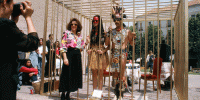
The Couple in the Cage documents the travelling performance of Guillermo Gómez -Peña and Coco Fusco, in which they exhibited themselves as caged Amerindians from an imaginary island. While the artists’ intent was to create a satirical commentary on the notion of discovery, they soon realized that many of their viewers believed the fiction, and thought the artists were real “savages”.
Thelma Golden, curator at the Studio Museum in Harlem, talks through three recent shows that explore how art examines and redefines culture. The "post-black" artists she works with are using their art to provoke a new dialogue about race and culture -- and about the meaning of art itself.
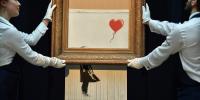
On Friday night, a painting by the anonymous street artist known as Banksy sold at Sotheby’s auction house in London for $1.4 million. But as soon as the auctioneer dropped the gavel, something unexpected happened: a beeping alarm went off and the frame began eating the painting, spitting half of it out the bottom in what may be the first instance of a self-destructing painting, reports Scott Reyburn at The New York Times.
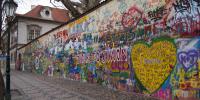
Prague's Lennon Wall is a tourist attraction to some, and a participatory street art haven for others. Directly opposite of the French embassy, the wall has been filled with evolving art and graffiti since the 80s. The wall received its first public inscription, a tribute to John Lennon, following Lennon's assassination in September 1980.
The new exhibit “MESH” at Portland Art Museum features Indigenous contemporary artists advocating for change
Visual artist, writer and activist Ka’ila Farrell-Smith says she considers herself a wartime artist.
She is a member of the Klamath tribes and lives in Modoc Point, Oregon. When asked about how history influences her work, the answer weaves through over 150 years of white colonization and Indigenous struggles in the West:
If fashion is a reflection of the times it is little wonder that the current round of shows have often felt discombobulating.
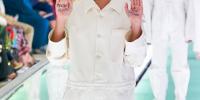
Gucci’s show on Sunday night was particularly surreal, opening with a series of models being propelled along a conveyor belt catwalk, staring bleakly ahead, wearing a high fashion take on straitjackets.
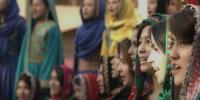
In response to a memo from Afghanistan's education ministry, Ahmad Sarmast, the founder of Afghanistan's Institute of Music, began a Twitter campaign with the hashtag #IAmMySong. In response to the hashtag, Afghan girls have taken to Twitter with videos of themselves singing tagged with Sarmast's hashtag and spreading petitions against the ban. The ministry memo banned girls 12 years old and older from singing at school functions.