When Europeans of the 18th and 19th centuries established their grandest museums, each building meant to unite the world’s cultural heritage under a single roof, they had no doubt as to who should explain it all: themselves. They took a Eurocentric view, categorizing the spoils of colonial enterprise by nation and region, splitting art from craft, and nature from culture.
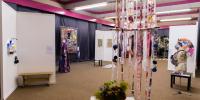
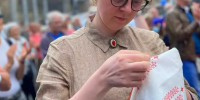
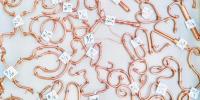
A disability / textile arts project, challenging assumptions about disabled artists & highlighting shoddy treatment of disabled people by current government:
https://shoddyexhibition.wordpress.com/
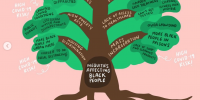
"When it comes to the effects of the virus on black lives, the roots run deep.
⠀⠀
This is one of the hardest illustrations I’ve ever done. Not because of the tree - but because of the overwhelming nature of the subject at hand. Seeing headlines like “Blacks are Dying at Higher Rates from Covid-19” SHOOK me!
⠀⠀
These graffiti artists were given carte blanche over an entire warehouse to do with what they wanted. The result? Everything from the soundtrack from the videography, editing and the painting is just absolute brilliance.
According to the World Health Organization, China is home to two-thirds of the world's women who wear IUD devices. This is a form of contraception that was developed after World War II, and in essence, comes from discrimination against women. In 2014, artist Zhou Wenjing made a work of IEDs, which was recently exhibited in Beijing.
WEST PALM BEACH, Fla. —
Supporters of the LGBTQ+ and arts communities in West Palm Beach are protesting the closure of two popular spots for creatives in the city.
Bea Camacho is a visual and performance artist from the Philippines, the provocation of whose work is described as exciting and strikingly into identity, intimacy, and isolation. Her art is known to delve into the human complex of experiences and offer a layered narrative within its visual and performance medium.
Jo’Artis Ratti is sure he looked intimidating to the police officers who were suddenly confronted by his agitated dancing at a California protest Sunday.
“I’m 210 pounds,” said Ratti, 35. “I have tattoos on my neck. I don’t have a passive energy; I’m very enthusiastic. And I know this looks unfamiliar.”
Rufina Bazlova is not afraid to surrender her art to activism. Born in Belarus, a former Soviet republic ruled by the authoritarian leader Aleksandr Lukashenko for 29 years now, Bazlova knows all too well that being apolitical is a privilege many Eastern Europeans cannot afford. 2020 was a pivotal year for Belarus, not only because of the COVID-19 pandemic but also the presidential elections, which declared Lukashenko president for the sixth time.
Peter Marks Review from the Washington Post:
“As Far as My Fingertips Take Me,” a performance piece about the ordeal of seeking refuge by Tania El Khoury that’s being presented for the next 2½ weeks in the lobby of Woolly Mammoth Theatre. For this hypnotic, one-audience-member-at-a-time experience, you pass through the door of a white-walled booth and slip into a white lab coat before putting on a pair of headphones.
Converse Rubber Tracks is a global community of professional recording studios, which provides free studio time to emerging artists. Bands and artists record without any fee whatsoever and maintain all the rights to their music.
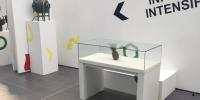
How did a pineapple become a postmodern masterpiece?
The aesthetic merits of tropical fruit inadvertently entered Britain’s national cultural conversation after two students jokingly placed a store-bought pineapple on an empty table at an art exhibition this month at Robert Gordon University in Aberdeen, a port city in northeastern Scotland.
Private Dinner Party: Clothing Not Allowed
The Füde Dinner Experience gathers those who want to meet, eat and drink — only after leaving their clothes at the door.
Ladies’ Room, lasting fewer than six and a half minutes, offers a behind-the-scenes look at a women’s washroom in a nightclub located in a Beijing hotel. A male patron of Cui Xiuwen’s studio first took her there, and she acknowledges being drawn to the ladies’ room precisely because her host did not have access to it.
What happens to explicitly political art when it’s placed inside of the White Cube? Paint the Protest, a group show curated by Nancy Spector at Off Paradise self-consciously poses this question, and further aims to reveal the place and purpose of activist art in general.
"Las Carpetas looks at the bureaucratic residue of a 40-year-long secret surveillance program that aimed to destroy the Puerto Rican Independence Movement. Through still-lives, archival appropriation, and investigation, Christopher Gregory-Rivera provides a counter-history to the way many understand this period of time and its aftermath.
Carolee Schneemann is largely associated with her performance art of the 1960s and 1970s, in which she boldly addressed feminist and political issues in ways that shocked and engaged viewers. But she has always maintained that she is a painter, a fact often overlooked in discussions of her larger body of work. At the heart of her approach is her ongoing exploration of the boundaries of painting and drawing, as in Up to and Including Her Limits.
It’s the radiant baby, the barking dog and the dancing man; the badges and the t-shirts; the unmissable mural spelling out CRACK IS WACK. Keith Haring’s career was short but spectacular, and he leaves behind a lasting legacy. From his chalk drawings in city-wide subway stations, to his collaborations with the superstars of his day, Haring’s life was founded on a belief in the power of people to change the world.
CNN
—
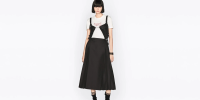
Dior is facing accusations of cultural appropriation after Chinese social media users – and protesters outside one of the label’s Paris stores – claimed that a $3,800 skirt was inspired by a centuries-old traditional garment.
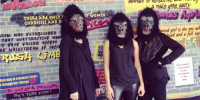
It’s women’s history month, and your favorite radical feminist avengers want you to go ape. The Guerrilla Girls have been making noise about gender and racial inequality in the art world since 1985. Fighting discrimination with a sense of humor and their signature faux fur, these masked feminists continue to challenge major museums to spotlight more women and artists of color.
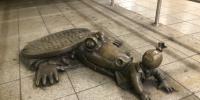
At the Eighth Avenue subway station, sewer alligators are not an urban legend.
Anyone who’s been through the 14th St./Eighth Ave. station has probably seen the bronze gator sculpture — and probably wondered what it means and why it’s there.
The underground gators — along with dozens of other whimsical creatures — are part of the permanent art installation housed at the intersection of the A,C,E, and L lines.