The Nanjing Yangtze River Bridge, completed in 1968, is one of China’s most iconic infrastructural projects and a potent symbol of national pride. Spanning over 6,700 meters across the Yangtze River, it was the first double-decked road-rail truss bridge designed and built entirely by Chinese engineers, without foreign assistance, during a time of intense geopolitical isolation.
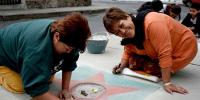
Tranvía Cero is a group of artists from Ecuador who have been creating artistic projects with the aim to empact community lives and change the ideas of art as an exclusive terrain. The describe their goal as a redefinition of art through the social engaging experiences.
Art in Odd Places (AiOP) presents visual and performance art in unexpected public spaces. AiOP also produces an annual festival along 14th Street in Manhattan, NYC from Avenue C to the Hudson River each October.
Journalist and playwright Xandra Clark began creating Polylogues, a one woman show exploring non-monogamy, in 2017. The show is created from interviews Clark conducts around the world with people of different ages, genders, and races about their relationship with non-monogamy or polyamory (hence the name of the performance Polylogues).
Parió Paula is an all women’s percussion group based in Lima, Peru. These women are truly artistic renegades defying the social norms of Lima’s predominantly male music scene. With a bold message on emphasizing female expression, these ladies have transformed their countless styles of drumming into something effective for their city.
(see full article and short documentary at link below)
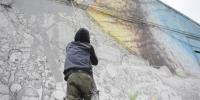
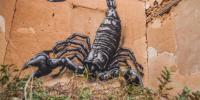
Djerbahood Project, which took place during the months of July and August on a small island called Djerba and is located in the Gulf of Gabes. Better known as the island of dreams, the tiny village of Djerba boasts a traditional and authentic Tunisian setting which acted as a blank canvas for hundred and fifty street artists from thirty different countries.
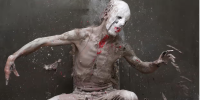
As the audience enter, Olivier de Sagazan is pacing the stage, deep in thought. A slight, barefooted figure dressed in suit and tie, he circles in and out the shadows, head bowed, sometimes muttering to himself. As the audience settle and hush, his footsteps gradually become more audible (the floor is mic-ed) and begin to pound like a calling drum.
The latest episode in Nicolas Heller's documentary web series "No Your City," as published by Gothamist, features the arguably pretentious, inarguably earnest street performer Kalan Sherrard, who was recently arrested during his peaceful anarchist puppet show. Functioning as a video manifesto for his peculiar ways, the clip is at least compelling.
Mayday is a neighborhood resource and a citywide destination for engaging programming, a home for radical thought and debate, and a welcoming gathering place for people to work, learn, drink, dance and build together.
Our NGO “Voices from the Conflict” seeks to open a conversation about the Israel-Palestine conflict through the lens of activist art. The history of the conflict dates back to the UN partition plan in 1947, followed by Israel’s independence in 1948. Since then, there have been several armed engagements between the two actors- causing massive civilian casualties and terrorism.
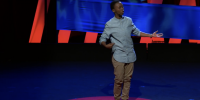
"I was the mystery of an anatomy, a question asked but not answered," says poet Lee Mokobe, a TED Fellow, in this gripping and poetic exploration of identity and transition. It's a thoughtful reflection on bodies, and the meanings poured into them.
This talk was presented at an official TED conference, and was featured by our editors on the home page.
Native American groups are expected to protest the Kansas City Chiefs on Sunday, calling for the AFC champions to drop their name and logo as they take on the Philadelphia Eagles in Super Bowl 57.
The Chiefs wear the arrowhead logo on their helmet and use a large drum to kick of their home games, as fans routinely engage in what’s known as the “tomahawk chop” chant, all of which critics say draw on offensive and racist stereotypes.
To some, the Clandestine Insurgent Rebel Clown Army (CIRCA) might appear to be but a ragged bunch of activists sporting false noses, a smudge of grease paint, camouflage pants and bad wigs. And those people may be right. But it is also a highly disciplined army of professional clowns, a militia of authentic fools, a battalion of true buffoons.
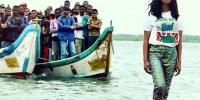
Horror stories about treacherous boat journeys from Africa to the Mediterranean far too often make headline news. The men, women and children fleeing their homes to start a new life in Europe become faceless numbers in the media, and are ‘othered’ by conservative politicians for their own agenda.
The video for “Borders,” a song off MIA's album Matahdatah, features images recalling all sorts of migrations from the developing world—there are people crossing deserts, fences, and bodies of water. Though much of M.I.A.’s work has been about women and children, this video is filled with brown men: the ultimate bogeyman for many in the West, stereotyped as terrorists, criminals, and job-takers.
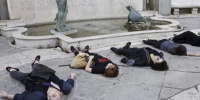
On September 2nd 2015, a die-in protest to advocate against gender violence was carried out by a group called Women in Black (Olmedilla, 2015). This form of protest was likely inspired by other die-in protests in Spain and represented Spanish women who have died due to domestic violence (DV). A group of women dressed in black clothing gathered on the streets of Madrid. One by one they fell to the ground and lay there, acting dead.
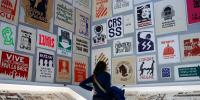
“The Feminist Zine Fest showcases the work of artists and zine makers of all genders who identify on the feminist spectrum, and whose politics are reflected in their work. For the second consecutive year, Barnard proudly hosts the zine fest, welcoming approximately 40 zine-makers eager to share their work.
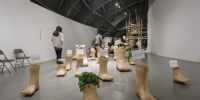
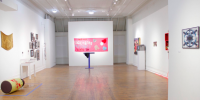
An oversized facsimile of Rush poppers, tipped over, pouring out its viscous contents: this example of underground gay iconography blown up to almost belligerent proportions perfectly represents the aims of Party Out of Bounds: Nightlife as Activism Since 1980, a new exhibition at La MaMa’s La Galleria. The group show, curated by Emily Colucci and Osman Can Yerebakan, gathers together works by a small yet distinct menagerie of queer artists.
In Tunisia, a country gripped by economic uncertainty and still in the midst of rebuilding its identity after the Arab Spring, hip-hop culture is viewed as part of an ongoing dissident movement. Just a few events, such as the recent Mafia Wallitili Festival in the heart of downtown Tunis, offer the local hip-hop community an opportunity to share their values with the broader population.
Miku is a Japanese virtual idol. She is 16 years old. Miku is created in 2007 and has been heavily promoted since 2008 and was originally aimed at professional musicians. On September 12, 2007, Amazon.co.jp reported sales of Hatsune Miku totaling 57,500,000 yen, making her the number one selling software of that time. She was the first vocal to be developed and distributed by Crypton Future Media and sung in Japanese.
Ricardo Levins Morales is an artist and organizer based in Minneapolis, Minnesota. He was born into the anti-colonial movement in Puerto Rico, and when his family moved to Chicago in 1967, he became interested in activism. After leaving high school early, he worked in various industries and began to use art as part of his activism work.
Whose Utopia? was made by the Chinese artist Cao Fei and filmed at the OSRAM lighting factory in Foshan in the Pearl River Delta in southern China during 2005 and 2006. It was commissioned as part of a project entitled ‘What Are They Doing Here?’ that was run by the Siemens Art Program from 2000 to 2006 and involved Chinese artists undertaking six-month-long residencies at industrial facilities across the country.