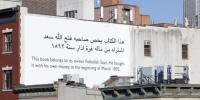
Recurrent themes in Emily Jacir's practice—which spans a range of strategies including film, photography, interventions, archiving, performance, video, writing, and sound—are silenced historical narratives, resistance, movement, and exchange.
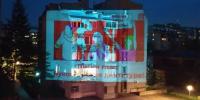
For the past few years around election time in Serbia, people have taken to the streets to protest government corruption, attacks on free press and voter suppression. This Spring, despite a nationwide lock-down to combat the COVID-19 pandemic, activists are finding new ways to protest the country’s increasingly-repressive government.
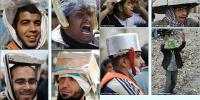
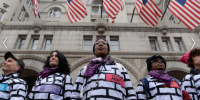
Brick x Brick is a public art performance that builds human “walls” against misogyny. It is organized by the Public Displays of Affection, a collective of artists, designers, educators and organizers that engages in nonviolent direct art action. During the wall performances, participants wear brick-patterned jumpsuits adorned with colorful brick patches bearing statements of misogynistic violence made by US President Donald Trump.
One of the most pressing questions before us in the United States now is how to resolve the tension between our personal visions and needs, on the one hand, and the demands of being a member of a community, on the other.
The kidnapping and enslavement of African people was the life-blood of transnational corporations like the "Royal African Company." In law, these human resource corporations were called "artificial people." Their human cargo was called "cargo."
from "Laugh, O Revolution: Humor in the Egyptian Uprising" by Anna Louie Sussman, in 2011.
Revolutions can be messy. They can be tragic. As long as the Internet is working, they can be tweeted. And, as Egyptians demonstrated during their 18 days of protest, they can also be funny.
By David Gonzalez
Leslie Thomas wants to shock you. She wants to anger you. And above all, she wants you to do something.
She’s not talking about run-of-the-mill, “Hey buddy, watch your step” angry or TMZ sleaze shock. She’s talking about the great humanitarian and social crises of our time, like in Darfur, Afghanistan or Myanmar. And yes, she’s talking to you.
It was September 1738, and Benjamin Lay had walked 20 miles, subsisting on “acorns and peaches,” to reach the Quakers’ Philadelphia Yearly Meeting. Beneath his overcoat he wore a military uniform and a sword — both anathema to Quaker teachings. He also carried a hollowed-out book with a secret compartment, into which he had tucked a tied-off animal bladder filled with bright red pokeberry juice.
The streets of Santiago are once again alive with the spirit of revolution. For weeks now, working-class Chileans have occupied national monuments and blocked major intersections in protest of widespread inequality. They desire full reform — a request so long in the making that it is practically tradition. The country’s floundering political elite offer half measures while dispatching riot police and the military.
Rooted in Native American and indigenous practices,[11] restorative justice is a set of principles and practices that aims to help communities heal from conflict and harm by developing a common understanding of the root causes and effects.[12] Restorative justice can occur in a variety of different contexts: in the workplace, at schools and within, or instead of, the criminal justice system.
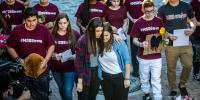
Shine, written by Stoneman Douglas students Sawyer Garrity and Andrea Peña in response to the tragic shooting at their school on February 14, 2018 to inspire unity, hope, and change. MSD alum Brittani Kagan collaborated with students and faculty to create this music video to honor the victims and the school.
Rufina Bazlova is not afraid to surrender her art to activism. Born in Belarus, a former Soviet republic ruled by the authoritarian leader Aleksandr Lukashenko for 29 years now, Bazlova knows all too well that being apolitical is a privilege many Eastern Europeans cannot afford. 2020 was a pivotal year for Belarus, not only because of the COVID-19 pandemic but also the presidential elections, which declared Lukashenko president for the sixth time.
"He's been running all his life, running for freedom, running for peace.It started when he ran away from home at the age of eight. Later he ran away from his homeland, Iran, and spent seven years on a bicycle, pedaling 49,700 miles across 55 countries. In 2002, he reached America. He now lives in a tent in Death Valley. It's been nearly 10 years since Reza Baluchi escaped from Iran.
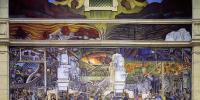
Almost all of Rivera's art told a story, many of which depicted Mexican society, the Mexican Revolution, or reflected his own personal social and political beliefs, and In the Arsenal is no different. The woman on the right side of this painting in Tina Modotti, an Italian photographer and revolutionary political activist, who is holding ammunition for Julio Antonio Mella, a founder of the internationalized Cuban communist party.
In time for the 30th Anniversary of the famed EDSA People People Revolution, a two-day pop-up museum in Camp Aguinaldo serves as a vivid reminder of a significant period in Philippine History.
The interactive museum, which is composed of nine halls, recreates the martial law victims’ struggle for democracy, including the events that led to the bloodless revolution in 1986.
Godfrey Mwampembwa, popularly known as Gado, has been holding politicians accountable for nearly 30 years. Now, his concern has shifted to the coronavirus.
In a quiet office on the third floor of a building in Nairobi’s central business district, the cartoonist known by his pen name, Gado, was sketching a satire about the coronavirus.
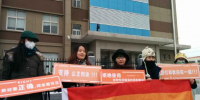
In November 2015, Chinese LGBT activist Chen Qiuyan met with government officials in Beijing after months of campaigning to have the Ministry of Education remove textbooks which identify homosexuality as a mental disorder.
In 2001, the Chinese Society of Psychiatry removed homosexuality from its list of recognized mental disorders, after the Chinese government decriminalized consensual homosexual acts in 1997.
To Battle Fake News, Ukrainian Show Features Nothing but Lies
KIEV, Ukraine — The studio lights dim, and the anchor taps a stack of papers on her desk and directs a steely gaze toward the television cameras.
What appears to be a nightly newscast is about to begin, only with a very Ukrainian twist: Everything is a lie, from start to finish.
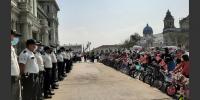
Non-profit organizations and a multitude of Guatemalan girls protested together demanding justice and security from the government. Guatemala's insecurity and cases of girls' disappearances have increased over the years. The protest started outside the Government Ministery (Ministerio de Gobernación) early in the morning, where protestors gathered riding their bikes.
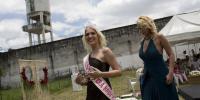
In its thirteenth year, the annual Miss Talavera Bruce beauty pageant is held in unlikely surroundings: a women’s prison in Rio de Janeiro, Brazil. The Instituto Penal Talavera is the only maximum-security women’s prison in the city with inmates serving life sentences for murder, fraud and drug trafficking.
For the past five years, we’ve screened SIMA juried films in communities and classrooms across six continents and witnessed an increasing demand to use the inspirational force of documentary filmmaking to build a global digital community around today’s most pressing issues.
Tennessee Rep. Justin Pearson never guessed he'd be expelled for leading a gun control protest on the House floor after a deadly school shooting. Nor did he predict that he'd be propelled into the national spotlight, placing his state at the forefront of the conversation on gun regulations.
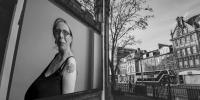
UK photographer Alicia Bruce collaborated with Zero Tolerance, a Scottish non-profit to end GBV, to produce a new version of the Violence Unseen campaign, launched for the first time in the 1990s and created by Franki Raffles. The new one was launched in 2018, 25 years after the original iconic Zero Tolerance campaign, shot by the late Franki Raffles.