Marcel Duchamp, father of the readymade, forced the world to consider mundane things as significant objects, worthy of greater-than-average contemplation — yet his bicycle wheel, shovel, and urinal didn’t come freighted with all that much history.
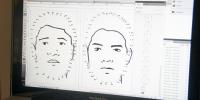
On December 2014 I've been artist in residence at MANY MINI RESIDENCY a short-term residency program organized by Sarrita Hunn and Ryan Thayer and hosted by GYB BYG in Mexico City. During my 12 hour residency I’ve worked on the case of the 43 students from Normal Rural de Ayotzinapa who went missing while in the custody of Iguala’s police force in September 2014.
The latest Academy Award for Best Picture was earned by a film depicting the story of a poor, gay, black boy in South Florida. Moonlight, by director Barry Jenkins, has achieved great recognition for its beautiful and honest depiction of a storyline which challenges itself at every turn.
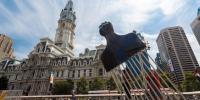
Located in Thomas Paine Plaza, across the street from City Hall, Hank Willis Thomas’s All Power to All People was a public art intervention that dealt with racial identity and representation in Philadelphia.
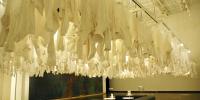
NORTHFIELD, Minn. — Exactly 1,281 white garments hang from the ceiling of the Perlman Teaching Museum’s Braucher Gallery. The collared shirts, knit sweaters, tights, and other items of clothing glow with an eerie luminosity.
Mayday is a neighborhood resource and a citywide destination for engaging programming, a home for radical thought and debate, and a welcoming gathering place for people to work, learn, drink, dance and build together.
Back after a five year hiatus, V-Day Sedona joins with hundreds of other productions across the globe in celebrating V-Day’s 20th anniversary with an act of artistic activism. For its 20th anniversary, V-Day is calling on activists around the world to Rise, Resist and Unite.
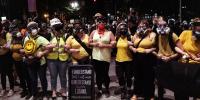
When mothers take to the streets — particularly those from privileged groups — governments take note. The “wall of moms” in Portland has taken up the cause against police violence.
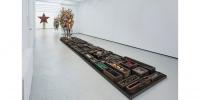
“Gravity of Equilibrium” revolves around Mass Shootings in USA. Mass shootings and guns are an incredibly divisive topics, one that is nearly impossible to engage opposing viewpoints in a discussion about. The majority of gun related debates devolve into charged arguments with parties feeling threatened. This effectively creates an environment where new perspectives and inputs are unable to be processed.
Gender equality charity Women of the World (WOW) is launching a one-day festival of activism that invites people from all generations, genders and backgrounds to take part in conversations around sexual violence.
In the Ukraine, a country where females are victims of sexual trafficking and gender oppression, a new tribe of empowered women is emerging. Calling themselves the “Asgarda”, the women seek complete autonomy from men. Residing in the Carpathian Mountains, the tribe is comprised of 150 women of varying ages, primarily students, led by 30 year-old Katerina Tarnouska.
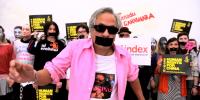
For the past few years around election time in Serbia, people have taken to the streets to protest government corruption, attacks on free press and voter suppression. This Spring, despite a nationwide lock-down to combat the COVID-19 pandemic, activists are finding new ways to protest the country’s increasingly-repressive government.
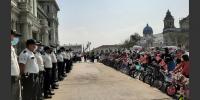
Non-profit organizations and a multitude of Guatemalan girls protested together demanding justice and security from the government. Guatemala's insecurity and cases of girls' disappearances have increased over the years. The protest started outside the Government Ministery (Ministerio de Gobernación) early in the morning, where protestors gathered riding their bikes.
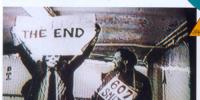
This is Marina Abramović's first attempt to interact with the audience on the spot, allowing the audience to become part of her work. Guns, bullets, kitchen knives, whips and other dangerous items), the audience can use any item to do whatever they want to her. Due to the unpredictable danger of the work, Marina promised to take full responsibility for the performance of the performance art.
"The Surveillance Camera Players (SCP) is a small, informal group of people who are unconditionally opposed to the installation and use of video surveillance cameras in public places.
Earlier this year Chinese dissident artist Ai Weiwei recorded a gangnam style video, dancing handcuffed, sending a message to the Chinese authorities who responded by banning the video as soon as it came online. British-Indian artist Anish Kapoor
Sima Qian: China's 'grand historian' By Carrie Gracie BBC News, Beijing
Speaking truth to power has always been a high-risk strategy in China. Its rulers tend to prefer flattery, and writers who forget this do so at their peril. China's "grand historian" - 2,000 years ago - was one of many who have paid a terrible price.
In France, abstention, vote of protest, lassitude or violent reactions rise from all over the crisis of our "representative democracy ».
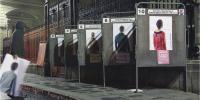
What about thinking the other way round ? What if we reappropriate the iconography of the election?
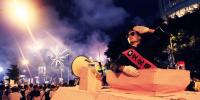
The Hong Kong 1 July protests are a surprising sight on the often chaotic stress. This day marks the transfer of Hong Kong from the United Kingdom to China (PRC) and is a public holiday it was originally thought to be a day of celebration. However, now it is mostly known for hundreds of thousands of people flooding the streets who protest for democracy, universal suffrage, and other political concerns.
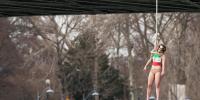
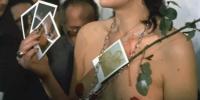
A Femen activist, Sarah Constantin, is hanged from a noose-like rope from a Paris bridge to call attention to the large number of executions in Iran as she stages a protest against visiting Iranian President Hassan Rouhani in Paris, Thursday, Jan. 28, 2016. A near-naked woman hanging from a noose-like rope from a Paris bridge has sent a message to visiting Iranian President Hassan Rouhani.
The resistance to Trump’s ICE militia is strong and is documented in the online art exhibition, “ABOLISH ICE” https://sites.google.com/view/abolish-ice/home The participating artists-activists are from New York, Connecticut, Pennsylvania, New Jersey and California.
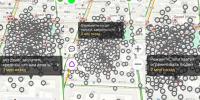
Russia is the midst of a strict COVID-19 lockdown. Although protesters cannot take to the streets, they are still holding mass demonstrations — digitally.
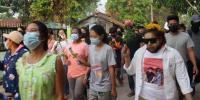
Opponents of military rule in Myanmar have marched, observed "flower strikes" and sought alternative ways to communicate after most users were cut off from the internet, undaunted by the bloody suppression of protests during the past two months.
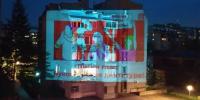
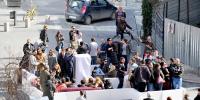
In a case of voter fraud, an investigation revealed that the party in power had won fifty votes from the residents of a single apartment.
A group of activists reproduced the apartment in a downtown square and invited 50 people inside.
The action took just one part of the case, literally brought it into three dimensions, and showed the absurdity that this could ever be legitimate.
The enforcement of city and state law pertaining to graffiti, advertising, and other signage has enormous power to visually shape public space. In New York City, enforcement is heavily skewed to ignore illegal commercial advertising, while simultaneously aggressively targeting graffiti and, in some cases, symbols of dissent.