On a sidewalk in the Village in downtown Manhattan, an African-American woman leans on her elbows and knees, wearing only black underpants. Scrawled in black marker all over her body are the words "Ain't I a Woman?"
Across the street, another woman lies face down, sunbathing on a large sheet of tinfoil. The sentence "White Supremacy Is Terrorism" is inked across her white skin, which is turning pink under the hot sun.
For Auli'i Cravalho, actions speak louder than words.
On Thursday night, the Moana voice actress stepped out for the premiere of Prime Video show The Power. There, the 22-year-old decided to raise awareness on missing indigenous women and girls by wearing a red lipstick-made handprint across her mouth and face.
It’s almost no surprise that the Supreme Court overturning of Roe v. Wade happened this past week.
Since its enaction in 1973, there have been numerous occasions where politicians and people alike have tried hacking away at its success in reaffirming a women’s right to choose.
Alice Paul, along with Lucy Burns, joined the National American Woman suffrage Association (NAWSA) in 1912. They were allowed to take over the NAWSA Congressional Committee in DC but were given no office or funds. For months Paul and Burns fundraised and significantly increased awareness for the cause. On March 3, 1913 (the eve of President Wilson's inauguration) Paul organized a parade, unparalleled in the capital.
Driving along an ordinary dirt road, it's hard to miss the Goma Cultural Centre with its bright blue gate, emblazoned with the Congolese flag. "As you can see, we are proud to be Congolese around here," said Belamy Paluku, a volunteer manager at the youth centre.
In recent years, a fashion for painting the human figure has preoccupied the art world, with an emphasis on race, gender and other urgent social issues. Yet another pressing topic in America has been curiously absent from art: abortion, which became all the more timely when the Supreme Court overturned Roe v. Wade in June.
“Badass Indian Pinups” is a series of paintings by Indo-Canadian artist Nimisha Bhanot, that features paintings of Indian women being confident and sexually liberated.
SERIE A players are once again doing their bit to raise awareness for a campaign against violence to women.
They have teamed up with Italian organisation WeWorld Onlus, and will promote the cause at all ten Serie A matches this weekend.
Players will have red stripes on their cheeks as they play their matches.
The striking look seeks to promote WeWorldOnlus' Red Card to Violence campaign.
Beyoncé delivered an intensely, unapologetic celebration of Black and HBCU culture at the Coachella Festival 2 weekends in a row. Not only were her performances some of the best live performances to date but they sent a pretty significant message to the world.
Here are some assessments of this beautiful demonstration of Blackness and Black Girl Magic:
From BBC News:
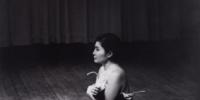
In Cut Piece—one of Yoko Ono’s early performance works—the artist sat alone on a stage, dressed in her best suit, with a pair of scissors in front of her. The audience had been instructed that they could take turns approaching her and use the scissors to cut off a small piece of her clothing, which was theirs to keep. Some people approached hesitantly, cutting a small square of fabric from her sleeve or the hem of her skirt.
In 2016, photojournalist Gulnara Samoilova was running a successful wedding photography business. Her diverse portfolio of work spans two decades — with images in the permanent collections of The New York Public Library, 9/11 Memorial Museum and Houston Museum of Fine Arts — but weddings had become her staple business. By the year's end, she'd decided to pack it in.
In a single hour, Beyoncé's Lemonade re-wrote the textbook definition of what a visual album should look like. The genre-bending music it introduced will define the struggles a generation was enduring in 2016, specifically for black women. The project transcends every definition pop has ever had; blending R&B, contemporary rock, country, reggae, soul and hip-hop in its 12 tracks, occasionally fusing several of these into a single song.
HIV is still among the top 10 leading causes of death in the world, ranking sixth with around 1.5 million deaths each year. Around 35 million people are currently infected with HIV, and cases are worryingly on the rise—it is far from old news. Determined to change this, a magazine has embarked on a bold new campaign in which 3,000 copies will be printed using ink mixed with HIV-infected blood.
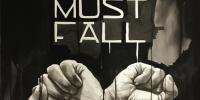
Daniel Hewson describes the use of protest posters and the work of collective, Burning Museum, and artist, Faith47, in the Fees Must Fall movement taking place in South Africa:
Despite the pushes to motivate more young girls into STEM (science, technology, engineering, and math) fields, women are still very underrepresented in almost every scientific field. Part of this motivation is because a lot of young girls would rather do something else.
Dozens of moms organized a breastfeeding protest at an Australian mall after nursing mom Luci White was asked to leave the food court.
White says she was finishing up her lunch at Bendigo Marketplace, about 90 minutes outside Melbourne, when her 7-month-old son, Zaydd, started crying for milk. White started nursing him, but other patrons, an older man and a mom of two, started to complain.
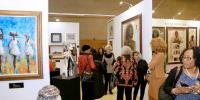
The International Harlem Fine Arts Show (HFAS) is the largest traveling African Diasporic art show in the United States. Inspired by the Harlem Renaissance, HFAS provides a platform for African Diasporic visionaries and American visual artists to exhibit and sell their artwork. The show also aims to create economic empowerment, educational opportunities and professional recognition within the multicultural community.
A project as expansive as the Guerrilla Girls Twin Cities Takeover is a first for them. Kicking off on January 21, the festival will comprise a series of events by 30 different groups, which will take place until March 6 at more than 20 arts and cultural organizations in and around Minneapolis/St. Paul. A network of local art activists will be mobilized, and the Guerrilla Girls have been working in tandem with the area’s youth groups to prepare.
Haiti is a conservative society where Roman Catholicism shapes many of its social norms. Patriarchal norms, says Haitian feminist Pascale Solages, co-founder and general coordinator of feminist organization Nègès Mawon, have informed its strict views on abortion. In Haiti, women can’t legally access voluntary abortions. Doctors can’t perform them unless the woman’s life is in danger.
This work addresses inequalities and disparities experienced specifically by LGTBIQ peoples in Spain. In the heart of this picture are six individuals dressed in queer fashion walking and linking arms. This is a powerful depiction. Usually, especially in a global context, it is unsafe for queer people to brave the streets alone. Here in Pozo’s work this represents pride without fear.
Brick x Brick is a public art performance that builds human “walls” against misogyny. It is organized by the Public Displays of Affection, a collective of artists, designers, educators and organizers that engages in nonviolent direct art action. During the wall performances, participants wear brick-patterned jumpsuits adorned with colorful brick patches bearing statements of misogynistic violence made by US President Donald Trump.
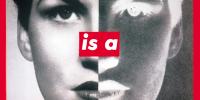
A woman’s head is bisected by a line that splits her face into positive and negative halves. Over the image, a commanding text, stated in the second person, reads: “Your body is a battleground.”
Ultra-Red is a collective founded by two AIDS activists in 1994 to explore the intersection of the political and aesthetic through "militant sound investigations".
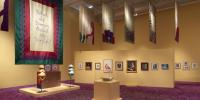
“Judy Chicago: Herstory” will span Judy Chicago’s sixty-year career to encompass the full breadth of the artist’s contributions across painting, sculpture, installation, drawing, textiles, photography, stained glass, needlework, and printmaking. Expanding the boundaries of a traditional museum survey, the exhibition will place six decades of Chicago’s work in dialogue with work by other women across centuries in a unique Fourth Floor installation.
WITH HER 2003 PROJECT UNTITLED, Andrea Fraser throws us an archetype of sexual and cultural identity. More than in her other performances, Fraser here works without the protection of a research-based script, a surrogate actor, or the remove that often characterizes analytical thinking. The central action in Untitled has Fraser and a male client of her US gallery meet for a session of sex and video recording in a New York hotel room.