In June of 1987, a small group of strangers gathered in a San Francisco storefront to document the lives they feared history would neglect. Their goal was to create a memorial for those who had died of AIDS, and to thereby help people understand the devastating impact of the disease.
Through her work, South African art activist Athenkosi Kwinana aspires to deepen the understanding of Albinism in her native country, where she has faced discrimination in most aspects of her life from childhood days on. Working with both drawing and printmaking, Kwinana creates large self-portraits that aim to constructively reimagine the representation of Albinism in the country’s black communities and African contemporary art as whole.
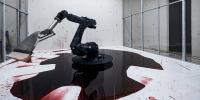
In 2016, the Guggenheim Museum commissioned its very first robotic artwork called Can’t Help Myself (Wannmann, 2016). The artwork is created by two of China’s most controversial artists Sun Yuan and Peng Yu and can be described as a robotic arm that has one specific, life-long duty: to prevent the deep-red, bloodlike liquid, which constantly oozes outwards, from straying too far (Weng, n.d.).
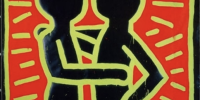
Keith Haring is known to be one of the biggest artists raising awareness for HIV and AIDS, considering he had also passed away from HIV. Starting his career covering ads with spray paint and chalk in subway stations in New York City, his work started trending and he became an activist for this cause.
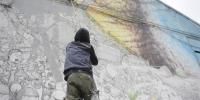
"Brazilian artist Mundano is used to spending his time on the road and in the streets, making art as an act of protest. Known for leaving his colorful works of graffiti on walls around the world, Mundano is especially dedicated to issues of environmental and social justice and spotlighting the overlooked work of Brazil’s trash collectors through his Pimp My Carroça campaign.
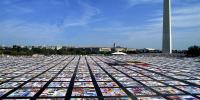
Cleve Jones's powerful vision for memorializing those lost to AIDS was realized in October 1987 in Washington D.C. It showcased the artistic contributions of people who'd lost loved ones to the virus from a number of US metropolitan centers. The quilt has continued to grow for the nearly 40 years since. By 1992, the AIDS Memorial Quilt included panels from every state and 28 countries.
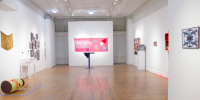
An oversized facsimile of Rush poppers, tipped over, pouring out its viscous contents: this example of underground gay iconography blown up to almost belligerent proportions perfectly represents the aims of Party Out of Bounds: Nightlife as Activism Since 1980, a new exhibition at La MaMa’s La Galleria. The group show, curated by Emily Colucci and Osman Can Yerebakan, gathers together works by a small yet distinct menagerie of queer artists.
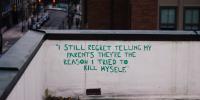
"What I Couldn't Say in Public" transforms individual secrets into a public, anonymous spectacle.
While origins and exact location of the "What I Couldn't Say in Public" project are unknown, awareness about the project has grown over the micro-blogging platform of Tumblr. Amassing over 132,480 notes on the website, this practice may have possibly inspired others to imitate the same or similar projects in different locations.
Sunaura Taylor is an artist, writer and activist. Through painting, printmaking, writing and other forms of political and artistic engagement her work intervenes with dominant historical narratives of disability and animal oppression. Taylor's artworks have been exhibited at venues across the country, including the CUE Art Foundation, the Smithsonian Institution and the Berkeley Art Museum.
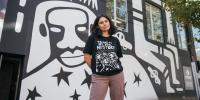
Asian Americans standing up for themselves, the Black Lives Matter movement, and their home: New York City
In 2020, as COVID-19 flared through New York City and NYC hospitals saw a spike of nearly 200,000 patients, Asian and Pacific Islanders (APIs) faced an added threat: blame, racism, and xenophobia.
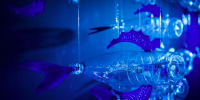
New Zealander artist George Nuku has presented his latest work as an installation that imagines the state of the world's oceans 100 years in the future where plastics have totally changed the marine environment.
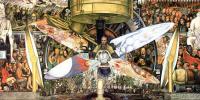
In 1932, Rivera was commissioned by Abby Aldrich Rockefeller and her husband John D. Rockefeller Jr. to paint a mural for the lobby of Rockefeller Center. Rivera kept the original, approved plan for the two outer sides of the mural but changed the inner panel to include a critique capitalism. This inner panel ultimately included: Lenin, prostitutes, and the upper class drinking alcohol and covered in signs of venereal disease.
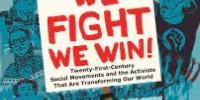
Greg Jobin-Leeds, a long-time social activist, collaborated with AgitArte, a collective of artists and organizers, to capture the stories of today’s social movements and the activists behind their success with the release of When We Fight, We Win: Twenty-First-Century Social Movements and the Activists That Are Transforming Our World.
Josep Renau Berenguer was a Spanish painter, photomontager, muralist and communist militant.
Renau was the son of an Art teacher. Due to his father’s low income, he had to work various jobs during his youth and teenage years to maintain a middle class position.
IMAPCT are youth activists who view the creative arts and leadership training as a way to develop ourselves and change the world in a positive way. They believe that they must be the message that bring through hardwork, focus, discipline, unity and the principles of S.O.S. safe space, outstanding effort and service to their family friends and community.
The sneaker brand Converse has commissioned an indigenous artist in Australia to create a gigantic mural with a surprising twist. The Melbourne mural plays homage to indigenous urban identity and was painted with a special type of pollution-absorbing paint that “cleans the air,” according to the agency behind the project, Amplify.
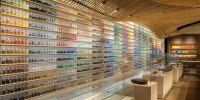
Established in 2015 in the Tennōzu neighborhood of Tokyo, and attracting industry professionals and art enthusiasts from both Japan and abroad, PIGMENT TOKYO has emerged as an art supply store specializing in the materials and tools used in traditional Japanese painting, such as mineral pigments, washi paper, and brushes. However, it’s more than just a store.
Amongst the European network of cultural institutions there has been widespread recognition that the climate crisis is a cultural crisis. In 2019 members of the European Theatre Forum convened and adopted the Dresden Convention, a revolutionary text that aimed to lower the carbon footprint and better the sustainable practices of the theatre and cultural sector at large.
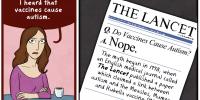
"Vaccines Work. Here Are the Facts." is a short web comic by Maki Naro explaining "The risks, the misinformation, and the science behind history’s greatest life saver."
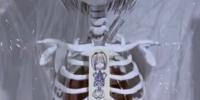
A unique piece captured significant attention at the Central Academy of Fine Arts undergraduate graduation exhibition in June. The work featured an "anime-style" girl's skull linked to a human skeleton and internal organs, all encased within a thin film. As visitors entered the exhibit area, her breathing and gaze would alter accordingly.
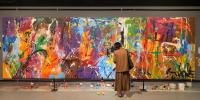
At a gallery within a shopping complex in the South Korean capital, a couple saw paint cans and brushes at their reach and use next to what was actually a finished portrait worth hundreds of thousands of dollars. Thinking the available paint and brushes was a signal to be a part of the art, they ended up technically vandalizing the artists' work.
As the female gaze comes to the fore, artists are beginning to examine and explore the possibilities of what exists, what it is to be a woman looking at the world outside of her self. For American artist Dani Lessnau, the gaze opened the door into uncharted realms in search of the things that a camera can capture that the human eye might otherwise miss.