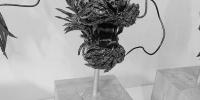
In 2016, Zhou Zhenfeng, who was a student at a college in Hebei at the time, discovered that there were a lot of waste tires in the streets and alleys. Zhou Zhenfeng learned that tires are made of infusible or refractory polymer elastic materials. It takes hundreds of years for these materials to decompose in the soil to the extent that they do not affect the growth of plants.
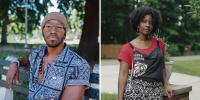
Through their podcast, The Dance Union, Melanie Greene and J. Bouey have been confronting racism in the dance world, and highlighting the experiences of Black artists, since 2018. Their episodes cover a variety of topics and issues, ranging from mental health and sexual harassment to advocating for fair pay.
For the past five years, we’ve screened SIMA juried films in communities and classrooms across six continents and witnessed an increasing demand to use the inspirational force of documentary filmmaking to build a global digital community around today’s most pressing issues.
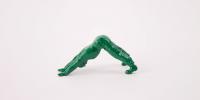
If something is a total opposite to war, that is the practice of yoga. Concentrating or relaxing your muscles and mind in order to release tension, is something a soldier would never have the luxury to do under the dangerous circumstances of war.
Inventor Dan Abramson thought of a amazingly creative and beautiful way to connect the two, by creating “Yoga Joes”, a series of simple green plastic army men that have some killer… yoga moves.
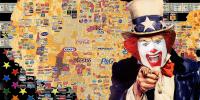
Ever get to thinking about how a food desert can pop up in the middle of a major city? One major reason is corporate fast food and manufactured goods. Food deserts are defined as urban neighborhoods and rural towns without ready access to fresh, healthy, and affordable food.
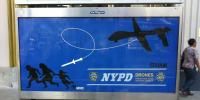
On Sunday, September 16th at around 1am, a white van—labelled with “Van Wagner’s” blue logo and topped by a yellow strobe light—circled through permanently lit Times Square. Inside the vehicle, the driver and passenger, both dressed as construction workers, were nervous. They had just vandalized one kiosk a few yards away from an NYPD tower, now they were about to hit another one right underneath the nose of a large white NYPD security camera.
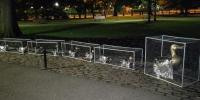
Alzayer put cages around Boston's "Make Way for Ducklngs" statues, separating the baby duckling statues from the mother. The original statues were created in 1987 by Nancy Schon and the mallard family is based on the children's book by Robert McCloskey.
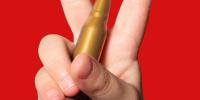
The installation consists on providing postcards to gallery visitors that they can use to mail their Elected Officials to advocate for gun control. The front of the postcard shows the photograph “Mommy, what is this?” (2018), which is the hand of Ileana's son, Lucca, holding a toy bullet while making the peace sign. The back of the postcard contains a short letter with the phrase “No more children should die from gun violence.
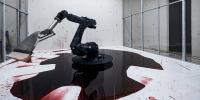
In 2016, the Guggenheim Museum commissioned its very first robotic artwork called Can’t Help Myself (Wannmann, 2016). The artwork is created by two of China’s most controversial artists Sun Yuan and Peng Yu and can be described as a robotic arm that has one specific, life-long duty: to prevent the deep-red, bloodlike liquid, which constantly oozes outwards, from straying too far (Weng, n.d.).
DOHA — In an interview with the Paris Review in 1993, the late Toni Morrison once said,
I think of beauty as an absolute necessity. I don’t think it’s a privilege or an indulgence. It’s not even a quest. I think it’s almost like knowledge, which is to say it’s what we were born for.
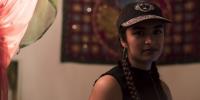
Khushboo Kataria Gulati lights an off-white candle and passes the flame to a switch of sage, casting a spell around the purple-lit room as she places paintbrush to canvas. The herbaceous smoke billows around her, time suspends and her paint strokes create a scene of three multicolored faces surrounded by plants.
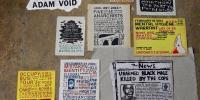
The prints exhibited June 2013 at Firestorm in Asheville NC, will comprise two separate bodies of work; Chelsea Ragan’s combination screen print / woodblock print / painting / drawings graphically detail police shootings of young black males from across the country, and Adam Void’s hand-painted screen prints state the facts of important national news stories that have been swept under the rug of mainstream corporate media.
The artist conceived the project as a collaborative exhibition featuring five art-as-response pieces to the student loan crisis and the pressure it causes upon graduates. In its original version, Öğüt invited Natascha Sadr Haghighian, Superflex, Dan Perjovschi, Martha Rosler to present sculptures as collection points for public contribution to The Debt Collective, a student-debt canceling initiative launched by Strike Debt's Rolling Jubilee.
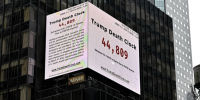
Donald Trump has been accused of personally causing the deaths of 40,000 Americans through his “reckless” handling of the Covid-19 pandemic, in a new website launched on Wednesday under the provocative title Trump Death Clock.
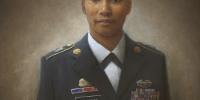
On completion the 100 Faces project will consist of 100 Portraits of Americans who have been to the theaters of war in Iraq or Afghanistan (OEF,OIF). Each portrait is accompanied by a placard featuring a statement written by the person pictured and a brief biography of the person pictured. The biographical information and the statement reflect the person at the time of the creation of the portrait.
Graffiti art is particularly viewed as a powerful form of social protest, and the (illegal) act of defacing can be as important as the message itself. Artist Void One has been arrested on numerous occasions for his politically-charged interventions.
“I didn’t set out to make political art but art is a platform where I can vent my frustrations” – Void One.
It all began during Claudia's final art project at the London College of Communication, where she delved into the issue of "sexual objectification of women," a topic close to her heart as she navigated her womanhood.
In 1978, while studying print-making in Hamburg, Gavin Jantjes was deemed a persona non grata by South Africa. His crime? Creating a series of prints that documented the violence and discrimination in the apartheid state, which he gathered together under the tongue-in-cheek name of a "colouring book".
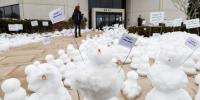
500+ snowmen appeared outside the office of Senator Chuck Schumer in Melville Monday, Feb. 15, 2021. The snowmen appear to be placed there by climate activist @pricecarbonplz. (Source: Newsday, https://www.newsday.com/long-island/photos-of-the-day-1.50139710)
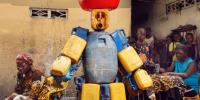
“So dramatic, so strong, so visual,” artist Stéphan Gladieu said of his first encounter with the revival of an ancestral folk art movement in Kinshasa, Democratic Republic of Congo. Kinshasa is the capital of Congo but also one of the many places American and European countries send their waste.
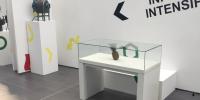
How did a pineapple become a postmodern masterpiece?
The aesthetic merits of tropical fruit inadvertently entered Britain’s national cultural conversation after two students jokingly placed a store-bought pineapple on an empty table at an art exhibition this month at Robert Gordon University in Aberdeen, a port city in northeastern Scotland.
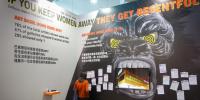
For more than 30 years, the Guerrilla Girls have travelled the world exposing sexism and inequality in the art industry, and this week they proved Hong Kong was no exception.
Three members of the anonymous feminist collective—calling themselves Frida Kahlo, Käthe Kollwitz and Zubeida Agha—spoke at the University of Hong Kong on Monday, dressed in their signature black outfits and gorilla masks.
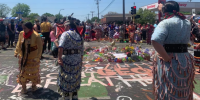
Indigenous people in Minneapolis supporting Black Lives Matter cite similar struggles
Jingle dress dancers held a ceremony at the intersection of 38th Street and Chicago Avenue in Minneapolis on Monday, the place where George Floyd was killed by police last week.
This piece is fascinating because of its use of just a few words and country names, muted colors, and the recreation of famous art. The artist used this canvas to depict a concern about events happening in the Gaza strip.
National Public Radio (NPR):
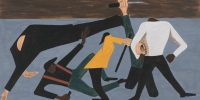
There's no historical marker outside Jacob Lawrence's childhood home in New York City's Harlem neighborhood.
But Khalil Gibran Muhammad, director of the Schomburg Center for Research in Black Culture, has an idea of what it might say: "Here lived one of the 20th century's most influential visual artists, a man named Jacob Lawrence, who was a child of southern migrants."