“As an educator, I want people to have a sense of empowerment. I want them to have ownership of their own creative experience. It’s a very humane thing knowing we are inherently creative.”
"A few months ago artists John Peña, Jon Rubin, and Dawn Weleski opened Conflict Kitchen, a take-out restaurant that only serves cuisine from countries that the United States is in conflict with. Nowadays the Iranian food is served at the counter. More precisely, the kubideh, a dish made of grilled ground meat in freshly baked barbari bread with onion, mint, and basil.
The Resistance Arts Trust Political Action Committee is a Super PAC with the mission of challenging great Artists to create public works of political art meant to inform communities, start conversations and drive media coverage on progressive issues, and empowering artists and the arts to a greater role in American political discourse.
In this short documentary, Latinos grapple with defining their ethnic and racial identities
http://www.nytimes.com/2016/02/29/opinion/a-conversation-with-latinos-on...
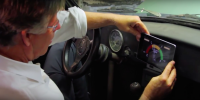
It took 17 high schoolers, eight mentors from Kansas City and a 1967 Volkswagen Karmann Ghia to create the first ever social media powered car.
The concept was to bring MINDDRIVE to life with tweets, posts, shares and likes which were monitored by an Arduino device. This open-source, single-board microcontroller triggered the vehicle’s motor based on the number of tweets and posts about the project.
"Turkish past, Ottoman present" and "Spengler in Turkey"
105 NY-110, Melville, NY 11747
August 5, 11 am – August 30, 7 pm
Monday – Friday, 11 am – 7 pm, free admission
Please write to racc.ny@mail.ru or call (347) 662 1456
The artist is available for interviews
The term “Afrofuturism” was coined in the 1990s by the cultural critic Mark Dery, who recognized a preoccupation with the future in the work of a number of black artists. Ever since, it has remained a term that is retrospectively applied to seemingly disparate artists, from Missy Elliot to Toni Morrison. What unites the movement is a shared fascination with the black experience, particularly in America.
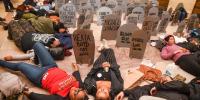
A group of Chicago youth staged a “die-in’ at City Hall to demand that the city defund police and fund marginalized communities instead. The youth, all members of #NoCopAcademy, also announced that the organization is suing Mayor Rahm Emanuel for withholding critical emails regarding construction of the proposed $95 million building for a Police and Fire training center in West Garfield Park.
From Public Delivery:
"The art piece, which was showcased at the Flashpoint Gallery in Washington D.C. from February 1 to 17, 2019, allowed visitors to interact with it. The audience had a pile of crumbs placed right in front of the three-walled setup, which they would through and watch as ‘Ivanka’ vacuumed them all up.
It all started a few months ago, when the Minneapolis Institute of Art got a phone call from Valerie Castile.
Castile is the mother of Philando Castile, the 32-year-old black man who was shot and killed by a police officer in 2016. Valerie Castile has since founded the Philando Castile Relief Foundation, which helps victims of gun violence.
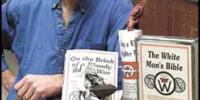
The Creativity Movement (formerly known as the World Church of the Creater) is a self proclaimed white supremacist organization with factions across the United States. In 2004, a high ranking leader of the Montana based faction defected from the group, but not before donating over 4,000 of the group's bibles called the 'RAHOWA' (acronym for racial holy war) to the Montana Human Rights Network.
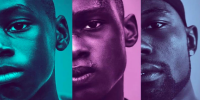
The latest Academy Award for Best Picture was earned by a film depicting the story of a poor, gay, black boy in South Florida. Moonlight, by director Barry Jenkins, has achieved great recognition for its beautiful and honest depiction of a storyline which challenges itself at every turn.
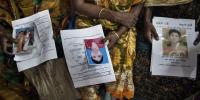
On April 24, 2013, more than 1,000 lives were taken in the Rana Plaza Collapse. While history remembers this tragic event as the deadliest garment factory accident, activist and photographer Taslima Akhter reveals a story of dreams crushed by structural murder. Dedicating her career to the lives and struggles of garment workers in Bangladesh, she has continued to foster a community rallying together for safer working conditions.
The Survivaball made its first appearance in 2006, when "Halliburton representatives" attended a conference on catastrophic climate change and demonstrated the functionality of the large inflatable suits ("a gated community for one"), which keep corporate managers safe from global warming. Not long afterward, in Berlin, the Yes Men learned they also work as disruptive, arrest-resistant tools.
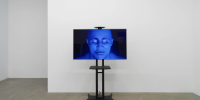
If you assign no sound to the redaction in I'm Blue (If I Was █████ I Would Die), it has the same amount of syllables as its referent, the first line of the chorus from Eiffel 65's 1999 chart-topping single, I'm Blue. The last word in that line is spelled out "da," but when you listen to Jeffrey Jey's compressed scatting, it sounds more like "die."
"I decided to shoot pictures of men who made comments to me on the street. I had always hated this invasion of my privacy and now I had the means of my revenge. As I walked along Houston Street with my fully automated Nikon, I felt armed, ready. I passed a man who muttered ‘Wanna fuck?’ This was standard technique: the female passes and the male strikes at the last possible moment forcing the woman to backtrack if she should dare to object.
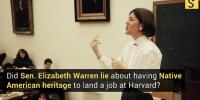
WASHINGTON ― Sen. Elizabeth Warren (D-Mass.) was positioned to make a strong bid for president in 2020, but she infuriated tribal leaders by releasing the results of a DNA test to prove her Native ancestry and now her future is unclear.
"One morning, when JR awoke, an image lingered from his dreams: The wall along the U.S.-Mexico border, and above it a young kid peering curiously over. A child just 1 year old, who has "no idea that's a wall that divides people — he has no idea of the political context," JR imagined.
Drake has released an emotional video for "God's Plan" in which he donates the music video budget to people in need.
Shot in Miami and directed by Toronto's Karena Evans and Jordan Oram, the video features a bunch of generous, grand gestures.
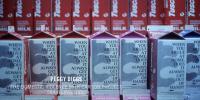
Peggy Digg’s The Domestic Violence Milk Carton Project consisted of an image printed by Tuscan Dairy Farms on over one million milk cartons, which were distributed during January and February of 1992 throughout New York, New Jersey, Connecticut, Maryland, Delaware, and Pennsylvania. This wide-reaching project sought to both raise awareness of domestic violence and distribute a helpline.
Artist and activist Favianna Rodriguez recently teamed up with Pharrell Williams' I Am Other YouTube Channel to create a moving new documentary series titled "Migration is Beautiful." Addressing the debate surrounding immigration policy in the United States and the overall perception of immigrants, the three-episode project focuses on the growing influence of artists in the political realm.
From March 29 to April 28, 2012, artist Angel Chen transformed Toronto's Whippersnapper Gallery into a pop-up call centre to field questions on the financial crisis. Phone lines were manned by passers-by, volunteers and guest operators, all of whom solicited callers for discussion about the current economic climate.
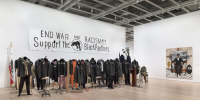
Henry Taylor (born 1958) is an American artist and painter who lives and works in Los Angeles, California. He is best known for his experimental figurative paintings and exploration of contemporary and relevant historical social issues. Taylor rewrites art history, often with art historical references, to amplify Black people who have been overlooked or undermined by the canon and systems of power and control.