Gum Election
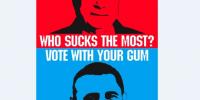
Gum Election is a guerilla art project which started in New York City in October 2008. It encouraged people to vote during the presidential election in 2008 and also not to spit out their chewing gum carelessly on New York Cities already dirty streets. Now the Gum Election is back and New Yorkers are voting again “who’s sucking the most”.
The link between early trauma and ill health later was untilled soil in the world of medicine. But the possibility of a connection captured the interest of the Centres for Disease Control and Prevention. And it was the beginning of a 25-year odyssey for Vincent Felitti when he teamed up with researchers to study the health of 17,000 members of a preventive care program at Kaiser Permanente, a private insurer.
A collective endeavor of Greek antiquity — no less than eighty different artists worked on the frieze alone — the Parthenon was built between 447 BC and 438 BC under the orders of Pericles, following a democratic debate, and overseen by the sculptor Phidias. It measures ten meters high and approximately seventy meters long by thirty meters wide.
Most nights since a coup returned Myanmar to military rule on Feb. 1, a spectral symbol of protest has glowed on a mildewed side of a building.
Where the next illumination will appear in Yangon, the country’s biggest city, is a mystery. But, suddenly, a projected image appears in the dark. Three fingers raised in a rebellious pose. A dove of peace. The smiling face of Daw Aung San Suu Kyi, whose government was ousted in the army putsch.
This month’s blast of arctic air may have roused climate-change skeptics. But the composer Laura Kaminsky and the painter Rebecca Allan were unfazed. Holed up in their apartment in Riverdale in the Bronx on one of the coldest days in decades, these longtime artist-activists were doing what came naturally: fighting the planet’s warming.
Celeste Caeiro, who on April 25, 1974, handed out red carnations to soldiers on their way to ending a 40-year right-wing dictatorship in Portugal, a spontaneous patriotic act that gave a largely bloodless coup its name, the Carnation Revolution, and her an enduring appellation, “the Lady of the Carnations,” died on Friday in Lisbon. She was 91.
A photography project on China's marriage market has recently reignited the debate about marriage in China, and the phenomenon of women deemed too old to marry, or "leftover women" in the country.
Activism through print media is often done through duplication: posters, flyers, magazines, manifestos. But with these media, each individual duplicate holds the same, political message.
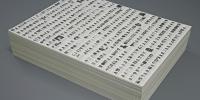
In Felix Gonzalez-Torres's "Untitled" (Death by Gun) (1990), a stack of posters are placed in the gallery space for people to take with them. As the pile is depleted, more posters are printed.
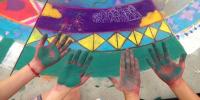
Street Art Projects brings talented visual artists to public events, community groups, and schools, to offer a window into the creative process. Our workshops and projects combine chalk art with story telling, encouraging a deeper understanding between different cultures through the creation of collaborative public artworks. The work is not just about public art, its about making a public places as a focal point for education.
Woman Spent 15 Days And Nights Occupying IKEA
A woman, with the help of Portuguese creative agency TBWA Lisboa, went on 'protest' at an IKEA store in Portugal.
Called ‘Occupy IKEA’, the movement was to urge IKEA to set up a store in Madeira.
The woman spent 15 days and nights living in IKEA, setting up a live blog and a reality TV show about her days of protesting in the store.
Can you finish the lyric? “Your driver could be LGBTQ, Your Tailor could be LGBTQ,…” If you can’t, you may be a part of the majority who doesn’t know about the song Wo Fie. However, for those in the LGBTQIA+ community, and followers of Ghanaian musician Angel Maxine, the song has become a Pride month anthem.
Wafaa Bilal’s brother, Haji, was killed by a missile at a checkpoint in their hometown of Kufa, Iraq in 2004. Bilal feels the pain of both American and Iraqi families who have lost loved ones in the war, but the deaths of Iraqis like his brother are largely invisible to the American public.
Independent producer and longtime WWNO collaborator Eve Abrams brings us Unprisoned: Stories From The System. From New Orleans and Louisiana, the world’s incarceration capital, we meet those serving time inside and outside the criminal justice system.
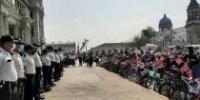
Non-profit organizations and a multitude of Guatemalan girls protested together demanding justice and security from the government. Guatemala's insecurity and cases of girls' disappearances have increased over the years. The protest started outside the Government Ministery (Ministerio de Gobernación) early in the morning, where protestors gathered riding their bikes.
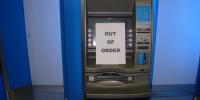
On the 6th February 2013, 40 activists across 6 states plastered 110 ANZ ATMs with 'Out of Order' notices, sharing them on social media the following day. The objective was to use a hoax style action to exploit mainstream media sensitivity around ANZ Bank's unethical funding of fossil fuel projects that had been generated by Jonathan Moylan's Whitehaven Hoax a week earlier.
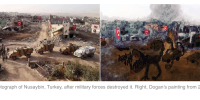
The Kurdish journalist and artist Zehra Doğan was freed yesterday after nearly three years in prison, Hyperallergic reports. Doğan first caught the attention of the Turkish authorities back in 2017 with a watercolor that depicted a Kurdish district after Turkish security forces set it on fire and largely destroyed it.
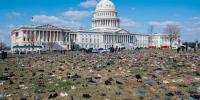
WASHINGTON -- Thousands of shoes were laid outside the Capitol in Washington, D.C., on Tuesday to represent children who have been killed by gun violence. Avaaz, an international advocacy group, planned the demonstration to honor victims killed since the massacre at Sandy Hook Elementary School in 2012.
A source of delicious egg creams and daily newspapers since at least the 1930s, an unassuming shop at the corner of St. Marks Place and 2nd Avenue was renamed Gem Spa in 1957 and swiftly transformed into a meeting ground for generations of downtown artists, musicians, poets, and activists.
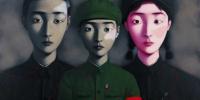
The immediate prototypes of Zhang Xiaogang’s Big Family series are formal group photographic portraits from the 1950’s and 60’s, including those of Zhang’s own family, a source of the painter’s “endless reveries.” From these old black-and-white pictures Zhang Xiaogang derived the series’ paradigmatic features: a subdued, nearly monochromatic palette; a thickly layered but flat surface, without overt evidence of brushwork; a general compositional restric
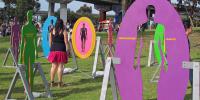
The humorously critical project offered people an opportunity to compare themselves to the supermodel silhouette: face to face in the imaginary impression of a mirror, or at real physical scale.
The idea was born out of a serious concern with the publicized woman's body - our social obsession with thin ideals - that falls nowhere close to average or, for the majority of the population, healthy.