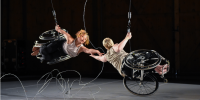
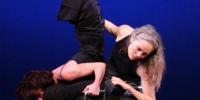
"Rainer’s early choreography celebrated, among other things, ordinary movements: the expressive capacities of kneeling, of shaking your head, of rolling on the floor. And when she went through periods of sickness, those movements became an even more important part of her repertoire. In her 1966 Hand Movie, an 8mm film she shot on her sickbed, we see a dance she choreographed for just her hand, while her body rests.
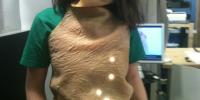
Memetro is a non-profit cultural organisation, which has developed a web application for smartphones for all people who have a transitory memory upset. The term ‘memetro’ is a merging of two concepts‘Meme’ from the Spanish expression, and the film ‘Memento’. People with TMG (Transitory Global Memetro) very often forget to validate their ticket of public transport, especially on the subway.
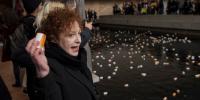
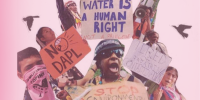
Anti-opioid activists unfurled banners and scattered pill bottles on Saturday inside the Sackler Wing of the Metropolitan Museum of Art in New York, which is named for a family connected to the powerful painkilling drug OxyContin.
The protest, which was organized by a group started by the celebrated photographer Nan Goldin, started just after 4 p.m., when several dozen people converged at the Temple of Dendur inside the wing.
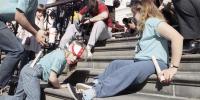
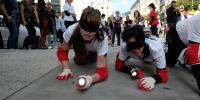
Conquest is a compelling new collective performance conceived by acclaimed artist Pope.L (b. Newark, 1955). It is inspired by his iconic solo crawls, where the artist dragged himself across a number of different urban landscapes. Navigating the streets and parks of Downtown Manhattan, Conquest extends this irreverent and provocative forty-year tradition of public performance with an ambitious group crawl involving over 140 volunteers.
These two works on canvas were made with my own blood, using the severed distal phalanx of my index finger as the painting instrument. They are connected to my solo anti-war action in Copenhagen in September 2026.
Their central messages are “No to War!” and “Peace & Love!” The index finger—the finger used to pull a trigger—became the central symbol of my refusal to participate in aggression and the killing of other people.
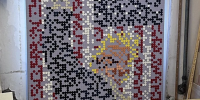
A blind artist has unveiled an image of Donald Trump in Braille dots, which spell out his conversation with Secret Service agents following the assassination attempt in July 2024.
Seconds after the shooting in Butler, Pennsylvania, agents tried to move Trump to safety, but he demanded to retrieve his shoes and then paused to make a fist pump gesture.
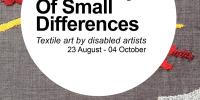
An exhibition of textile-based work by disabled artists, organised in protest at the inaccessibility of an exhibition by a popular artist, when it came to Leeds.
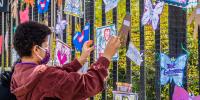
In May 2020, a team of artists, activists, folklorists, and people who lost loved ones to Covid-19 came together to make monthly memorial sites in New York City to remember victims of the Covid-19 pandemic. They continued installing memorials around New York City every month during the summer of 2020.
Fabled Asp is a multimedia online archive that documents forty years of activist history and creativity. Disabled lesbian activism is a radical assertion of self in the face of societal stigma and marginalization. The project illuminates the myriad ways disabled lesbians have been moving against invisibility through civil rights actions, theater, dance, sports, and visual arts.
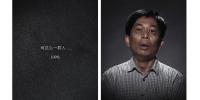
Pneumoconiosis has become the most serious occupational disease in China, and the vast majority of sufferers, nearly 6 million, are migrant workers. Because of the long-term inhalation of dust caused by pulmonary fibrosis, they usually breathing if not oxygen machine help, easy to suffocate.
Earlier this month, an anonymous message was posted to the discussion-board Web site 4chan. In it, the author threatened to hurt the video-game developer Zoe Quinn: “Next time she shows up at a conference we … give her a crippling injury that’s never going to fully heal … a good solid injury to the knees. I’d say a brain damage, but we don’t want to make it so she ends up too retarded to fear us.”
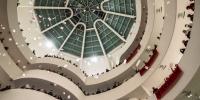
The scraps of paper swirled through the Guggenheim Museum in New York on Saturday night like confetti, thrown from an upper walkway into the central rotunda before floating to the ground.
Ron Krielen is a social designer and a taxi driver. He spent five years driving a taxi for elderly and disabled people. En route, he would get to know them and their individual situation. He realized that this kind of personal contact gave him a better insight into possible solutions than many of the healthcare providers who were actually assigned to each case.
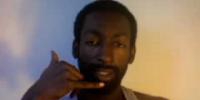
I met Antoine in 2012, when I first found out I was going deaf, and attended my first ASL Meetup in San Francisco. At that time I was only moderately hard of hearing (HOH), and had no idea what was to come. I didn't stay in the San Francisco Bay Area long to get too involved in the Deaf community.
Zimmerman a composer who uses art, dance, tech, and even robots in his shows. You might call this interdisciplinary. Wagner called it total art, or gesamtkunstwerk.
The protagonism of the body in the dramatization of marginalized groups is also central to Emilio García Wehbi's Proyecto Filoctetes, an urban intervention staged November 15, 2002, on the streets of Buenos Aires. The project consisted in placing twenty-five lifelike latex mannequins in central, highly trafficked locations around the city in varying positions of injury, physical distress, and abandonment.
Play Safe is a documentary film series created and directed by NYU alum Eddie Einbinder. The film, much of which now appears for free on YouTube, was originally released in 2013 after being filmed between 2011 and 2012. It debuted at the International Harm Reduction conference in Vilnius, Lithuania in 2013.
Sara Hendren is an Enabler. Hendren's writing, research, and "knowledge-building" propels conversations of ability and disability in such a way that activates a creative dialogue as well as provides a scholarly basis for cultural critique.
The user muchachafanzine on instagram is an activist who writes a "decolonial native xicana feminist fanzine". They are an online activist and they spread their message through their page, the zine, and through merchandise. Daisy Salinas began Muchacha Fanzine as a feminist punk zine in 2011. Over the years, Muchacha has grown into a larger, submission-based compilation of work by marginalized voices from around the world.
On Sept 21, 2017, the professional committee of dementia and related diseases of China geriatric health association, together with many caring enterprises, jointly launched a public welfare activity entitled "no longer forget", hoping to call on the public to pay attention to Alzheimer's disease and promote early screening.
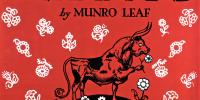
On a damp and rainy Sunday in October of 1935, Munro Leaf sat down to write a story. He had been eager to work with his friend – the illustrator Robert Lawson – for some time and so he decided to pen a book which he felt might suit the illustrator’s skills. Lawson was a master at drawing animals but horses, dogs, cats, rabbits and mice had all been done a thousand times already.
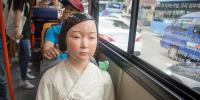
Buses serving several routes in central Seoul have acquired a new and highly controversial passenger: a barefoot “comfort woman”, wearing a traditional hanbok dress with her hands resting on her knees.