After being contacted by a member of the Occupy Wall Street Alternative Banking group , illustrator Marc Scheff agreed to do a few drawings for a deck of cards depicting some of the people and institutions responsible for causing the Great Recession.
Play Safe is a documentary film series created and directed by NYU alum Eddie Einbinder. The film, much of which now appears for free on YouTube, was originally released in 2013 after being filmed between 2011 and 2012. It debuted at the International Harm Reduction conference in Vilnius, Lithuania in 2013.
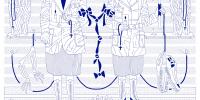
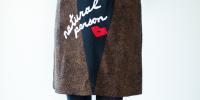
Shift Change Dress is a community fashion & art project that utilizes a shift dress sewing pattern as a medium for communication and action. Participants are encouraged to use the pattern as a blank canvas for their art or message and to share their work with the community.
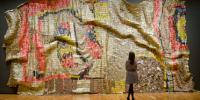
The first solo exhibition in a New York museum by the globally renowned contemporary artist El Anatsui, this show will feature over 30 works in metal and wood that transform appropriated objects into site-specific sculptures.
Khushboo Kataria Gulati lights an off-white candle and passes the flame to a switch of sage, casting a spell around the purple-lit room as she places paintbrush to canvas. The herbaceous smoke billows around her, time suspends and her paint strokes create a scene of three multicolored faces surrounded by plants.
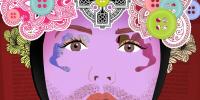
Daniel Arzola, a digital artist and activist originally from Maracay, Venezuela, began his series, 'No Soy Tu Chiste' ('I Am Not A Joke') in 2013 intent on combating the stereotypes and cruelty so often facing LGBT identifiers; youth in particular. The project went viral in 2014, around the same time it teamed up with the It Gets Better Project based in the United States.
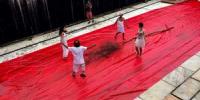
A site-specific art intervention intended as a call to action in response to Brazil's water crisis. Strategically planned to coincide with UN World Water Day, Gota D'Agua gathered onlookers around an abandoned Olympic size swimming pool at the foot of Edificio Raposo Lopes, a towering luxury condominium building situated on a steep incline overlooking Rio de Janeiro.
This is a prime example of the marriage of art and activism. The Silence = Death poster is simple but extremely powerful representation of the obstacles the AIDS movement was facing (suppression of gay people + their problems, lack of awareness surrounding the pandemic).
The image is stark. And shocking.
A black man, his ankles shackled, his head hanging away from the viewer, stands in relief on a field of white. Chains stretching to the image's borders on the left and right pull his arms taut. Fourteen crimson marks crosshatch his back. Within the dark fabric that frames "86 Lashes to Go," a small rectangle is labeled simply "salt."
"Denial of Family Values, Gay and Anti-gay Propaganda in Russia"
105 NY-110, Melville, NY 11747
June 3, 11 am – June 28, 7 pm
Monday – Friday, 11 am – 7 pm, free admission
Artist talk – June 28, 2 pm
Please write to racc.ny@mail.ru or call (347) 662 1456
The artist is available for interviews
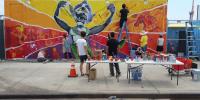
The sneaker brand Converse has commissioned an indigenous artist in Australia to create a gigantic mural with a surprising twist. The Melbourne mural plays homage to indigenous urban identity and was painted with a special type of pollution-absorbing paint that “cleans the air,” according to the agency behind the project, Amplify.
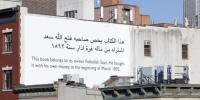
Recurrent themes in Emily Jacir's practice—which spans a range of strategies including film, photography, interventions, archiving, performance, video, writing, and sound—are silenced historical narratives, resistance, movement, and exchange.
Thrive Collective mobilizes students, parents, artists, and community stakeholders to partner with public schools for transformational change. They function both as a matchmaker and direct service provider of arts and mentoring programs that cultivate the character and competencies necessary for students to thrive in today’s world.
During the public vacation of May Day, also called International Workers’ Day, “For People, Food is the First Necessity: Qiu Zhijie’s Writing in a Market” was launched at the crowded Sanyuanli market in Beijing.
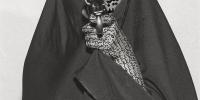
Shirin Neshat’s Women of Allah is a photographic series exploring the complex identities of Muslim women in post-revolutionary Iran. Combining black-and-white portraits, Persian calligraphy, and symbolic elements such as guns and veils, Neshat interrogates themes of martyrdom, violence, femininity, and resistance.
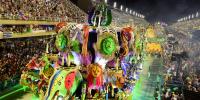
"A week-long party characterizes Brazil’s Carnival, the Mardi Gras of the southern hemisphere. Celebrations and parades are held throughout the country, most notably in the city of Rio de Janeiro and the Brazilian states of Bahia and Pernambuco. Carnival celebrations vary in length and content, depending on the area.
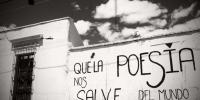
The Acción Poética movement is a literary phenomenon that began in Monterrey, Mexico in 1996. It was founded by Mexican poet Armando Alanis Pulido and involves painting and intervening abandoned walls in cities with fragments of poetry. The content is usually love poems or optimistic phrases. Also, some phrases refer to the current situation in the cities (though one of their rules is to not talk about politics or religious beliefs).
The Shifting View on Anthropofagia
Tarsila is closely associated with the establishment of the Brazilian art movement known as cultural “cannibalism,” or “Anthropofagia”: the then-radical idea that a truly Brazilian art would emerge by ingesting all the different cultures that intermingled within the country, rather than simply copying European styles.
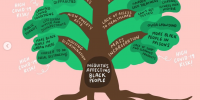
"When it comes to the effects of the virus on black lives, the roots run deep.
⠀⠀
This is one of the hardest illustrations I’ve ever done. Not because of the tree - but because of the overwhelming nature of the subject at hand. Seeing headlines like “Blacks are Dying at Higher Rates from Covid-19” SHOOK me!
⠀⠀
The Georgian government’s attempt in March to impose a repressive Russian-style “foreign agent” law has galvanised the cultural community in the country. Museum workers and artists have been at the forefront of dramatic protests during which police fired water cannons at crowds waving European Union flags, and say they plan to continue the battle despite the government backing down from the legislation.
Late last month, Chinese citizens took up a creative means of protest over the nation’s strict “zero-COVID” policy. In a place with little tolerance for large public demonstrations, protesters have been holding up blank pieces of paper. Their ingenuity inspired a local artist Yolanda He Yang to stage a public art demonstration to subtly communicate their dissent.
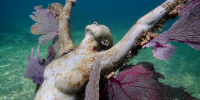
Angel Azul is an environmental documentary that follows the work of eco-sculptor Jason deCaires Taylor. Jason creates artificial coral reefs from statues he's cast from live models and installed on the ocean floor in an underwater museum off the coast of Cancún. The film explores issues that threaten the world's coral reefs which are suffering unprecedented losses.
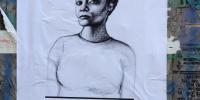
Stop Telling Women to Smile is a street art project by Tatyana Fazlalizadeh that addresses gender based street harassment.
Street harassment is a serious issue that affects women world wide. This project attempts to take women's voices, and faces, and put them in the street - creating a presence for women in an environment where women are a lot of times made to feel uncomfortable and unsafe - outside in the street.
As the cold air bit our faces, and we hid deeper into our layer of sweaters, my family and I continued to wander around Manhattan, seeking a place which would provide warmth and food. And there it was, dimly lit: the Michelin-starred ramen restaurant, Tonchin. We ordered the highly-sought after ramen bowl, Tonkotsu, and awaited our meal. Out of the kitchen, the steam arose from a bowl of a warm, salty pork broth.