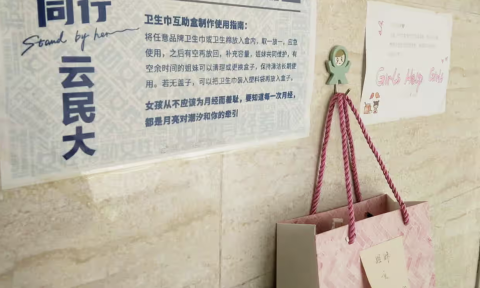
menstrual pad mutual aid boxes 5 Favorite 

Practitioner: 

Date: 

Oct 30 2020

Location: 

China

Since 2020, university students across China have launched a grassroots initiative to combat menstrual stigma by placing “menstrual pad mutual aid boxes” in campus restrooms. These boxes, often accompanied by signs reading “Take one if you need it, donate if you can,” provide free sanitary pads to anyone caught off guard by their period—offering both practical relief and a symbolic challenge to the cultural silence surrounding menstruation.

This decentralized campaign, driven largely by female students, gained momentum through social media platforms and student forums, eventually spreading to hundreds of universities under slogans like “I’m a woman, I menstruate.” Groups such as Stand By Her helped amplify the movement, but much of its success lies in its informal, peer-to-peer structure, which empowers young women to support one another directly.

Set against a backdrop of long-standing menstrual taboos—where pads are still sold in black plastic bags and periods are treated as shameful—this initiative reframes menstruation as a public issue deserving of empathy, dignity, and visibility. It also surfaced during broader social reckonings, such as the MeToo movement and the pandemic-era neglect of female frontline workers’ needs.

While modest in scale and cost, these mutual aid boxes represent a quietly radical form of activism: one that promotes gender consciousness, builds solidarity, and asserts the legitimacy of women’s everyday bodily experiences in public space.

Posted by Katherine on

Staff rating: 

0

Effectiveness

How does this project help?

Timeframe For change

The long-term goal of the menstrual pad mutual aid initiative on Chinese campuses is to normalize menstruation in public discourse, dismantle menstrual stigma, and promote gender equity through everyday acts of solidarity. By embedding menstrual care into shared public space, the movement seeks to cultivate a generation of students—especially women—who are unashamed of their bodies and empowered to advocate for gender-sensitive public infrastructure. More broadly, the initiative aspires to shift cultural perceptions of menstruation from shame to shared responsibility, encouraging institutions, policymakers, and society at large to recognize menstrual products as essential health needs rather than private or taboo items. It lays the groundwork for future demands, such as state-provided menstrual support, workplace protections, and comprehensive menstrual education in schools.

Notes

Despite its informal and decentralized nature, the initiative has been remarkably effective in sparking national awareness and local change. Originating from student-led efforts and gaining momentum through social media, the movement has spread to hundreds of universities, breaking the silence around menstruation in one of the most stigma-laden contexts. Its success lies in its accessibility and emotional resonance: rather than confrontational protest, it uses mutual aid, care, and empathy as tools of activism. The boxes are inexpensive, easy to replicate, and symbolically potent—transforming restroom stalls into spaces of dignity and solidarity. The initiative has not only alleviated menstrual emergencies but also fostered feminist consciousness among participants and observers. It generated public discourse on “period poverty,” challenged campus norms, and inspired related campaigns in other contexts (e.g., health worker protections during COVID-19). Though it has yet to result in large-scale policy reform, it has planted powerful seeds of cultural change, especially among China’s younger, more gender-aware generation.