In the past few years we have seen a growing awareness and concern with Internet freedom and privacy, fuelled by Edward Snowden’s revelations of the vast U.S.
Spent is an online in-browser game designed by ad agency McKinney as part of a partnership with Urban Ministries of Durham, NC, calling attention to the problem of poverty and educate people about homelessness. In the game, players are challenged to live on $1000 over a month, often having to decide between essentials and utilize outside options in order to survive.
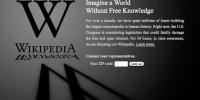
On January 18, 2012, numerous website across the internet called for an internet blackout in protest of SOPA and PIPA. SOPA, or the Stop Online Piracy Act, and PIPA, the Protect IP Act, were a series of bills promoted by Hollywood in the US Congress that would have created a “blacklist” of censored websites.
Sojo Studios, a new entertainment company, made plenty of headlines this week with its first social game, WeTopia. The studio is gaining plenty of attention with news of its $8 million arsenal, a roster of partnerships with non-profits like Save the Children, Children’s Health Fund and buildOn, consumer brand advertisers, and Ellen DeGeneres as one its business investors and partners.
Have you ever wanted to see current or potential innovations for poverty or the environment without having to do a lot of researching or reading? Have you ever thought of an idea and wanted to tell the world about it and get feedback? Howitcouldbedifferent.org was founded for these purposes - to enable people to easily see, share, and suggest ideas in different categories.
"Dark Side of the Prism" is a Firefox Add-on that provides a soundtrack for our surveilled internet meanderings.
The public recently learned that the US National Security Agency's on-going internet surveillance program, Prism, collects data from users of major websites.
The elimination of Net Neutrality is a much bigger issue than most people would like to admit. This issue stems far from just an issue dealing with an open internet, free from biased control of the internet service providers, whom which we rely on.
Trash Tycoon is an upcycling social network game developed by Guerillapps. The game applies traditional social gameplay features to highlight real-world issues such as waste, water, and “green” activities. Gameplay includes cleaning trash, recycling, and constructing products and decorations out of recycled material.
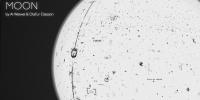
Artists Ai Wei Wei and Olafur Eliasson have come together to collaborate on the project Moon. The Moon Project is an interactive platform that consists of an open online interface, which anyone with an internet connection can access and leave their mark on the moon. The project was first presented this past November at the Falling Walls Conference in Berlin.
Games for Change is a community of game designers, activists, artists and individuals focused on creating and using digital games for purposes of social change. Games for Change is a large and loose community, but it has a major nonprofit organization at its center, who organizes the majority of the meetups and work of the movement.
ScareMail is a web browser extension that makes email “scary” in order to disrupt NSA surveillance. Extending Google’s Gmail, the work adds to every new email’s signature an algorithmically generated narrative containing a collection of probable NSA search terms. This “story” acts as a trap for NSA programs like PRISM and XKeyscore, forcing them to look at nonsense.
There’s a fine line between offensive and hilarious, and Arizona lawmakers aim to make that boundary legally protected. If House Bill 2549 passes, online harassment could become a criminal offense – but some hacktivists are there to help you rejoice.
Oakland Wiki (oaklandwiki.org) is a free website about Oakland that anyone can edit. It's a wiki that can house any kind of information about Oakland, from historic figures to native plants to City Council meeting notes to your favorite leafy walk.
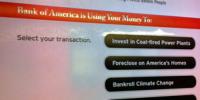
A couple of weeks ago, a group of activists working with Rainforest Action Network’s Energy and Finance campaign hit the streets of San Francisco to bring a little truth about Bank of America’s misdeeds to its customers—not in the lobbies of the bank’s local branches, but at its ATMs throughout the city.
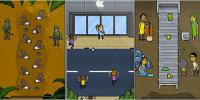
In this mobile game, the studio Molleindustria makes commentary on the people and practices behind the creation of mobile devices. Not lost on the authors is the deep sense of irony in that the game itself relies on mobile platform. The "game" is structured as a narrative where the process begins in mining materials in Africa (slavery) to putting together the devices in China (labor abuse), to heavy purchasing in the U.S.
The Guardian
By Tania Branigan
In the opaque world of Chinese censorship, a few red lines shine through the murk. One of the clearest is: no gossip about top political leaders, their families or internal party affairs.