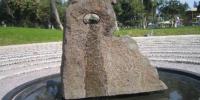
The Eye that Cries (El Ojo que Llora, in Spanish) is a memorial that was born as a private initiative designed to honor the thousands of victims as a result of terrorism in Peru, to strengthen the collective memory of all Peruvians and to promote peace and reconciliation in the country.
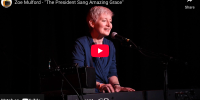
"The President Sang Amazing Grace" tells the story of the 2015 attack that claimed nine lives at the Emmanuel AME Church in Charleston, SC. It first appeared on Zoe's 2017 album "Small Brown Birds" and was widely played on independent folk radio shows across the US. Since then, the song has taken on a larger life, inspiring a variety of artists and finding its way to new audiences.
#NYTIMES Why are there no U.S. anti-slavery monuments? http://antislaverymonument.org project is an answer.
Standing 60 feet tall, corten steel of two hollow chain links the upper one broken.
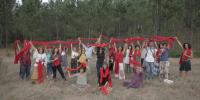
Linha Vermelha was created in 2016 by the non-profit organization Academia Cidadã (Citizenship Academy). At that time there were fifteen active contracts for oil and gas drilling and we were inspired by the “Red Line Action” in Paris, during COP21 and decided to create this campaign.
"MASK" is an art exhibition that explores the uses and meanings of masks, and ones feelings about them. Masks throughout history have taken many forms and have served many purposes. They have been used in construction, scientific research, technical manufacturing, medicine, the theater, and warfare.
This work addresses inequalities and disparities experienced specifically by LGTBIQ peoples in Spain. In the heart of this picture are six individuals dressed in queer fashion walking and linking arms. This is a powerful depiction. Usually, especially in a global context, it is unsafe for queer people to brave the streets alone. Here in Pozo’s work this represents pride without fear.
Encarnación Aragoneses Urquijo (886-1952), commonly known by her literary pseudonym Elena Fortún, was a Spanish writer who focused in children and teenagers literature.
She was born in Madrid, where she studied Philosophy and Humanities. In 1908 she married Eusebio de Gorbea y Lemmi, a member of the republican army. They left the country after the Civil War to live frist in France and then in Argentina.
Seattle Times:
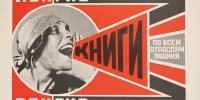
In 1921, just four years after the Bolshevik Revolution, American journalist Albert Rhys Williams wrote: “The visitor to Russia is struck by the multitude of posters — in factories and barracks, on walls and railway-cars, on telegraph poles — everywhere.”
The streets of Santiago are once again alive with the spirit of revolution. For weeks now, working-class Chileans have occupied national monuments and blocked major intersections in protest of widespread inequality. They desire full reform — a request so long in the making that it is practically tradition. The country’s floundering political elite offer half measures while dispatching riot police and the military.
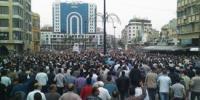
Bashar al-Assad snores, his head twitching on a large white pillow. Suddenly, he wakes up. “The people want to overthrow me!” he screams, the pompom on his nightcap bouncing.
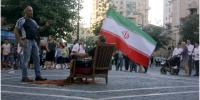
There is no embassy of Iran in Jerusalem.
We ask why.
We are a group of artists living and creating in Jerusalem, trying to create a new reality. one which we can identify with. A reality of dialogue between the people, not dominated by mass media and governments.
The Embassy as we imagine it will be functioning as a bridge for trading ideas, dreams and giving silent voices a sound through art.
Huffington Post put together a digital, interactive map of some of the so-called best and brightest street art collections. Street art is important because it allows artists, usually from the community where the street art is taking place, to interact with the community and bring color/brightness to the environment.
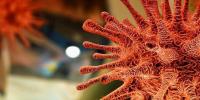
The signature angst of our time was profoundly expressed in the poems submitted for WOMAWORDS Literary Press June 2020 edition, Imaging Life After COVID-19, offering women poets an opportunity to write about their experience of the pandemic and their vision of or for the future. The universal trauma wrought by this virus, invisible and silent and pouncing with madness and mendacity, brings us to a place we’d like to forget but never will.
Wajiha Jendoubi is an actress and one of Tunisia's best-known comedians. To be a woman comedian in this North African nation can be a challenge, but the country's gender gap is narrowing for the first time in almost a decade and Wajiha sees Tunisia as a country that stands for women's rights and supports it.
This is a series of paintings reflecting the struggle and sacrifices made by the Tibetan people for independence. The author is Tenzing Rigdol, who is a Tibetan and influenced a lot by the Dalai Lama and traditional Tibetan culture. The paintings are full of Tibetan cultural elements. For instance, the characters created in the paintings are Tibetan monks, who are the typical representatives of their culture.
In July and August 2013, O Teatrão, a Coimbra based theatre company, presented the project Arruinados, comprising three theatre performances in three abandoned spaces (‘ruins’), one in each of three cities in the Centre region of Portugal located along the Mondego River:Coimbra, Montemoro Velho, and Figueira da Foz.
We demand that AATA respond to Karen Pence's stated commitment to our field by asking her to publicly take action for the rights of LGBTQIA people, Native people, Black and Brown people, Muslims, survivors of sexual assault, people with disabilities, immigrants, refugees and all people who are in danger as a result of the policies of the current administration.
The duo Libia Castro (b. 1970) & Ólafur Ólafsson (b. 1973) are the recipients of the Art Prize 2021 for their collective performance with the Magic Team In Search of Magic - A Proposal for a New Constitution for The Republic of Iceland.
The Harlem Festival of Culture not only pays homage to the past but also envisions a brighter future. It serves as a platform to showcase the rich diversity and dynamism of Harlem's artistic community, while also acting as a catalyst for social change and community empowerment. The festival boasts a lineup of artists from various genres and backgrounds, including jazz, soul, hip-hop, gospel, blues, rock, Latin, and Afrobeat.
Empathy may be the cornerstone of any Global Justice movement, but how do we cultivate the conditions for empathy to thrive?
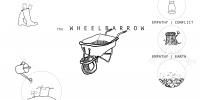
The wheelbarrow symbolises something universally useful, practical and pleasingly straightforward. A space to deliver things in an efficient and direct manner - no packaging and completely people powered.
"Thai artists and art students are on the frontline of their country’s swelling pro-democracy movement, calling for reforms of Thailand’s military-backed government, and breaking both taboo and national law to criticise the nation’s monarchy.
The New Culture Movement was initiated by Chen Duxiu, Li Dazhao, Lu Xun, Hu Shi, Cai Yuanpei, Qian Xuan and other writers who had received Western education (called the new-style education at the time). It is an ideological and cultural innovation and literary revolutionary movement.
John Shore and his wife Catherine had been attending the First Presbyterian Church of San Diego for six years when they were nominated to serve as deacons. But before they could be ordained, they were asked to sign a document agreeing that no person in a same-sex relationship should hold any position of authority within the church, which is one of the city’s oldest. It was 1990.