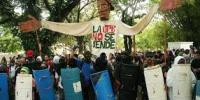
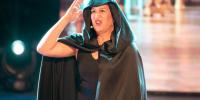
Wajiha Jendoubi is an actress and one of Tunisia's best-known comedians. To be a woman comedian in this North African nation can be a challenge, but the country's gender gap is narrowing for the first time in almost a decade and Wajiha sees Tunisia as a country that stands for women's rights and supports it.
The signature angst of our time was profoundly expressed in the poems submitted for WOMAWORDS Literary Press June 2020 edition, Imaging Life After COVID-19, offering women poets an opportunity to write about their experience of the pandemic and their vision of or for the future. The universal trauma wrought by this virus, invisible and silent and pouncing with madness and mendacity, brings us to a place we’d like to forget but never will.
In state capitals and street protests, women’s rights activists have been wearing red robes and white bonnets based on “The Handmaid's Tale,” the 1985 novel that is now a series on Hulu.
Silent, heads bowed, the activists in crimson robes and white bonnets have been appearing at demonstrations against gender discrimination and the infringement of reproductive and civil rights.
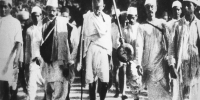
In 1930, the Indian National Congress adopted satyagraha (essentially, nonviolent protest) as their main tactic in their campaign for independence. Mahatma Gandhi was appointed to develop a plan of action; he proposed marching to the sea to make salt in defiance of the Salt Act of 1882.
Shine, written by Stoneman Douglas students Sawyer Garrity and Andrea Peña in response to the tragic shooting at their school on February 14, 2018 to inspire unity, hope, and change. MSD alum Brittani Kagan collaborated with students and faculty to create this music video to honor the victims and the school.
"Myanmar has been engulfed in protest since February 1, when Burmese army general Min Aung Hlaing seized control of the government in a military coup, refusing to accept to the landslide election victory of the National League for Democracy and its leader, Aung San Suu Kyi.
In July and August 2013, O Teatrão, a Coimbra based theatre company, presented the project Arruinados, comprising three theatre performances in three abandoned spaces (‘ruins’), one in each of three cities in the Centre region of Portugal located along the Mondego River:Coimbra, Montemoro Velho, and Figueira da Foz.
Encarnación Aragoneses Urquijo (886-1952), commonly known by her literary pseudonym Elena Fortún, was a Spanish writer who focused in children and teenagers literature.
She was born in Madrid, where she studied Philosophy and Humanities. In 1908 she married Eusebio de Gorbea y Lemmi, a member of the republican army. They left the country after the Civil War to live frist in France and then in Argentina.
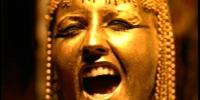
Presaged by shimmering spin-off hits “Dreams” and “Linger,” The Cranberries’ landmark debut album, Everybody Else Is Doing It, So Why Can’t We?, suggested its creators had taken up the baton handed down by jangly indie-pop classicists The Smiths and The Sundays.
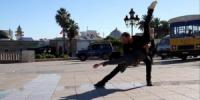
The flashmob ‘’I will dance despite everything’’ was organized in Tunis's old medina on December 2012 by “Art Solution", a Tunisian group aiming to promote street art as a form of resistance.
Their name, Sapeurs, comes from the French slang se saper, meaning to dress with class, but also from the acronym of their social group : La Société des Ambianceurs et des Personnes Élégantes (the Society of Ambianceurs and Elegant Persons). La Sape can be traced back to the early years of colonialism.
Join acclaimed director Velcrow Ripper (Scared Sacred, Fierce Light) on a journey deep inside the revolution of the heart that is erupting around the planet, as he asks the question, “How could the crisis we are facing become a love story?”
"Project Black Mask HK (PBMHK) was founded by a (then) 18-year-old, Joyce Ho, who is an American-born Hong Konger. On May 28, 2020, during a peak of the Coronavirus Pandemic, many people expressed frustration with their inability to protest on the streets (of the United States) in support of the freedom and democracy for Hong Kong. PBMHK became a space where people could do exactly that.
Beyoncé delivered an intensely, unapologetic celebration of Black and HBCU culture at the Coachella Festival 2 weekends in a row. Not only were her performances some of the best live performances to date but they sent a pretty significant message to the world.
Here are some assessments of this beautiful demonstration of Blackness and Black Girl Magic:
From BBC News:
Celeste Caeiro, who on April 25, 1974, handed out red carnations to soldiers on their way to ending a 40-year right-wing dictatorship in Portugal, a spontaneous patriotic act that gave a largely bloodless coup its name, the Carnation Revolution, and her an enduring appellation, “the Lady of the Carnations,” died on Friday in Lisbon. She was 91.
The work of a radical theater and puppetry collective, known as Papel Machete, produces and performs throughout Puerto Rico and the United States. Papel Machete was established on May 1, 2006 during protests responding to the government shutdown and political and economic crisis prompted by Puerto Rico’s status as a United States colony.
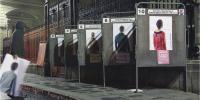
In France, abstention, vote of protest, lassitude or violent reactions rise from all over the crisis of our "representative democracy ».
What about thinking the other way round ? What if we reappropriate the iconography of the election?
On Wednesday, December 15th 1976, a referendum was held in Spain. The question was to pass or not to pass the Ley para la Reforma Política (Political Reform Act). This Act was the legal instrument that allowed Spain to transition between Francisco Franco’s dictatorship to a democratic constitutional regime, a parliamentary monarchy.
On the 5th of May 2021, the subway's 12-line partially collapsed, killing 24 people and injuring more than 70. Onboard, were children, young women and men, and the elderly. The accident also killed a man and injured a woman who was driving a car, upon which the train fell.
The poorly conditions of the subway structure had been repeatedly reported by neighbors living nearby. No institutional response was given.
"Thai artists and art students are on the frontline of their country’s swelling pro-democracy movement, calling for reforms of Thailand’s military-backed government, and breaking both taboo and national law to criticise the nation’s monarchy.
One of the most pressing questions before us in the United States now is how to resolve the tension between our personal visions and needs, on the one hand, and the demands of being a member of a community, on the other.
To state or chant ‘BLACK LIFE’S MATTER’ is not to say other lives don’t matter, it’s a reminder that four hundred years and counting, black lives didn’t matter enough. Not during the dark era of slave trade and its horrors on the African, not after slavery ended and blacks were left holding the short end of the stick.
Toyi-toyi is a Southern African dance originally from Zimbabwe by Zimbabwe People's Revolutionary Army (ZIPRA) forces that has long been used in political protests in South Africa.
Toyi-toyi could begin as the stomping of feet and spontaneous chanting during protests that could include political slogans or songs, either improvised or previously created. Some sources claim that South Africans learned it from Zimbabweans.