change
region
medium
issue
pol
Children in marginalized communities often lack access to healthy foods, especially fresh fruits and vegetables. Poor nutrition, in turn, has significant negative impacts on a child’s health and ability to focus in school. Learning and academic achievement often plummet.
“Children will never be well-read if they are not well-fed,” says Stephen Ritz, veteran educator and founder of Green Bronx Machine, a nonprofit organization driven by the belief that healthy students are the heart of healthy communities.
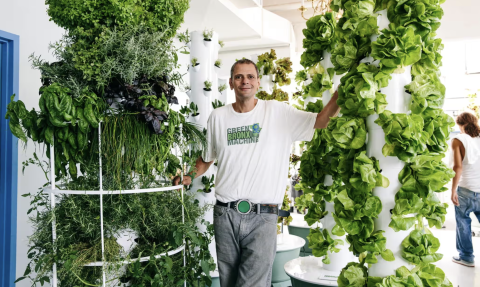
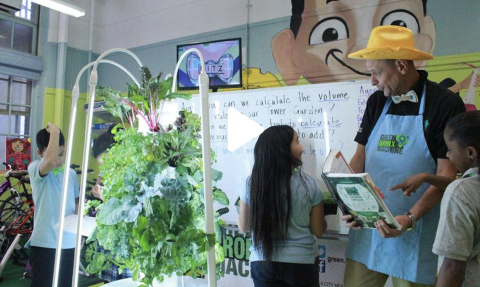
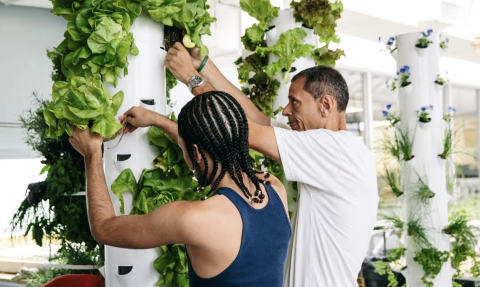
Ritz originally conceived Green Bronx Machine as an afterschool workforce development program. He began a pioneering project to farm plants and vegetables indoors at Discovery High School building community gardens, designing and installing green roofs, and experimenting with indoor gardens. Their successes demonstrated tangible and long-term rewards of getting kids invested through hands-on learning—but they weren’t scalable. Ritz wanted to make the program more widely available and appropriate for students of all ages. He designed a whole-school curriculum that aligns classroom gardening to key school-performance indicators and social determinants of health. It utilizes innovative—and easily replicated—garden systems that make it easy for classrooms to grow and harvest vegetables throughout the year and features data-driven lessons, professional development, and a set of assessment tools that track academic performance. The child-friendly teaching technology is low-cost, portable, and can be assembled without tools in less than 40 minutes.
"We took forlorn, unproductive spaces and turned them into aspirational places where we could bring communities together," said Ritz. "We then moved on to growing food indoors in vertical planters around the school....The kids really believe that they are responsible for them and attendance has increased from 43% to 93%. Students come to school to take care of their plants – they want to see them succeed. Along the way, the kids succeed too. That’s great, because if I have their bodies in school, I have their brain. I am committed to the belief that children should not need to leave their neighborhood to learn and earn in a better one. Why not take the urban setting they live in and turn it into an oasis?"
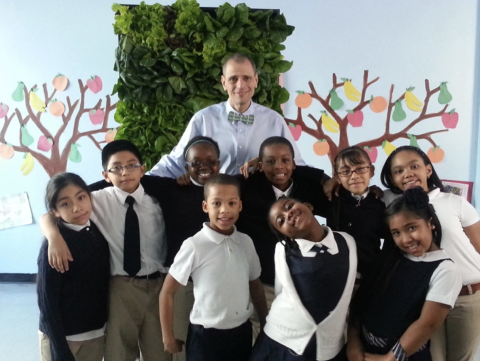
The school’s so-called “edible walls” gave birth to the Green Bronx Machine, a project that helps other schools in the US start their own agricultural programs to teach children healthy eating, environmental awareness and life skills. As well as continuing his educational work in New York, Stephen travels the world promoting the value of growing fresh produce, both in schools and the wider community. It’s now a K-12 curriculum program serving more than 275,000 students and 10,000 teachers worldwide. Participants eat more fruits and vegetables, while schools reap the rewards of marked improvements in test scores, attendance, and academic performance. Students have graduated into vocational programs in food and agriculture.
"When kids learn about where their food comes from, it changes their world view," said Ritz. "Most kids in the South Bronx have horrible diets. We are inundated with cheap food, which is only expensive in terms of the health costs. We are looking at the first generation of children who will not outlive their parents simply because of what they eat. The ability to bring healthy, fresh food into schools and teach children that input equals output is absolutely spectacular. While I started this program with older kids, now I love working with little ones because I can build on good habits instead of trying to fix bad ones. My kids have gone from being consumers to being producers. We have been selling the plants, working with major stores to increase awareness and access to cooking, nutrition, and health for kids. This is not just growing plants, though, this has applications for a range of curriculum subjects including maths, science, and literacy. Farming teaches patience and fortitude. A crop well tended will yield a good harvest. We are dealing with kids who are being fed the next video game, the next application – they are used to instant gratification – so it’s about learning the patience they need to grow up."
Ritz has counseled the White House, testified before Congress, been honored by New York City and New York State departments of education, and was invited to Google Food Lab, a collaborative network for food and nutrition leaders. His work is now the subject of an award-winning documentary, Generation Growth. Green Bronx Machine’s efforts in harnessing the transformational qualities of project-based learning have earned it a spot on Fast Company’s list of the world’s Most Innovative Companies of 2024.
Students learn science, math, and English through the program, and how to cook the food they grow—often alongside their parents. Green Bronx Machine’s technology infrastructure has enhanced the classroom experience and allowed the organization to scale globally. Ritz emphasizes that his program—which is funded by donations, foundations, and corporate partnerships—is much more than teaching kids how to grow a garden. “Imagine a small, one-time investment that generates transformational outcomes in perpetuity,” he explains. “It’s about teaching communities that by planting the seeds of learning, they can grow healthy children.”
Green Bronx Machine’s extended student community has harvested more than 225,000 pounds of fruits and vegetables in the Bronx alone. But much more impressive are the lives that have been transformed through better diet and nutrition, and the increased academic performance that is leading to brighter futures.
Ritz sees accessibility as key to the success of the program. “When you change a classroom, you change a school, and when you change a school, you change a community. And we’re just getting started.”