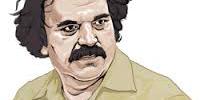
Cartoons Against Corruption is a cartoon based campaign by political cartoonist Aseem Trivedi to support anti corruption movement in India, best known for sharp hard hitting anti corruption cartoons. Using national emblems and current political news, Trivedi creates cartoons that don't attempt to skirt the issues at hand, but portrays his political stance straightforwardly.
Members of Greenpeace together with environmental advocates dressed as zombies attend a creative protest against water pollution in Manila on September 27, 2012. The protesters delivered a petition urging the establishment of a “Right-To-Know” system for chemicals and the adoption of a policy to eliminate hazardous chemicals released by factories into freshwater bodies.
New Delhi: With his ‘climate fast’ entering its fourth day at Khardungla pass (18,000 ft) at -40 °C, Sonam Wangchuk — the renowned engineer, educationist and reformer from Ladakh took to Twitter, urging the people of India to join him on the last day of his fast in support of Ladakh.
By adding screen print with the wording ‘SUPERCOPY’ on to copies of LaCoste polo shirts bought at a street market in Thailand SUPERFLEX turns a copy product into a Supercopy – a new original. As a result, LaCoste took legal action against SUPERFLEX.
To call attention to bullying, the Singapore Coalition Against Bullying for Children and Youth has released a video that gets shorter each time it is viewed.
Hosted on a site called Share It To The End, the short animated video depicts a boy getting bullied at school and telling us he always feels alone and doesn’t feel safe anywhere.
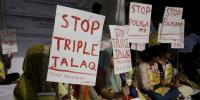
The egregious practice that some Muslim men employ to divorce their wives instantaneously and without their consent, merely by uttering the word talaq (divorce) three times, has finally been declared unconstitutional and illegal by the Indian Supreme Court. The country’s ruling Bhartiya Janata Party (BJP) party claims that the ban is a victory for its administration, which had been advocating its abolition since it came to power in 2014.
Myanmar has been engulfed in protest since February 1, when Burmese army general Min Aung Hlaing seized control of the government in a military coup, refusing to accept the landslide election victory of the National League for Democracy and its leader, Aung San Suu Kyi.
Dear Team
Please find below the links of the video and detail of Kind Coins Pakistan, Kids for Peace Pakistan School
and Peace Centre, hope you will publish it on your website and circulate it at large,
your this publication and circulation can change the lives of Pakistani kids and children
Kind Coins for Pakistan
Zubair Magray, who goes by the stage name Haze Kay, raps about the conflict in Indian-administered Kashmir. The 23-year-old, one of the first rappers to emerge from the valley, blames the Indian military for "ruining" his homeland.
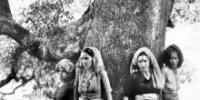
The forests of India are a critical resource for the subsistence of rural peoples throughout the country, but especially in hill and mountain areas, both because of their direct provision of food, fuel and fodder and because of their role in stabilising soil and water resources.
We are sitting at a dhaba – a roadside tea-shop in Pakistan often frequented by lower-to-middle income men. At our table: four women and camera crew. The reporter from ‘one of the most globally viewed’ [read: western], mainstream British outlets looks me in the eye: “So, how safe do you feel at the moment? We were just surrounded by a group of little boys [because of the cameras], do you think the situation can ever turn on you?"
Singaporean artist Lee Wen’s series Journey of a Yellow Man (1992–2012), one of his most famous and long-standing performances, was not simply a personal affront, it was a political affront. At the intersection of Asian art history, critical race theory, and migration and diasporic studies, one is never far (enough away) from the chromatic framing of race and ethnicity: yellow race, yellow peril, yellow face, the forever foreigner.
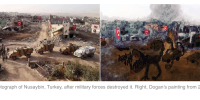
The Kurdish journalist and artist Zehra Doğan was freed yesterday after nearly three years in prison, Hyperallergic reports. Doğan first caught the attention of the Turkish authorities back in 2017 with a watercolor that depicted a Kurdish district after Turkish security forces set it on fire and largely destroyed it.
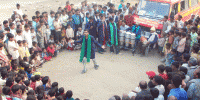
In 1989, playwright, actor, and activist Safdar Hashmi was fatally attacked by political thugs while performing a street play outside of Delhi. His death led to the founding of Sahmat, an influential artist collective that has taken a consistent stance against the threats of religious fundamentalism and sectarianism in India through a vibrant mix of high art and street culture.
The “Wearable/Portable Architecture project” discussed the possibilities of having a locale create portable architecture based on the conditions of its environmental, urban and cultural conditions. It is structured to find ways in providing new arguments and sustaining an artistic impetus to our immediate environment.
The Voice of Dissent
“I am not here to entertain you; I am here to disturb you. Those who are here for entertainment, I request them, please go.” It’s unusual, if not rare, for a live performer to begin by saying that to the audience. The compact of patronage that’s implicit is what Sambhaji Bhagat smashes right at the onset of his performance. For him, this art is a quest for the truth that will liberate the people he represents.
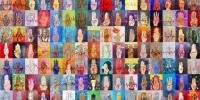
Founded in India, this collective creates participatory murals that transform public spaces into affirmations of love and resistance. Collaborating with marginalized communities, they co-create artworks that challenge narratives of fear and oppression
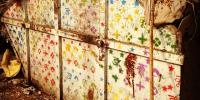
Delhi- based graffiti artist who goes by the name Daku went around South Delhi, one of the poshest places in the city, and painted on overflowing garbage cans.
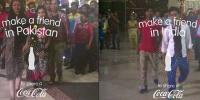
A new, three-minute ad by Coca-Cola, "Small World Machines," starts with a relatively straightforward premise: India and Pakistan do not get along so well. It ends with the promise of peace: "Togetherness, humanity, this is what we all want, more and more exchange," a woman, either Indian or Pakistani, narrates as the music swells. Sounds great. How do we get there? By buying Coke, of course.
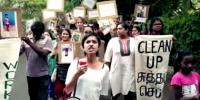
The Kodaikanal Won't video by Chennai artist Sofia Ashraf, asking Unilver to 'clean up their mess' in connection with the Kodaikanal mercury dumping, has gone viral with over 783,533 views at the time of writing this, in just over two days. It has been shared on social media by prominent personalities such as Nandita Das, Varun Grover, Vishal Dadlani and was even praised by Nicki Minaj, on whose song Anaconda, the rap is based on.
Mukti Caravan, the Campaign on Wheels, is a mobile cultural group of former child bonded labourers. Started by the Bachpan Bachao Andolan (Save Childhood Movement), a movement started by now Nobel laureate Kailash Satyarthi, it involves activists visiting villages to create awareness about need for education, emphasizing on the need for improving access to education and quality of education, to completely eradicate child labour from the society.
Dark Matter is a trans South Asian performance art duo comprised of Alok Vaid-Menon and Janani Balasubramanian, a prominent pair of voices operating at the intersection of the arts and activism.
The Propaganda Machine is a battle cry delivered in the language of extreme metal. On Sahil Makhija’s fourth solo album as Demonstealer, he takes aim at the right-wing politicians, racist nationalists, disinformation artists, and religious extremists who manipulate and exploit the masses, in his native India and all over the world. He doesn’t mince his words; just about every lyric on the album could easily be printed on a protest sign.