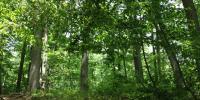
The forests of India are a critical resource for the subsistence of rural peoples throughout the country, but especially in hill and mountain areas, both because of their direct provision of food, fuel and fodder and because of their role in stabilising soil and water resources.
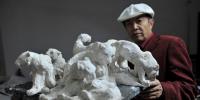
By a pond inside one of the entrances to Beijing’s Chaoyang Park lies a cluster of one and two storey red pyramid-shaped buildings. Sculptures of Gandhi and Lincoln and other famous figures sit in the quiet woods nearby. This is Yuan Xikun’s Jin Tai Art Museum.
The Green Belt Movement (GBM) was founded by Professor Wangari Maathai in 1977 under the auspices of the National Council of Women of Kenya (NCWK) to respond to the needs of rural Kenyan women who reported that their streams were drying up, their food supply was less secure, and they had to walk further and further to get firewood for fuel and fencing.
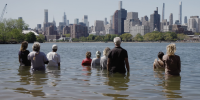
A site-specific, community-engaged process: Sarah and NYC collaborators gathered at the water’s edge every month from September 2020 (when the work was initially scheduled to take place but was postponed due to the pandemic) until September 2022, to build Kin To The Cove, a site-specific community-powered environmental public art process that connects local residents to the Cove and Water that surrounds NYC.
“Works in Progress” highlights artists across a range of disciplines whose work deals with ecological themes. Considering the particular role that artists play in the climate movement, this column shares their voices and provides a glimpse behind the curtain into their creative processes and experiences.
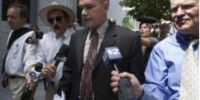
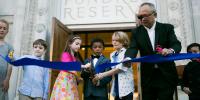
In December 2008, Tim DeChristopher, along with his church group, was protesting outside a Bureau of Land Management oil and gas lease auction of 116 parcels of public land in Utah's red rock country. Tim decided to take his protest inside and disrupt the auction itself. Instead, at the door, he was offered a bidder's paddle — which, after a split second of hesitation, he accepted.
"Operation Paydirt is a multidisciplinary, artist-driven project advancing a solution to the devastating problem of lead (Pb) contaminated soil that puts thousands of children at risk for severe learning disabilities and behavioral problems. The goals of the project are to raise awareness of the issues of lead and to create a model for making cities lead-safe across the United States.
The 21st annual Environmental Film Festival is being held in Washington DC from March 12 to March 24, 2013. Shining a spotlight on environmental issues and eco-activism, the festival features films that are both directly and tangentially related to concerns for the natural world.
After decades of fighting to preserve many of the old woods of Staten Island and years of fighting for the preservation of Pouch Camp, the Boy Scout camp and 100 wooded acres in the middle of the Greenbelt is officially saved!!
In April, 2011, Food and Water Watch partnered with Yes Lab to raise questions regarding drinking water around New York City. Yes Lab, an organization that collaborates with activist groups, aims to create successful media-related creative actions that help raise awareness regarding pertinent causes and create desirable action, often by staging interventions for the existing status quo by imitation and alteration.
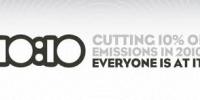
Environmental activist Franny Armstrong's brainwave came as she was walking to a debate with the then Secretary of State for Energy and Climate Change Ed Miliband. She had read a report saying that the developed world must cut its carbon emissions by 10% by the end of 2010 to avoid passing the tipping point. Armstrong, 39, dropped her idea to start a campaign into the debate. 10:10 was born.
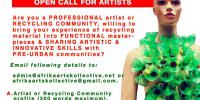
Afrika ARTS Kollective is a group of artists that decided to face Uganda's demographic growth and the garbage problem of the capital, Kamala, with art. 30,000 tons of residues come out of this monthly and the Administration is being working on healthy and good environmental behaviors among citizens.
"The mandate for great and difficult achievement is manifest in the message coming from the science of sustainability and climate change. Yet information alone will not take us where we need to go; science needs the arts to compel a response. It is the synergy of these two great human enterprises that creates both intellectual and emotional clarity.
Artist Maya Lin first burst onto the scene in 1981, when her design was selected for the Vietnam Veterans Memorial while she was still a senior at Yale. Since then, Lin has turned her focus to environmental issues, with her most recent show at Pace Gallery investigating Manhattan’s landscape and environmental history.
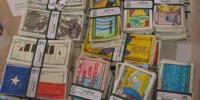
The Fundred Dollar Bill Project, initiated by artist Mel Chin, is a collaborative art project aimed at raising awareness and mobilizing action against the environmental and health threat of lead contamination. It encourages individuals to create their own unique interpretations of $100 bills, symbolizing the value of human lives and the need for a lead-free future.
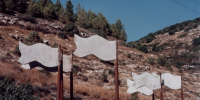
Utilizing excess construction cement that was being dumped into a creek near Beit Shemesh, Israel, Shai Zakai harnessed the unclaimed cement to create an art installation that brought awareness to the ongoing pollution. The project was entitled, 'Concrete Creek' aimed to bring the community closer to their environment. Zakai installed cement flags and set them among the river.
World Without Oil (WWO) is an alternate reality game (ARG) created to call attention to, spark dialogue about, plan for and engineer solutions to a possible near-future global oil shortage, post peak oil.
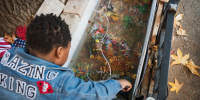
The Bed-Stuy “aquarium” is back.
The neighborhood’s beloved sidewalk fish pond was resurrected this week — in an act of defiance that comes just five days after the city cemented over the original and left the neighborhood’s goldfish to die.