It appears Elon Musk has enemies all over the world.
The tech billionaire — currently the planet’s richest man and CEO of Tesla — has integrated himself into U.S. politics, becoming Donald Trump‘s head of a new Department of Government Efficiency (DOGE) and aligned himself with far-right politicians in Europe.
Zhang Donghui, born in 1992, is a native of Shijiazhuang, Hebei Province, China. He graduated from the Sculpture Department of the Central Academy of Fine Arts in 2017. He has been living and working as a professional artist in Beijing since then.
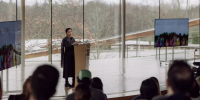
For the completion of her residency as the NYU Steinhardt 2023-24 Scholar-in-Residence, Dominique Jackson collaborated with NYU students to honor the fem queen (trans women) and their historical meaning to not only ballroom but popular culture at large.
This afternoon, in the Sackler Wing of the Metropolitan Museum of Art in New York, a mother and daughter threw coins into its reflecting pool while a couple posed for engagement photos in front of the Temple of Dendur, the man in red pants and a gray blazer, the woman in a black jumpsuit. A long line snaked out of the temple. It was tranquil, most people speaking in a whisper. That grand space has such an effect on people.
Following the murders of George Floyd and Breonna Taylor, corporations jumped on the opportunity to commodify the Black Lives Matter movement. In June of 2020, Netflix launched a Black Lives Matter collection, and by December, they had released Cops and Robbers, an animated short about racial injustice.
It was 1967, and sentiment against the Vietnam War was in the air nationwide. The counterculture was flourishing on the heels of the Summer of Love. Organizers from Mobe — the National Mobilization Committee to End the War in Vietnam — initially called for a massive march on Washington.
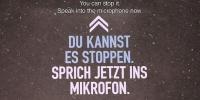
Neighbors in modern cities have less and less communication, and they all go about their business as soon as they close the door. In Switzerland, a woman dies every week as a result of domestic violence, so in an effort to get everyone to act, the charity has put up an interactive billboard in a shopping mall that shows a man in a family doing violence to a woman.
CNN
—
Dior is facing accusations of cultural appropriation after Chinese social media users – and protesters outside one of the label’s Paris stores – claimed that a $3,800 skirt was inspired by a centuries-old traditional garment.
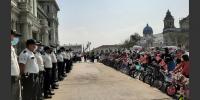
Non-profit organizations and a multitude of Guatemalan girls protested together demanding justice and security from the government. Guatemala's insecurity and cases of girls' disappearances have increased over the years. The protest started outside the Government Ministery (Ministerio de Gobernación) early in the morning, where protestors gathered riding their bikes.
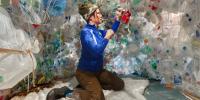
Lynn Neuman, director of New York City–based Artichoke Dance, became preoccupied with single-use disposability after she started wondering about waste and who was responsible for it. For some of her performances, she has collected massive quantities of discarded plastics, like bags and six-pack rings, and invited community members to contribute their own. “There’s a real aha moment when people see how quickly plastic amasses,” she says.
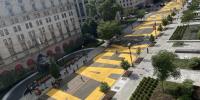
D.C. Mayor Muriel E. Bowser renamed a street in front of the White House “Black Lives Matter Plaza” and had the slogan painted on the asphalt in massive yellow letters, a pointed salvo in her escalating dispute with President Trump over control of D.C. streets.
An exercise that used drama/and audio visuals to engage with with all election partners, especially the political parties especially the political parties and their candidates/leaders, Electoral Commission, Musicians Association of Ghana, etc to push for a free, fair and peaceful Presidential and Parliamentary election and hand over of power to who ever won the elections peacefully.
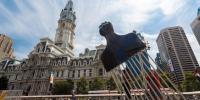
Located in Thomas Paine Plaza, across the street from City Hall, Hank Willis Thomas’s All Power to All People was a public art intervention that dealt with racial identity and representation in Philadelphia.
The Quilt was conceived in November of 1985 by long-time human rights activist, author and lecturer Cleve Jones. Since the 1978 assassinations of gay San Francisco Supervisor Harvey Milk and Mayor George Moscone, Jones had helped organize the annual candlelight march honoring these men. While planning the 1985 march, he learned that over 1,000 San Franciscans had been lost to AIDS.
Shackles. Cotton. The Big House.
Americans tend to think of slavery in terms of chattel slavery. Plantation Slavery. Slavery where human beings are bought, sold, and owned. The kind outlawed in the United States by the Emancipation Proclamation in 1863.
Slavery as a relic of the 19th Century.
“Six of us lived, worked, slept in a 10-by-10 (foot) room without a bed, bathroom, or clean water,” Nasreen Sheikh remembers.
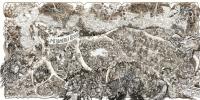
The Beehive Design Collective is a wildly motivated, all-volunteer, activist arts collective dedicated to “cross-pollinating the grassroots” by creating collaborative, anti-copyright images for use as educational and organizing tools. We work as word-to-image translators of complex global stories, shared with us through conversations with affected communities.
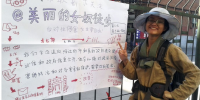
In 2012, the 24-year-old feminist activist Xiao Meili launched the "Beautiful Women's Rights Walk" anti-sexual assault activity. She set off from Beijing in mid-September and passed through Zhengzhou, Wuhan, Changsha and other cities along the way to reach the destination Guangzhou. She took 114 days and reaches more than 2500 kilometers in this tour.
The author behind ‘The First Paradise of Fang Siqi,’ a novel that Han described as ‘a young girl falling in love with her rapist,’ has sent shockwaves through Taiwanese society.
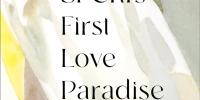
On April 27, aspiring Taiwanese author Lin Yi Han committed suicide, leaving behind only her first, and sadly last, novel. The story, entitled “The First Love Paradise of Fang Siqi,” concerns the mental struggles of a young girl who is raped by her teacher.
From this article: https://www.bbc.com/news/magazine-27632527
A campaign by one of Brazil's biggest football clubs to encourage fans to become organ donors has led to a massive rise in the number of life-changing transplants and reduced waiting lists for organs in the area almost to zero.
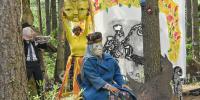
The Insurrection-Resurrection Service Circus is this summer’s [started in 2020 and is ongoing] contribution to the iconic Bread and Puppet Circus tradition beloved by audiences worldwide for nearly 2 generations — a bright, raucous melee of short acts governed by a brass band, addressing the heart of the current moment using diverse puppetry styles and spanning many moods, from slapstick to the sublime.
Asian Americans standing up for themselves, the Black Lives Matter movement, and their home: New York City
In 2020, as COVID-19 flared through New York City and NYC hospitals saw a spike of nearly 200,000 patients, Asian and Pacific Islanders (APIs) faced an added threat: blame, racism, and xenophobia.
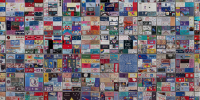
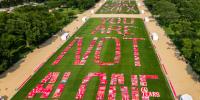
The Monument Quilt is a large quilt that serves as a memorial for survivors of rape and abuse. It contains over 3,000 stories from individuals who have experienced gender-based violence, and allows visitors to add their own stories by writing, painting, or stitching onto red fabric. The project took place over a span of six years, during which the organizers traveled to 49 states and 33 cities in the U.S.
First cut the banks! In 2012 Bankia declared itself bankrupt and, almost immediately, asked the Government of Spain for €23 billion. The Government accepted, yet that very same week ordered €20,000 million worth of cuts in health and education. It was then that we realized that what they called a crisis was actually a scam. You wouldn’t believe how pissed off we were. So we threw a party, because there is nothing like partying to relieve your anger.
Students at art colleges across China are taking a strong stance in the midst of the largest wave of protests to have gripped the country since 1989. As demonstrations against the government’s strict Covid-19 policies erupted across the country over the weekend, students rallied on campuses to create protest art and graffiti.