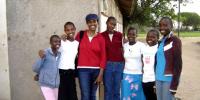
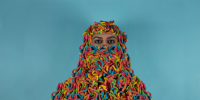
Mtendo MweMa Project's mission is to provide a safe house and educational opportunities to girls, especially those in danger of female circumcision, early marriage and pregnancy, whom otherwise have no alternative but to return to their villages during the holiday seasons in Kenya, East Africa.
The story of the life and death of Jesus is arguably the most ubiquitous story ever told. Translated to every language, vastly circulated, taught in schools all around the world, conservative groups –except for some exemptions, like Liberation Theology- have held monopoly of this narrative for the longest time. However, like every other narrative, it is not totally closed to resignification and oppositional and negotiated readings.
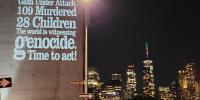
As the death toll from Israel’s attacks on the besieged Gaza Strip continues to rise, a guerrilla projection on May 13, 2021 illuminated a building in Brooklyn’s Dumbo neighborhood with messages of solidarity with Palestinians.
The minaret of the Jara Mosque in Gabes towers over its surroundings. Formed of golden brick, it jolts up from the flat, sand-colored cityscape around it, all the better to broadcast the call to prayer across the coastal city.
Presaged by shimmering spin-off hits “Dreams” and “Linger,” The Cranberries’ landmark debut album, Everybody Else Is Doing It, So Why Can’t We?, suggested its creators had taken up the baton handed down by jangly indie-pop classicists The Smiths and The Sundays.
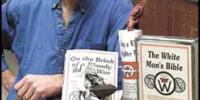
The Creativity Movement (formerly known as the World Church of the Creater) is a self proclaimed white supremacist organization with factions across the United States. In 2004, a high ranking leader of the Montana based faction defected from the group, but not before donating over 4,000 of the group's bibles called the 'RAHOWA' (acronym for racial holy war) to the Montana Human Rights Network.
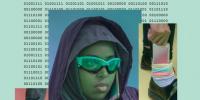
The questions that London-based collective One Of My Kind (aka OOMK) explore are those of identity and belonging—issues that are experienced by everyone regardless of whether they grew up defining themselves based on the music they listen to, the hobbies they enjoy, or the religion they practice.
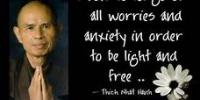
Thich Nhat Hanh reads his poem "For Warmth" in Vietnamese, Krista Tippett reads the translation in English, excerpted from the episode "Mindfulness, Suffering, and Engaged Buddhism."
"FTSE" is Birmingham-born producer and rapper Sam Manville. As an anti-captialist, he though it would be funny to take the name of the British stock market index (Financial Times and Stock Exchange), but he also jokes the acronym stands for "Fuck The System, Ennit.”
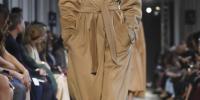
A woman dressed in western clothes and a hijab is a common sight across Europe’s capital cities – a fact now reflected on the catwalk at Milan fashion week.
Halima Aden, a Somali-American model, is fast becoming fashion’s face of 2017, currently stealing the show at fashion week from the catwalk superstar Gigi Hadid.
It all started when a 70-year-old fish market stall owner nicknamed “Booghy” was grooving in public, in violation of Iranian law.
A new form of protest against the government is rocking Iran: a viral dance craze set to an upbeat folk song where crowds clap and chant the rhythmic chorus, ‘oh, oh, oh, oh.’
When Behnaz Babazadeh was young, her family moved from Afghanistan to the US. She loved almost everything about her new home — especially America’s amazing selection of candy — but she also loved wearing her familiar pink-flowered headscarf, which she’d grown used to wearing as part of her school uniform in her old home.
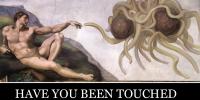
In the mid early 2000s, religious advocates tried a new strategy: promoting the theory of “intelligent design” to be taught in schools. As the Kansas School Board considered the argument, Prophet Bobby Henderson saw an opportunity. His now famous, “Open Letter to the Kansas School Board” began:
Mansour began rapping in 2003 and has gained recognition in the Middle East, Europe and the United States for her own songs and collaborations with other artists. She performs wearing a traditional Palestinian thawb and has said that she considers herself to be part of a "musical intifada" against the occupation of Palestine, conservatism and oppression of women.
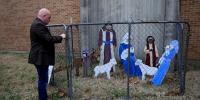
The nativity scene at Fellowship Congregational Church in Tulsa, Okla., looks a little different this year: There is a chain-link fence surrounding Mary, Joseph and the baby Jesus.
The display has been up since the beginning of December, but it drew news coverage this week after the church changed the message on its marquee to read, “The holy family was a migrant family,” and posted photos of the nativity on Facebook.
"A Night of Philosophy and Ideas is a thinker’s lollapalooza. The free, 12-hour weekend lyceum at the Brooklyn Public Library includes spirited debate, live music, theater, performance art pieces, and film screenings. At any given hour, five or six different events will be taking place simultaneously. Visitors are encouraged to come and go as the spirit moves them.
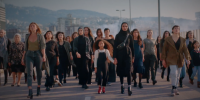
To honor their battle, Lebanese women's rights organization ABAAD launched a powerful song and music video titled Not Your Honor. The clip was launched on the occasion of the "16 Days of Activism against Gender-Based Violence" initiative which took off on Nov. 25, the International Day for the Elimination of Violence against Women.
Pam Geller doesn’t know much about Islam or Muslims, that much is clear. What she does know, however, is how to rally the troops to incite racism. From funding Islamophobic bus ads to maximizing offensive Muslim stereotypes, it’s clear that there’s only one thing on her agenda — and that’s hate.
"Late last night, an autonomous group of activists placed posters throughout the subway system, blocking out advertisements with their own materials protesting Israel's bombing campaign in Gaza.
A Lebanese Olympic skier whose topless calendar prompted calls for a ministerial inquiry has unwittingly sparked a social media campaign backing her, with supporters stripping off in solidarity.
Three years ago, Jackie Chamoun posed for a calendar photo shoot. Behind-the-scenes footage recently was posted online, and Lebanon's sports and youth minister reportedly ordered an investigation.
Artist and activist Niki Lopez is a survivor. From age 11 to 25, she was trapped in a religious cult in Georgia, where she was separated from the rest of her family. The cult's leader sexually abused her. But in 2000, Lopez escaped and worked with the FBI to put him in prison. She was later given a humanitarian award from the FBI for her help in putting her abuser behind bars.
These two works on canvas were made with my own blood, using the severed distal phalanx of my index finger as the painting instrument. They are connected to my solo anti-war action in Copenhagen in September 2026.
Their central messages are “No to War!” and “Peace & Love!” The index finger—the finger used to pull a trigger—became the central symbol of my refusal to participate in aggression and the killing of other people.
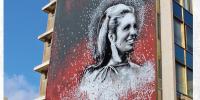
Yazan Halwani is a young Beiruti artist who paints murals of revered Lebanese and Arab figures on prominent walls in a bid to help overcome sectarianism in this fragmented city. “What I try to do,” he explains down a fuzzy line from Beirut, “is write the stories of the city, on its own walls – creating a memory for the city.”
This Anti-Abortion Influencer Is Using ‘Magical Birth Canal’ Videos to Supercharge the Movement
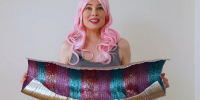
Laura Klassen is using props, satire, and a pink wig to pioneer a young and edgy approach to anti-abortion messaging in Canada.
By Valerie Kipnis and Elizabeth Landers
May 4 2020, 12:45pm