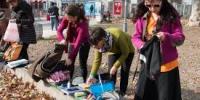
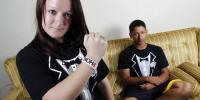
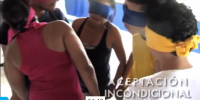
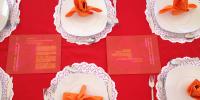
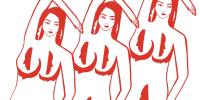
“Misplaced Women?” is an art project-workshop by Tanja Ostojic in which she and project`s participants – artists , art students , cultural workers and activists: Nela Antonovic, Gorana Bacevac, Nadezda Kircanski, Tatjana Beljinac, Milica Jankovic, Tamara Bijelic, Irena Djukanovic, Bojana Radenovic, Marija Jevtic, Irena Mirkovic, Jelena Dinic, Sanja Solunac and Suncica Sido showed the everyday life activities that are characteristic for migrants, refugee
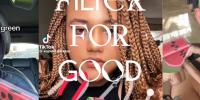
A watermelon filter on TikTok is allowing users to raise funds to support civilians in Gaza, where more than 11,000 people have been killed since Israel began an offensive military attack on the Gaza Strip in October, after a Hamas attack killed 1,400 people in Israel and saw roughly 200 civilians taken hostage.
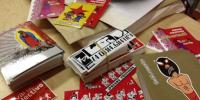
Sublevarte, a Collective of Mexican artists, was born out of the ENAP (National School of Fine Arts) of UNAM (the National Autonomous University of Mexico), during the student strike of 1999-2000, the longest student strike in history.
Maha ElNabawi
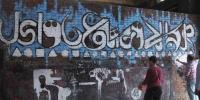
Amid the bleak backdrop of a revolution-riddled Egypt, a beacon of positivity shone on downtown Cairo Friday during the launch of one of the most exciting, social-conscious street art collaborations to happen this year.
CORPUS CHRISTI — Many Flour Bluff ISD students have developed an extracurricular activity that takes their education to the streets, to social media and toward a path of change: activism.Much of the students' passion stems from the April 1 suicide of 16-year-old Ted "Teddy" Molina, a former Flour Bluff Independent School District student.Ted's family has attributed his death to bullying.
This special EDition is a revolutionary chant against the menacing cantankerous demonic , satanic COVID 19. And again doubles as a bold and poetic supplication to the great Almighty God to release us off this pandemic bondage. This Edition is a poetically driven spiritual prayer for freedom of expression and freedom after expression.
Estados de excepción (States of Exception) is series of participatory cultural interventions created for women to freely and joyfully exercise our rights in public and secure environments, currently being produced in Mexico and abroad.
For over 60 years, Colombia has been facing war between guerrilla groups, the State, paramilitary groups and drug dealers. Hundreds of thousands of people have been killed, raped, displaced and threaten by this armed conflict. The common trait of this tragedy has been the people being in the middle, the people that still today pay the consequences.
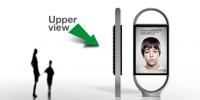
Spanish organization the ANAR Foundation (Aid to Children and Adolescents at Risk) releases a campaign that takes advantage of the process of lenticular printing to send an offer of help to abused children without alerting their abusers, even if they’re walking together.
Lenticular printing is a process that allows for different photos to be seen depending on the angle the image is viewed from.
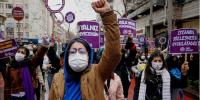
It has been a tumultuous and anxious week for women in Turkey. When President Recep Tayyip Erdogan issued a decree at midnight last Friday, annulling Turkey's ratification of the Istanbul Convention on violence against women, women poured onto the streets of Turkish cities to protest. Further demonstrations are planned.
Media artist Joseph DeLappe announces the completion of “The Drone Project: A Participatory Memorial” on the campus of Fresno State University in California.
As a visual art student, I’m interested in hearing your feedback about this project. Thanks
We need to make a call to awaken humanity from their passivity and social indifference and acceptance of criminals who did commit crimes against humanity. When a human suffers we also suffer. Is only one Humankind I’m not from a different species.
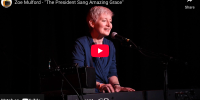
"The President Sang Amazing Grace" tells the story of the 2015 attack that claimed nine lives at the Emmanuel AME Church in Charleston, SC. It first appeared on Zoe's 2017 album "Small Brown Birds" and was widely played on independent folk radio shows across the US. Since then, the song has taken on a larger life, inspiring a variety of artists and finding its way to new audiences.
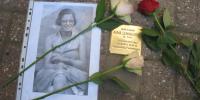
The late, late snow has finally disappeared from Berlin’s streets. Visible once again, here and there, are the “stumble stones” –Stolpersteine in German – with their brief, tragic messages.
Many Berlin tourists will enjoy the night life. They may also look upwards – at the giant TV tower, the Brandenburg Gate, at ancient and less ancient churches. There is a wide assortment of memorial monuments, some impressive, some uninspiring.
Artists4Ceasefire is a collective of actors, filmmakers, and other artists calling for an immediate and permanent ceasefire during the Gaza war in Gaza, the delivery of humanitarian aid to civilians, and the release of all hostages.The collective was started on October 20, 2023, two weeks after the October 7 attacks.
“My image was inspired by the #MeToo Revolution, my personal experiences with the male gaze and a healthy amount of frustration and repulsion. What I hope to convey in this image is the sense of verbal, physical and energetic male ownership that is placed on women in society.”
— Beata Kruszynski is a freelance illustrator and art teacher in Ontario, Canada.
In 2023, it is impossible to be an apolitical artist in Eastern Europe. As war rages on in Ukraine, art serves as a powerful and necessary tool, according the members of the Sunflower Solidary Community Center in Warsaw: Maria Beburia, Sebastian Cichocki, Kuba Depczyński, Taras Gembik, Yulia Krivich, Kaja Kusztra, Natalia Sielewicz, and Bogna Stefańska.
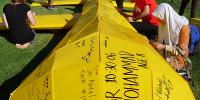
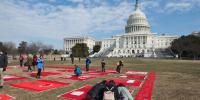
The Monument Quilt is an on-going collection of stories of survivors of rape and abuse. By stitching our stories together, we are creating and demanding public space to heal. We are building a new culture where survivors are publicly supported rather than publicly shamed. From 2013-2016, more and more stories will be added to The Monument Quilt as participants make their own squares, host workshops, and organize local displays of the quilt.
To state or chant ‘BLACK LIFE’S MATTER’ is not to say other lives don’t matter, it’s a reminder that four hundred years and counting, black lives didn’t matter enough. Not during the dark era of slave trade and its horrors on the African, not after slavery ended and blacks were left holding the short end of the stick.
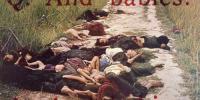
Ronald Haeberle took a color photograph of the bloody corpses of men, women, and children after the Mai Lai Massacre during the Vietnam War in in March 1968, initially publishing it in Life magazine. Later the image was used by the Art Worker's Coalition to create the infamous poster, "And babies.," which superimposed "Q: And babies? A: And babies" in red letter across the top and bottom of the image.
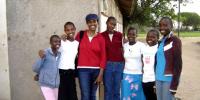
Mtendo MweMa Project's mission is to provide a safe house and educational opportunities to girls, especially those in danger of female circumcision, early marriage and pregnancy, whom otherwise have no alternative but to return to their villages during the holiday seasons in Kenya, East Africa.
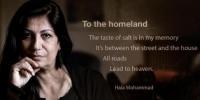
"Today there is literature coming out of Syria that we could have never even dreamed of just a few years ago," Atrash says.Rather than relying on metaphors and allegorical images, these new poems rely on literal, visceral descriptions, with a newfound emphasis on a united Syrian identity instead of religious symbols.
Ghada al-Atrash, a Syrian-Canadian writer and translator, has been studying Syrian poetry for decades.
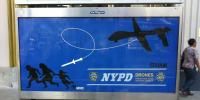
On Sunday, September 16th at around 1am, a white van—labelled with “Van Wagner’s” blue logo and topped by a yellow strobe light—circled through permanently lit Times Square. Inside the vehicle, the driver and passenger, both dressed as construction workers, were nervous. They had just vandalized one kiosk a few yards away from an NYPD tower, now they were about to hit another one right underneath the nose of a large white NYPD security camera.