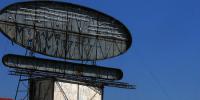
Mayor Gilberto Kassab passed a Clean City Law that banned all public advertising in Sao Paulo, one of the world's most populous cities. The mayor gained the support of the city's elites in pressing the law as an anti-pollution measure targeting "visual pollution". The city was quickly stripped of its ubiquitous billboards, signs, graffiti and other public ads.
If you're a bibliophile you'll get a kick out of the car-turned-library that can be found in Buenos Aires, Argentina. Artist Raul Lemesoff took an old 1979 Ford Falcon, a popular mode of transport amongst the military forces of its time, and transformed it into a mobile library shaped like a tank.
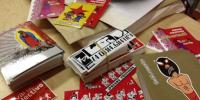
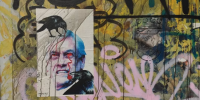
"The walls of the streets of downtown Santiago are covered with stickers, art, words and posters.
The messages are varied and range from "Feminist power" to "All cops are bastards". They have taken over the walls of Zona Cero (Ground Zero), the name given to the area around Plaza de la Dignidad, where anti-government protests have been held - and at times brutally repressed by police - since 18 October.
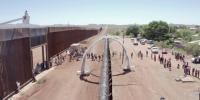
order Crossers comprise a series of lightweight robotic sculptures that poetically explore the notion of borders and boundary conditions. The inflatable sculptures rise up to several stories high and extend across a given threshold. Their choreographed performance, originating on both sides of the border, would stage a symbolic connection.
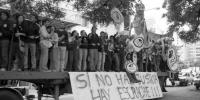
Faced with a lack of prosecution of those accused of crimes against humanity committed during Argentina’s military dictatorship, family members and descendants of the country’s estimated 30,000 disappeared took action.
While governmental support for arts and culture is often meager, the Brazilian national government has recently demonstrated great interest in the industry. They've just introduced a "cultural stipend," which provides workers with 50 real (roughly $25) per month for arts and cultural expenses. The allowance covers personal spending on things like movies, concerts, books or museums.
Ahead of Monday’s planned protest, police set up a barricade around the presidential palace, which a spokesperson described as a “peace wall” to prevent vandalism, the Guardian reported. But protesters said the barrier was symbolic of the president’s refusal to take on the issue, noting that he frequently makes a show of traveling in drug cartel-controlled parts of Mexico but felt unsafe ahead of their protest.
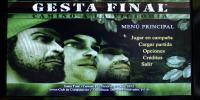
HAVANA — It’s the latest challenge for computer gamers, in Cuba at least:
Fight your way through mangrove swamps shoulder-to-shoulder with bearded guerrillas clad in the olive green of Fidel Castro and Ernesto “Che” Guevara. Your mission: Topple 1950s dictator Fulgencio Batista.
It was October 31st, 2012, when a new artist appeared on social media. In a series of video clips, she proposed with a soft and slow speech that Peru hide its poverty. Her project consisted of installing vinyl pieces to avoid what she called "the visual pollution." She titled the project Don't be poor, be fashion(able).
Most cheLA activities are organized around a series of workshops, which may act in combination, are designed as areas of aesthetic, technological and theoretical concentration, and structured to promote their development. Its core activities are research and experimentation residences. As participants in the Parque Patricios neighborhood life, within the Federal Capital, are evident human needs.
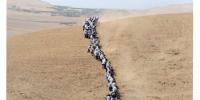
Five hundred volunteers with shovels gathered at a huge sand dune on the outskirts of Lima, Peru, and over the course of a day moved it by several inches. Alÿs developed the idea after first visiting Lima in October 2000. The political context was inescapable: “This was during the last months of the Fujimori dictatorship. Lima was in turmoil with clashes on the streets, obvious social tension and an emerging movement of resistance.
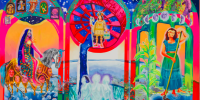
The work of Marcela Cantuária (b. 1991, Rio de Janeiro; lives in Rio de Janeiro) often portrays female figures who navigate regional, international, and social boundaries. Often highlighting symbols from tarot and astrology as well as themes that reflect political and environmental activism in Latin America, she weaves narratives of social spheres, political associations, and ethereal wishes.
During 2011, students around Colombia decided to create a National Student organization that would organize thousands of them to reject a harmful educational reform (Reforma a la ley 30). Before this year, student organizations were characterized by their segmentarity and old fashion yet violent ways to protest.
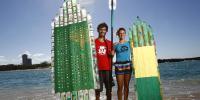
All those who practice surfing know firsthand the serious problem our beaches face: pollution. While some only complain, others do something about it. Two Brazilian surfers decided they could help raise public awareness of the need to protect nature of the proliferation of plastics used in the oceans through a novel idea: create surfboards plastic bottles.
Entre el 2004 y el 2014 se registraron 982 víctimas de ataque con ácido en Colombia. En el 41 por ciento de los casos, el agresor no fue identificado. El aumento de casos llevó a que en enero pasado se promulgara una ley que endurece los castigos contra ese flagelo y con la que se busca reducir al máximo esta situación en todo el país.
Sublevarte, a Collective of Mexican artists, was born out of the ENAP (National School of Fine Arts) of UNAM (the National Autonomous University of Mexico), during the student strike of 1999-2000, the longest student strike in history.
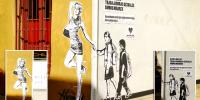
Spanish organization the ANAR Foundation (Aid to Children and Adolescents at Risk) releases a campaign that takes advantage of the process of lenticular printing to send an offer of help to abused children without alerting their abusers, even if they’re walking together.
Lenticular printing is a process that allows for different photos to be seen depending on the angle the image is viewed from.
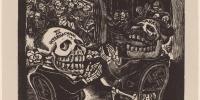
Born on June 30, 1902, in Mexico City, Leopoldo Méndez would become one of Mexico’s most significant and beloved graphic artists of the twentieth century. Méndez was one of eight children in a poor household. At a young age, Méndez used art as a means to bring joy to the Mexican community and attended the Academy of San Carlos located in Mexico City.
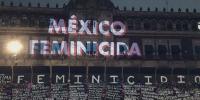
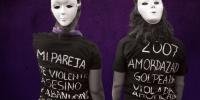
El acoso sexual a las mujeres en México, no es novedad. Desde un chiflido o grito de “mamacita” en la calle hasta una alarmante cifra de seis feminicidios diarios, la violencia machista es un asunto cotidiano.
Lo que sí es novedad es que este año las mujeres no se estén quedando calladas, y que salgan a las calles, ya no con miedo, sino con determinación de defender su derecho a ser respetadas.
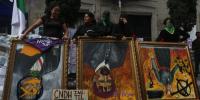
Women's collectives and feminist groups occupied the National Commission of Human Rights demanding results to several neglected, open investigations of feminicide in the country. During the occupation, they interviewed the portraits of historical "national heroes" with spray-paint, glitter, markers, and liquid paint.
From 1995 to 1997, Colombian families reunited in front of the TV to watch Quac: El Noticero, a comedy newletter performed by the comedian Jaime Garzon and the actor Diego Leon Hoyos.
It has been the only space in which the Colombian society was allowed to see a well made newsletter about the reality of the country and their politicians from a comedy perspective.
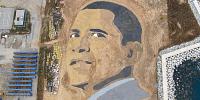
Jorge Rodríguez-Gerarda is a cuban Artist that was born in 1966. One of his projects was naed Expectations in which he did with sand and grave a massive image of Barack Obama, as a way to reflect all what this presidential candidate representated in terms of change.
Brief History is part of a series produced by Carlos Motta between 2005 and 2009 that presents two chronologies of events in Latin America: one of U.S. interventions in the region since 1946, and one of the area’s leftist guerrilla movements. One side of the print outlines the interventions’ interconnected narratives in text; the other depicts two bloody handprints and the symbol of the Mano Blanco death squads from 1980s El Salvador.