Visual artist Alexandre Orion removes soot in an artful manner to produce skulls in the tunnels of the polluted city of Sao Paulo. Orion does so in an attempt to create intervention, raise awarenes, and decrease pollution. "From the ocular cavities of so many dead, his work looks out on the living and interrogates people passing by; it quietly criticizes our omission, our comfortable acceptance of pollution." ( Jose De Souza Martins)
From a Universe of Trash, Recycling Art and Hope
By STEPHEN HOLDEN
“We are not pickers of garbage; we are pickers of recyclable materials,” Tião, an impoverished Brazilian catadore, or trash picker, declares to a talk-show host in Lucy Walker’s inspiring documentary “Waste Land.”
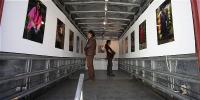
Se sacuden la desconfianza y entran al camión. En él no hay frutas, ni verduras, ni carnes. El piso, igual que el techo y las paredes están inmaculadas y pintadas de blanco. Solo ellos y algunos compañeros inmortalizados en fotos llenan el espacio.
It was a long time coming - but it was worth the wait.
Nearly two years ago, more than a dozen of Mexico’s biggest performing artists came together in a mega-event aimed at saving Wirikuta, one of the country’s most sacred sites, from devastation at the hands of Canadian gold and silver mining operations.
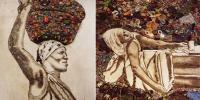
In 2008, my work as an artist took me to a gigantic landfill outside Rio de Janeiro called Jardim Gramacho. After operating for more than 30 years, the sanitary facility, once one of the largest in the world, had reached its maximum capacity and was on the eve of closing permanently.
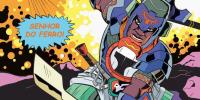
Imagine if back in the 1960s, creators Jack Kirby and Stan Lee had found inspiration for The Avengers in Yoruba mythology. Instead of Iron Man, we'd have the warrior Oxaguiã. Taking the place of the blue-eyed, blonde-haired Norse god Thor would be the equally strong and black-skinned Xangô, the ruler of justice — who also happens to carry a hammer.
On the 5th of May 2021, the subway's 12-line partially collapsed, killing 24 people and injuring more than 70. Onboard, were children, young women and men, and the elderly. The accident also killed a man and injured a woman who was driving a car, upon which the train fell.
The poorly conditions of the subway structure had been repeatedly reported by neighbors living nearby. No institutional response was given.
For over 60 years, Colombia has been facing war between guerrilla groups, the State, paramilitary groups and drug dealers. Hundreds of thousands of people have been killed, raped, displaced and threaten by this armed conflict. The common trait of this tragedy has been the people being in the middle, the people that still today pay the consequences.
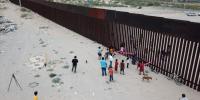
hot pink see-saws installed along the US-Mexico border where one person on each side can sit and see-saw with the other. installed at Sunland Park, nine miles northwest of El Paso, on the 18 feet slats border wall between Mexico and the United States. It is at this site where the US Border Patrol detained about 300 migrants from Mexico. (Public Delivery) the installation lasted only 1 day and was done without permission.
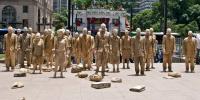
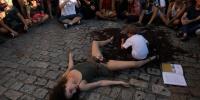
A troupe of approximately thirty women and men of various ages, sizes, ethnicities and performance backgrounds marched through the performance art space of SESC-Vila Mariana in Sao Paulo and then through the streets of downtown Sao Paulo, silent, blind folded, dressed in business attire, and covered completely with a gray mud. The performances walked slowly in unison at turtle's pace.
Fashion designer and social scientist, Lucia Cuba, has taken up the task of using fashion as a vehicle to bring attention and awareness around Articulo 6, an article in the Peruvian constitution that declared a law of forced sterilization of women in the country. Cuba has taken the testimonies of the victims of this article and integrated them into the very fabric of her designs.
MEXICO CITY — Tens of thousands of women vanished from streets, offices and classrooms across Mexico on Monday, part of a nationwide strike to protest the violence they suffer and to demand government action against it.
The women’s absence from public spaces was intended to be a reminder that every day, 10 women in Mexico are killed — and so disappear forever, organizers said.
São Paulo went through a process of privatization of the public spaces. The local government implemented several rules that beneficiated the real state speculation, the city is expensive, and it's not for the poor.
Besides that, in october the elections were a hard game for the progressive party, PT, since two conservative candidates had big shares.
Vegan-friendly cosmetics brand LUSH is launching the “Shark Attack” campaign to save sharks from slaughter on World Oceans Day (June 8). Starting today, LUSH will re-launch its popular vegan Shark Fin Soap online (available in-store starting June 8) and donate 100 percent of the $5.95 sales price to The Rob Stewart Sharkwater Foundation, an organization created to continue the work of late ocean conservationist and filmmaker Rob Stewart.
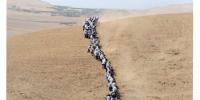
Five hundred volunteers with shovels gathered at a huge sand dune on the outskirts of Lima, Peru, and over the course of a day moved it by several inches. Alÿs developed the idea after first visiting Lima in October 2000. The political context was inescapable: “This was during the last months of the Fujimori dictatorship. Lima was in turmoil with clashes on the streets, obvious social tension and an emerging movement of resistance.
Tranvía Cero is a group of artists from Ecuador who have been creating artistic projects with the aim to empact community lives and change the ideas of art as an exclusive terrain. The describe their goal as a redefinition of art through the social engaging experiences.
In 1995, Bogota was a chaotic city. Among others, it presented high ranges of homicides, delinquency, corruption, no sense of belonging, traffic chaos and financial problems.
"Beginning in 1910, the Mexican Revolution spawned a cultural renaissance, inspiring artists to look inward in search of a specifically Mexican artistic language. This visual vocabulary was designed to transcend the realm of the arts and give a national identity to this population undergoing transition.
Hundreds of taxi drivers gathered together on the streets of Mexico City protesting against Virtual apps like Uber and Cabify. They formed a caravan and stopped the traffic for hours, as a way of denouncing unfair price competition.
Artists in Rio de Janeiro have staged a pop-up street show to protest against the closure by the new far-right state government of an exhibition because of a performance attacking dictatorship-era torture.
On July 2nd, 2013, after attending the Gas Exporting Countries Forum (GECF) conference, Bolivian President Evo Morales departed Russia from Vnukovo Airport in Moscow aboard his presidential plane. However, a "leak" suggested that Edward Snowden was aboard, which led Spain, France, and Portugal to close their airspace to the aircraft, to then be grounded in Austria.
A converted school bus with the sawed-off top is taking Mexico City visitors on the "Corruptour", a visit to the country's seedy underbelly of murderous misdeeds and multibillion-dollar graft by public officials.
Thousands of students have protested in the Colombian capital, Bogota, and other cities against government plans to reform higher education.
The demonstrations were mainly peaceful but Bogota police fired tear gas and used water cannon after some people threw stones, officials said.
Students say the proposed reforms will lead to partial privatisation of the public universities.
Haiti is a conservative society where Roman Catholicism shapes many of its social norms. Patriarchal norms, says Haitian feminist Pascale Solages, co-founder and general coordinator of feminist organization Nègès Mawon, have informed its strict views on abortion. In Haiti, women can’t legally access voluntary abortions. Doctors can’t perform them unless the woman’s life is in danger.