When Agnes Gund, the 77-year-old philanthropist and president emerita of the Museum of Modern Art, got the call, she thought: “That’s odd. What’s that got to do with someone like me?”
When Fran Lebowitz, the 65-year-old author, got the call, she said, “I thought it was a joke.”
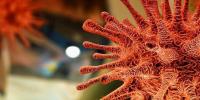
The global response to COVID-19 has made clear that the fear of contracting disease has an ugly cousin: xenophobia. As the coronavirus has spread from China to other countries, anti-Asian discrimination has followed closely behind, manifesting in plummeting sales at Chinese restaurants, near-deserted Chinatown districts and racist bullying against people perceived to be Chinese.
Identity/Identidad was included in The Disappeared exhibition at the El Museo Del Barrio from February 23rd to June 17th 2007. However, this project was exhibited over a long period of time at numerous different locations.
In Women Are Heroes, JR introduces women who sometimes look death in the face, who go from laughter to tears, who are generous, have nothing and yet share, who have had a painful past and long to build a happy future.
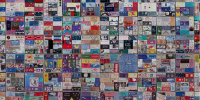
The Quilt was conceived in November of 1985 by long-time human rights activist, author and lecturer Cleve Jones. Since the 1978 assassinations of gay San Francisco Supervisor Harvey Milk and Mayor George Moscone, Jones had helped organize the annual candlelight march honoring these men. While planning the 1985 march, he learned that over 1,000 San Franciscans had been lost to AIDS.
At the peak of her career in 1976, Georgia O’Keeffe refused to lend her work to a pivotal exhibition in Los Angeles, “Women Artists: 1550 to 1950.” It was one of a wave of all-female shows — some 150 — that decade to spotlight artists largely ignored by major museums and galleries. But O’Keeffe, the most famous female artist of her day, saw herself in a different category — “one of the best painters,” period.
“Nude” and “vulnerable” aren’t words commonly used to describe Arab males. But that’s how Tamara Abdul Hadi pictures them—literally—in the project Picture an Arab Man. With the goal of breaking the stereotype of Arab men as violent and dangerous, Abdul Hadi has traveled during the past three years to countries including Egypt, Palestine, and Yemen to photograph semi-naked men.
Google entered the art game in 2011 with the introduction of its Art Project, working with 17 museums and expanding further to over 150 institutions in 2012. Last June, Google added 5,000 images of street art from around the world to the project and today it has announced that it will be doubling that number to 10,000 with the launch of the second edition of its Street Art Project.
‘Since Plotinus’, writes Joseph Tanke (2019, p. 486), ‘Western art has been consecrated to beauty, and beautiful art has been understood as the achievement of good form’. But alongside this interest in beauty and form, art has been committed to politics and perspectives, equity and rights. Consequently, and particularly since the start of the modern era, artists frequently initiate or participate in ‘difficult conversations’.
IMAPCT are youth activists who view the creative arts and leadership training as a way to develop ourselves and change the world in a positive way. They believe that they must be the message that bring through hardwork, focus, discipline, unity and the principles of S.O.S. safe space, outstanding effort and service to their family friends and community.
Radio Ambulante is an award-winning podcast and audio series co-founded by novelist Daniel Alarcón in 2012. Described by many commentators as a Spanish-language This American Life, Radio Ambulante publishes stories from “everywhere Spanish is spoken,” reaching as many as 60,000 listeners worldwide per episode.
Mind Over Media is a crowdsourced educational platform that contains diverse examples of contemporary propaganda on a wide range of social, political, economic and environmental topics.
The signature angst of our time was profoundly expressed in the poems submitted for WOMAWORDS Literary Press June 2020 edition, Imaging Life After COVID-19, offering women poets an opportunity to write about their experience of the pandemic and their vision of or for the future. The universal trauma wrought by this virus, invisible and silent and pouncing with madness and mendacity, brings us to a place we’d like to forget but never will.
Introduction: The Ambulatory Free States of Obsidia
The Ambulatory Free States of Obsidia is a tiny, Matriarchal, Micro-nation located at the confluence of feminism and geography.
Grand Marshal Yagjian's Great Vision for The Ambulatory Free States of Obsidia came in 2015 when its land claim was 'liberated' from a former lover’s house for a greater purpose.
Mass media using propaganda to brainwash citizens. Confusion and ignorance causing a divide. People rising up against an oppressive government. Humans being torn between rage and love. These are the themes of Green Day’s widely successful 2004 album, “American Idiot.” These themes still sound familiar. Nearly two decades later, the world, especially the United States, faces these same issues.
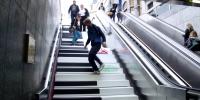
“Piano Stairs” is an interactive playful musical stairway installation created into the Odenplan underground station of Stockholm to make people use stairs more often than elevator. The project was part of a Wolkswagen initiative called “The fun theory” whose main objective and mission is to “change people’s behaviour for the better by making it fun to do.”
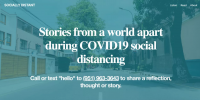
How it works:
1. Call or text “hello” to (951) 963-3643 to share your experience. Make sure you’re in a quiet place. Maximum recording time is 10 minutes.
2. Please start by telling us where you’re calling from. Perhaps you can even paint a picture of your surroundings for anyone who listens. Then share what you want to say.
3. Hang up when you’re finished.
Gregg Segal -- a California-based artist who is known for using the medium of photography to explore culture with the "sensibility of a sociologist" -- travelled around the world asking kids to keep a journal of everything they ate in a week. Once the week was up, Segal made a portrait of the child with the food arranged around them:
grrrRoar! Ecology is sexier when you focus on women and fanged beasts. Fashions in leopard print help us make that connection globally and online. Polluters at least pause at the reminder that nature isn't dead yet and in fact stirs the same passion as the woman you just met who's saying something about "Fanged Wilds"!
“My intention was not to disappear in the environment but instead to let the environment take possession of me” Said Liu Bolin. With his strong photography, Bolin vanishes into the city, creating a powerful statement about our relationship, as humans, to our surroundings.
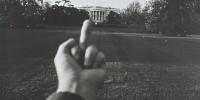
The son of an exiled political dissident, Chinese artist and activist Ai Weiwei’s work is inherently political. Since 1995 Ai Weiwei has been traveling the world, photographing himself flipping off iconic monuments of power in his Study of Perspective series.
While meditating in front of a Nepalese Sarasvati statue on New Year's Day in 1991 at her California home, Mayumi received a calling that brought a sudden halt to painting. Having witnessed the horrors of atomic bombings as a child and later, watching her beloved Japan become a leader in nuclear-energy, and seeing the effects of depleted uranium, Mayumi had to pursue a global cause greater than her art or feminism.
The user muchachafanzine on instagram is an activist who writes a "decolonial native xicana feminist fanzine". They are an online activist and they spread their message through their page, the zine, and through merchandise. Daisy Salinas began Muchacha Fanzine as a feminist punk zine in 2011. Over the years, Muchacha has grown into a larger, submission-based compilation of work by marginalized voices from around the world.
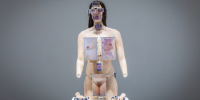
Filip Custic (Santa Cruz de Tenerife, Spain 1993) works across photography, performance and video to address themes around identity, body and our relationship with technology. Mirrors and screens are a recurring features, a reference to our age of image-obsession and selfies, and Custic also uses symbols, references to science, and art-historical borrowings in his art.