In Citizen, Claudia Rankine recounts mounting racial aggressions in ongoing encounters in twenty-first-century daily life and in the media. Some of these encounters are slights, seemingly slips of the tongue, and some are intentional offensives in the classroom, at the supermarket, at home, on the tennis court with Serena Williams and the soccer field with Zinedine Zidane, online, on TV—everywhere, all the time.
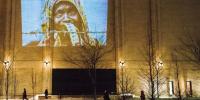
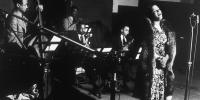
In March 1939, a 23-year-old Billie Holiday walked up to the mic at West 4th's Cafe Society in New York City to sing her final song of the night. Per her request, the waiters stopped serving and the room went completely black, save for a spotlight on her face.
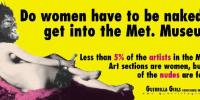
The Guerilla Girls are masked art activists who seek to bring attention to women in the art world and expose the unfair dominance of white males in the field. Their research into the racial and gender inequality in the art world is exposed through ironically worded public posters and billboards.
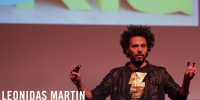
Enmedio member Leonidas Martín at Creativetime 2012 (New York). His presentation “How to Disrupt the Financial Order with Humour, Creativity and a Dose of Mischief” is priceless. Watch the video and laugh.
The Survivaball made its first appearance in 2006, when "Halliburton representatives" attended a conference on catastrophic climate change and demonstrated the functionality of the large inflatable suits ("a gated community for one"), which keep corporate managers safe from global warming. Not long afterward, in Berlin, the Yes Men learned they also work as disruptive, arrest-resistant tools.
#makeamericagreatagain is a group exhibition of diverse media that ran during February and coincided with the initial Democratic and Republican primaries. The exhibition’s title is culled verbatim from Donald Trump’s campaign slogan.
Rooted in Native American and indigenous practices,[11] restorative justice is a set of principles and practices that aims to help communities heal from conflict and harm by developing a common understanding of the root causes and effects.[12] Restorative justice can occur in a variety of different contexts: in the workplace, at schools and within, or instead of, the criminal justice system.
"SOA Cycle, and what it later became, which is called the Democracy Cycle, is a group of seven large works that approach the question of democracy. What is democracy? How is it constructed? How is it implemented? Is it something that is to be thought of in relation to its political influence? Or is it something that plays out in terms of cultural and social, and even emotional terms, for instance?
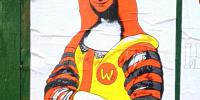
A French illustrator/painter/graphic designer from Nice who also has had shows in galleries in Monaco, Mr OneTeas is known to some as a graffiti artist who samples pop culture on his canvasses and appropriates commonly recognizable images of Hollywood names like Liz Taylor, Princess Grace, and Alfred Hitchcock. He also presents 80s television culture ironically (spotlighting Gary Coleman, Alf, Mr.
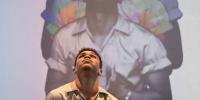
"WILD: Act I" is a film demonstrating the power of creativity in constraint. Using moving choreography performed by Elijah Lancaster and vivid imagery displayed on three walls in a mock cell, Jeremy McQueen gives voice to young Black and Brown men caught in the criminal 'justice' system.
Games for Change is a community of game designers, activists, artists and individuals focused on creating and using digital games for purposes of social change. Games for Change is a large and loose community, but it has a major nonprofit organization at its center, who organizes the majority of the meetups and work of the movement.
John Wood and Paul Harrison are renowned British artists whose collaboration has led to the merging of video art with performance and conceptual art. Their works usually reside on the relationship between human beings, objects, and the environment, with humor and wit attached to them. They are well in place to make the artworks thought-provoking and entertaining. One such has to be 'Device'.
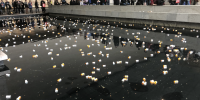
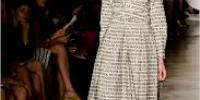
To protest unethical labor practices in Bangladesh, specifically unsafe working conditions, 99 Pickets, The Illuminator, and Ismail Ferdous took action during New York Fashion Week.
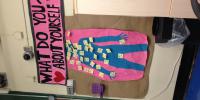
Students at the NYC iSchool, a high school in Manhattan, worked for 9 weeks to create works of activist art with art teacher Gretel Smith. We were lucky enough to have Stephen Duncomb and Steve Lambert from the Center for Artistic Activism come to our class to teach a lesson inspiring students to think like activists; they came back later to critique students’ works-in-progress.
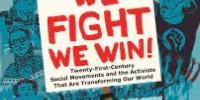
Greg Jobin-Leeds, a long-time social activist, collaborated with AgitArte, a collective of artists and organizers, to capture the stories of today’s social movements and the activists behind their success with the release of When We Fight, We Win: Twenty-First-Century Social Movements and the Activists That Are Transforming Our World.
On this International Women’s Day, we wanted to celebrate the commitment of a very special human being. Her name is Zaria Forman, a leading artist in contemporary art with a cause. She is not only an exceptional human being; she is also an incredible American drawer who uses art to convey the emergency of climate change.
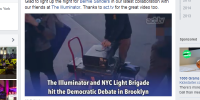
Bernie Sanders supporters know how to bring the party! And they did it big time for the Democratic Debate in New York this week, with help from The Illuminator & the NYC Light Brigade. They installed an interactive video game featuring Bernie jumping over obstacles and WINNING!
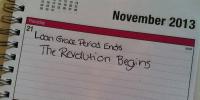
“The Grace Period” is a live blogging platform with seven anonymous contributing bloggers called: Monday, Tuesday, Wednesday, Thursday, Friday, Saturday and Sunday. Through, videos, writings, and visuals they present multiple perspectives of landing/creating a meaningful job after school in a country where personal and national debt is high and jobs are few. In this environment, will our creative spirits be resilient?
This afternoon, in the Sackler Wing of the Metropolitan Museum of Art in New York, a mother and daughter threw coins into its reflecting pool while a couple posed for engagement photos in front of the Temple of Dendur, the man in red pants and a gray blazer, the woman in a black jumpsuit. A long line snaked out of the temple. It was tranquil, most people speaking in a whisper. That grand space has such an effect on people.
You enter a narrow corridor where backlit Plexiglas panels offer three compelling narratives about whiteness and blindness: Nelson Mandela’s imprisonment and hard labor in Robben Island’s limestone quarry under a blinding sun; Bill Gates’ purchase of the Bettmann and United Press International archives, consisting of 17 million images, and their subsequent burial deep underground in a limestone vault for the sake of preservation, after Gates’s company C
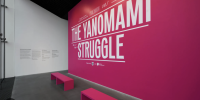
A new exhibition at The Shed in New York is a colour-soaked, eye-opening look into Yanomami life – an Indigenous culture in the heart of the Amazon rainforest
FEBRUARY 13, 2023
TEXT: Violet Conroy
It is a clear, fresh New York night in March 1939. You're on a date and you've decided to investigate a new club in a former speakeasy on West 4th Street: Cafe Society, which calls itself "The Wrong Place for the Right People".
MFA Fashion Parsons graduate and fashion designer Lucia Cuba, for her senior collection, created a fashion collection inspired by the victims and used to raise awareness of forced sterilization in Peru.