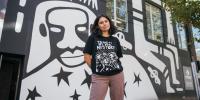
The sneaker brand Converse has commissioned an indigenous artist in Australia to create a gigantic mural with a surprising twist. The Melbourne mural plays homage to indigenous urban identity and was painted with a special type of pollution-absorbing paint that “cleans the air,” according to the agency behind the project, Amplify.
ONGOING ORGANIZATION:
CALLED: Iranti [pronounced írantì] is the Yoruba word for ‘memory’. Largely found in South West Nigeria and parts of Benin Republic, the Yoruba people consider memory a prized form of intelligence which determines how often one remembers what they see and hear.
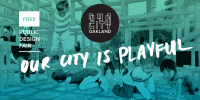
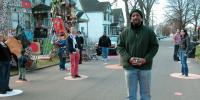
Our City is a startup nonprofit based in Oakland and working with cities everywhere. They work with governments, cultural institutions, companies, community organizations, designers, and residents to produce
events, installations, and workshops that use public design to improve cities.
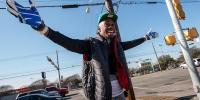
Frank Waln, a 25 year old Native American hip hop artist, tours the country and Canada performing and teaching motivational workshops to students across the country. He took to rap at a young age when he found a cd (Eminem's The Marshall Mathers LP) on the side of the road. Growing up on the Rosebud Sioux Reservation of South Dakota, he realized that the hip hop music genre was an outlet for expressing pain and frustration.
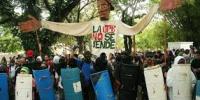
The work of a radical theater and puppetry collective, known as Papel Machete, produces and performs throughout Puerto Rico and the United States. Papel Machete was established on May 1, 2006 during protests responding to the government shutdown and political and economic crisis prompted by Puerto Rico’s status as a United States colony.
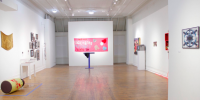
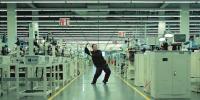
Whose Utopia? is a color film which is 19 minutes 58 seconds long. It was originally commissioned by the Siemens Arts Program back in 2005. The projector-style video is based on the work and social lives of assembly line workers at OSRAM’s light bulb factory in the Pearl River Delta in China. This area has received huge numbers of immigrants from inland provinces seeking work and better lives in the wake of Beijing’s booming economy.
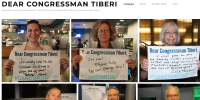
JR called for the creation of a global art project - the Inside Out Project - inspired by his large‐format street “pastings.” The concept of the project is to give everyone the opportunity to share their portrait and a statement of what they stand for, with the world. IOP provides individuals and groups from all corners of the globe with a vehicle to make a statement.
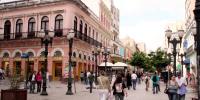
In the 1970s, Jaime Lerner, the former mayor of Curitiba, Brazil, transformed six blocks of the main downtown shopping street into a pedestrian zone in 1972, despite fierce objections from the merchants. He quickly accomplished this change in just three days by installing paving, lighting, planters, and furniture. The once-resistant merchants were impressed by the increase in their business and soon demanded an expansion of the traffic-free district.
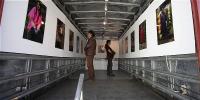
Se sacuden la desconfianza y entran al camión. En él no hay frutas, ni verduras, ni carnes. El piso, igual que el techo y las paredes están inmaculadas y pintadas de blanco. Solo ellos y algunos compañeros inmortalizados en fotos llenan el espacio.
Project Row Houses (PRH) is a neighborhood-based nonprofit art and cultural organization in Houston’s Northern Third Ward, one of the city’s oldest African-American communities. PRH began in 1993 as a result of discussions among African-American artists who wanted to establish a positive, creative presence in their own community.
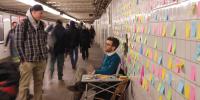
Matthew “Levee” Chavez sits at a table in New York City’s Union Square, sporting a thrift store suit and tie, holding a sign that reads “Subway Therapy.” This act of social practice, which started as an invitation for conversation, went viral after he set up shop at the subway the day after the 2016 presidential election. He wrote “Express Yourself” on a Post-It and stuck it to the tiled wall.
Students at the University of California-San Diego were surprised when an Unmanned Aerial Vehicle, commonly referred to as a drone, crashed in the middle of campus — or at least they thought that’s what happened.
A village shop in Coniston is stocked by local producers with everything from farm meat and vegetables to paintings and knitted goods. The produce is all homemade and brought in by local suppliers. Customers are invited to buy goods in the shop for an 'honest' price, there are guideline price tags attached to the items by the producer but customers are expected to pay what they consider an honest, suitable price for the item.
The Ogden Ar(t)chives Mailbox is a community project that was initiated by Ogden poet, Angelika Brewer. The project involves a metal sculpture of a mailbox, which has various decorative elements such as a typewriter, a birdcage, and a heart. The mailbox serves as a platform for the public to submit their creative works such as poems, drawings, letters, or anything that can fit in an envelope.
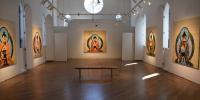
This is a series of paintings reflecting the struggle and sacrifices made by the Tibetan people for independence. The author is Tenzing Rigdol, who is a Tibetan and influenced a lot by the Dalai Lama and traditional Tibetan culture. The paintings are full of Tibetan cultural elements. For instance, the characters created in the paintings are Tibetan monks, who are the typical representatives of their culture.
An oversized facsimile of Rush poppers, tipped over, pouring out its viscous contents: this example of underground gay iconography blown up to almost belligerent proportions perfectly represents the aims of Party Out of Bounds: Nightlife as Activism Since 1980, a new exhibition at La MaMa’s La Galleria. The group show, curated by Emily Colucci and Osman Can Yerebakan, gathers together works by a small yet distinct menagerie of queer artists.
Enterprising Brooklyn men CHARGING people to see the new NYC Banksy street art by hiding it behind cardboard.
Some men in the tough Brooklyn neighborhood of East New York decided to charge admission when a Banksy piece showed up on their block.
It was the October 10 addition to the British artist's month-long street art residency he's dubbed Better Out Than In.
The Heidelberg Project is an outdoor art project in Detroit, Michigan. It was created in 1986 by artist Tyree Guyton and his grandfather Sam Mackey ("Grandpa Sam") as an outdoor art environment in the McDougall-Hunt neighborhood on the city's east side, just north of the city's historically African-American Black Bottom area.
The Bed-Stuy Aquarium (also known as the Hancock Street Bed-Stuy Aquarium) is a makeshift goldfish pond located on a sidewalk in the Bedford-Stuyvesant, Brooklyn neighborhood of New York City. The pond, originally formed by a puddle from a leaky fire hydrant, garnered attention from locals and the press beginning at the time of its creation in August 2024.
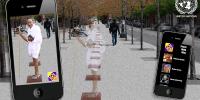
Imagine affecting the global cultural Landscape through art and technology use. Imagine one-mile long installation in 100 city locations worldwide, each mile-long install is of 250 bronze plaques of different Peacemakers. Then imagine its own App that when any smartphone is pointed at one of the plaques an entire timeline biographical history of that peacemaker becomes available.
We set up a gazebo and table in a public park. The gazebo had two notice boards in the shape of trees where reflections were encouraged. We had a sign with the name of the action "Fall in Love With Nature" painted upon it. On the table were resource lists for the public to take away with links to books and websites on the topic of forest bathing and connecting with nature.
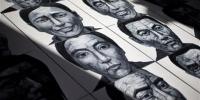
Beijing-based artist Liu Yi is working on a series of black-and-white portraits he knows will never be shown in a Chinese gallery. His varied subjects — men and women, young and old, smiling and pensive — have one thing in common: They are Tibetans who have set themselves on fire to protest repressive Chinese rule.
Wallhunter's Slumlord Project is an innovative project in Baltimore, Maryland that will use street art to expose and publicize vacant and dilapidated housing and the responsible parties for those conditions. The project will use different street art forms to display art that will attract community interest and support community identity.
"To that end, in the Spring of 2014 we launched the Chasing Ice Ohio Tour in an attempt to use the film to shift the political conversation around climate change. As a society, for us to address climate change properly, we need our leaders in Washington to stop debating about whether or not it is actually happening and start taking action.