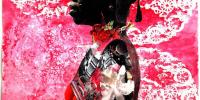
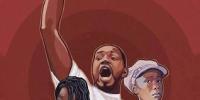
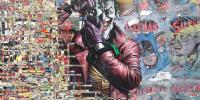
A Côte d'Ivoire-based artist, known as Kadarick, draws on the fantastical powers of The Hulk, Spiderman and Wonder Woman to articulate today's fears.
In a new pop-art series of 23 paintings titled Joker, the self-taught painter explores pop culture, politics, mass media and capitalism. The series was recently on display at the LouiSimone Guirandou Gallery in Abidjan.
Dr. Stella Nyanzi, a Ugandan medical anthropologist, activist, and writer, was convicted after writing and posting a poem online, in which she criticized Ugandan President Yoweri Museveni and his mother. In November 2018, Ugandan authorities charged Dr. Nyanzi with “cyber harassment” and “offensive communication” under Sections 24 and 25 of the 2011 Computer Misuse Act, and detained her in connection with the poem.
Made by Danish filmmakers Lotte Løvholm, Karen Andersen & Nanna Nielsen, Lagos in the Red follows Nigerian performance artist Jelili Atiku. Atiku uses his body as a prop as a means of sensitizing people to the problems that Nigeria - both as a people and a country - face.
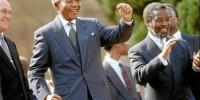
Mandela's notion of manhood changed over time. In the early days, he evoked the image of toughness to deal with an enemy that would not respond to reason. When it became possible to secure peace through talking, Mandela adapted. After his release his image was one of warmth and inclusiveness, embracing those who feared majority rule and even his former enemies.
Joseline de Lima was wandering the dusty alleys of her working-class neighborhood in the capital of Togo one day last year, when a disturbing thought crossed her mind: Who would take care of her two boys if her depression worsened and she were no longer around to look after them?
The term “Afrofuturism” was coined in the 1990s by the cultural critic Mark Dery, who recognized a preoccupation with the future in the work of a number of black artists. Ever since, it has remained a term that is retrospectively applied to seemingly disparate artists, from Missy Elliot to Toni Morrison. What unites the movement is a shared fascination with the black experience, particularly in America.
Our solution:
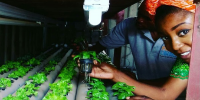
Fresh Direct Nigeria (Fresh Direct Produce and Agro-Allied Services) is “City Farming” using stackable container farms! Fresh DirectNigeria brings fresh premium organic produce closer to market with our Container Farm Technology.
The Green Belt Movement (GBM) was founded by Professor Wangari Maathai in 1977 under the auspices of the National Council of Women of Kenya (NCWK) to respond to the needs of rural Kenyan women who reported that their streams were drying up, their food supply was less secure, and they had to walk further and further to get firewood for fuel and fencing.
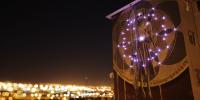
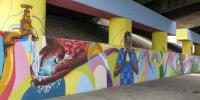
In Cape Town, South Africa the design firms Design Indaba Trust and Thinking have teamed up with artist Faith47 to help raise funds to bring more light to their urban city. Their goal is to raise funds to light up 700 meters of Manwabisi Park, which will ultimately reduce the crime rate in the area through more light. In order to get the community involved in the project, they have combined street art with community engagement.
One of the most pressing questions before us in the United States now is how to resolve the tension between our personal visions and needs, on the one hand, and the demands of being a member of a community, on the other.
WACENA, was established in the year 2008 by a number of concerned mothers together with women students from Makerere University Kampala with a purpose of addressing and alleviating the acute and long-term consequences of violence against the women and children of Uganda.
In her curatorial project Making Way, Ruth Simbao brought together works that complicated the idea of globalization’s effect on African nations, especially the idea that the new phase would usher in an almost frictionless movement of labor and capital across borders. Works by artists like Athi-Patra Ruga reflected on questions of how bodies moved through settler colonialist spaces.
VOA NEWS March 29, 2012 By Nico Colombant
WASHINGTON--A Sudanese artist from the restive Blue Nile region is using art and activism to promote the plight of people caught between borders and conflict.
In an audio montage of memories from refugees, the sounds of gunfire and explosions mix with crying babies. Narrator Michelle Orecchio describes how to reverse war's grip on so much of humanity.
The Women Are Heroes project has various steps in Africa, in Kenya, Sierra Leone, Liberia and Sudan.
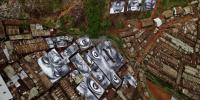
In January 2009, 2000 square meters of rooftops are covered with photos of the eyes and faces of the women of Kibera, in Kenya. Most of the women have their own photos on their own rooftop and for the first time the material used is water resistant so that the photo itself will protect the fragile houses in the heavy rain season.
In a bid to fight the spread of COVID-19, the EU Delegation to Ghana on Wednesday 27 May joined the International Organisation for Migration (IOM), the Accra Metropolitan Assembly (AMA) and artists from the Ghana Graffiti Collective, to launch an initiative to use street art and graffiti to create awareness about coronavirus and migration.
The artwork created by the Ghana Graffiti collective speak about hope, tolerance, love and solidarity.
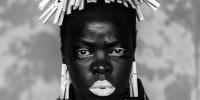
In the portrait Bester I, Mayotte, the sitter’s eyes stare directly at the camera, practically boring a hole in the lens. Their lips are painted white, their hair and ears adorned with clothespins. The self-portrait of Zanele Muholi is striking on its own, but it does not stand alone.
Driving along an ordinary dirt road, it's hard to miss the Goma Cultural Centre with its bright blue gate, emblazoned with the Congolese flag. "As you can see, we are proud to be Congolese around here," said Belamy Paluku, a volunteer manager at the youth centre.
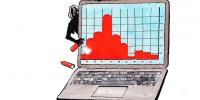
JAMES GUBB was finishing off the knuckles when the Johannesburg Stock Exchange (JSE) shut him down. Trading single shares between two accounts, Mr Gubb had managed to “draw” the image of a fist with an upright middle finger onto the share-price chart for Oakbay Resources and Energy Limited, a company controlled by the Gupta brothers, cronies of President Jacob Zuma, that is at the centre of allegations of “state capture” in South Africa.
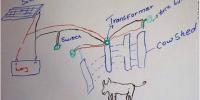
Richard Turere, 13, has devised an innovative system to protect his family's livestock from the wild beasts. He created "Lion Lights," which keeps the predators away from the family's enclosure. The Kenyan boy will speak about his invention at the TED 2013 conference.
Activist Boniface Mwangi on confronting corruption in his homeland, and director Sam Soko on recording his campaign
Kenyan director Sam Soko’s debut documentary feature, Softie, opens with the film’s protagonist, Boniface Mwangi, sourcing 1,000 litres of pigs’ blood. “I’ve found a van for you. When do you want it? When are you getting the blood?” Mwangi asks.
It started as an experiment: what happens when you equip a vibrant youth community with the resources to express themselves through hip hop and electronic music? Last summer I traveled to Goma, Democratic Republic of Congo to find out and the results were more beautiful than I could have imagined.
In an endeavor to raise awareness at the local and international level, Razia organized the Mifohaza Masoala (Wake Up Masoala) music and environmental festival, which took place at the edge of the Masoala Rainforest in October 2011. The concert featured some of Madagascar’s most thrilling performers, and the festival was a tremendous success, with over 10,000 people in attendance.
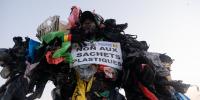
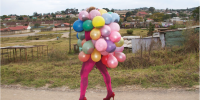
Dressed head to toe in plastic, Modou Fall is a familiar sight in Dakar. But however playful his costume, his goal couldn’t be more serious: ridding the capital of the scourge of plastic bags.
As local rapper Naty says, a group of young people are intent on making their mark in Madagascar's cultural history. From gifted slam poet Caylah to inventive visual artist Temandrota and a crew of entrepreneurial skateboarders, a generation of young Madagascans are making space for creative projects.They are inspiring in their enthusiasm and hopeful for the future despite the poverty in their country and its colonial past.
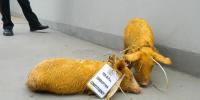
In February , two leaders of a guerrilla movement here traveled to the financial district carrying a wooden container that contained three pigs, each painted yellow from snout to tail.