Spanish street artist El Rey de la Ruina uses murals and installations to critique inequality and government policies. His works, especially during the pandemic, voiced concerns over healthcare, housing, and public resources in Madrid’s urban spaces.
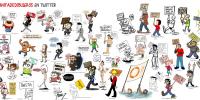
La huelga general europea del #14N no sólo nos dejó un importante seguimiento y abrumadora movilización en España y otros PIG's, sino que también desplegó la habitual fuerza y originalidad creativa de la cual se vienen dotando las protestas en España desde el 15 de mayo.
On 6 January 2012, Metrópolis (TVE 2) broadcast "Activismo y Ficción", a report directed by Enmedio members Leónidas Martín and Núria Campabadal. It looks at a series of creative projects that lie somewhere between fiction and social activism.
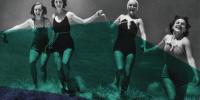
"Las sinsombrero" ("without hat") were a group of spanish women formed by the artists Maruja Mallo, Margarita Manso, Concha Méndez and the socialist activist Margarita Nelken.
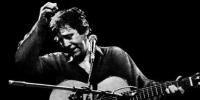
Francisco Ibáñez Gorostidi (known as "Paco Ibáñez") is a spanish singer that has dedicated almost all his career to turning poems by classical and contemporary spanish and latin american authors into songs.
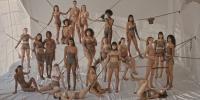
From intimate portraits to urban performance art, the through line of photographer Carlota Guerrero’s work has always been her stripped back sense of feminine reverie: rumpled sheets and broken shells, translucent tights and long braids, dusty floors and bare chests.
On November 7, 2010 Pope Benedict XVI visited our city. He would have been better off staying at home. Even before he touched land we had rendered him impotent for life. Yes: im-po-tent.
The story of the life and death of Jesus is arguably the most ubiquitous story ever told. Translated to every language, vastly circulated, taught in schools all around the world, conservative groups –except for some exemptions, like Liberation Theology- have held monopoly of this narrative for the longest time. However, like every other narrative, it is not totally closed to resignification and oppositional and negotiated readings.
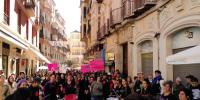
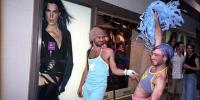
First cut the banks! In 2012 Bankia declared itself bankrupt and, almost immediately, asked the Government of Spain for €23 billion. The Government accepted, yet that very same week ordered €20,000 million worth of cuts in health and education. It was then that we realized that what they called a crisis was actually a scam. You wouldn’t believe how pissed off we were. So we threw a party, because there is nothing like partying to relieve your anger.
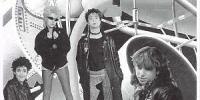
Las Vulpes was the first spanish punk rock band formed only by women. It was founded in Baracaldo (Vizcaya, Basque Country) in the summer of 1982, as a result of the guitarist´s desire on creating an all women punk band. After a few changes, the final formation consisted on: Loles Vázquez (guitar), Mamen Rodrigo (voice), Begoña Astigarraga (bass) and Lupe Vázquez (drums), all between 17 and 22 years of age.
This project was born a few days after a demonstrator lost an eye after being hit by a rubber bullet shot from police guns in Barcelona. Unfortunately, it was not the first time. "Cop d' ull" means a "a blow to the eye" and also "at a glance”, which is a perfect description of this project.
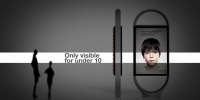
In an effort to provide abused children with a safe way to reach out for help, a Spanish organization called the Aid to Children and Adolescents at Risk Foundation, or ANAR for short, created an ad that displays a different message for adults and children at the same time.
The crisis is here, let the party begin! April 30, 2009. At first the crisis was just a state of being, a kind of social sadness that paralyzed everything. To break this atmosphere we couldn’t think of anything better than to throw a party. The first thing you need for a party is a good location, so we set out to find a place where social sadness and fear were extremely present. It didn’t take us long to find one: an unemployment office.
Spain’s most devastating environmental disaster took place 20 years ago, on the evening of November 13th, 2002. The Prestige oil spill occurred off the coast of Galicia, part of northern Spain. The spilled oil, in time, covered around 2,000 kilometers of the Galician coast.
Late last year the Spanish government passed a law that set extreme fines for protesters convening outside of government buildings.
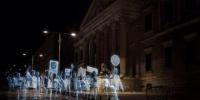
In response to the controversial Citizen Safety Law, which will take effect on July 1, Spanish activists have staged the world's first ever virtual political demonstration.
The Spanish 15M/INDIGNADOS social movement represents a citizen break-up with the current political system while proposing an alternative one, creatively transforming the prevailing participation and action patterns in its society.
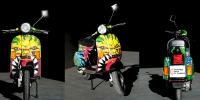
Fundacion Voces and Festival Mulafest got together to promote creative ideas for social change. They started a campaign in social media to ask people to donate their Vespa motorcycles. After they collected the Vespas donated by the people, they put them together again and invited known artists to intervene them.
"Surround Congress”: as soon as we’d heard this, in our minds we were there. To make the Government resign and demand they start a new constituent process seemed like a great idea. We immediately got to work.
Showcasing death to defend life
El Pais, Madrid
Activists protested with the organization Animal Equality (Igualdad Animal) in Puerta del Sol, Madrid, Burgos, and Toledo on December 10, commemorating the international Animal Rights Day.
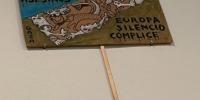
This piece is fascinating because of its use of just a few words and country names, muted colors, and the recreation of famous art. The artist used this canvas to depict a concern about events happening in the Gaza strip.
"On July 5, 2002, a strange new brand began cropping up in the streets of Barcelona. That day, at the height of sales season, more than fifty people rushed through the center of Barcelona to the Bershka clothing store to perform the very first Yomango fashion show.
Josep Renau Berenguer was a Spanish painter, photomontager, muralist and communist militant.
Renau was the son of an Art teacher. Due to his father’s low income, he had to work various jobs during his youth and teenage years to maintain a middle class position.
Comusitària is a Community Cultural Development agency based in Barcelona run by Noemi Rubio and Laia Serra. They work in the production, management, research and dissemination of artistic projects that build social capital and enable citizens to live more active, critical and creative lives.
La Casa Invisible project was started in 2007 in Malaga, Spain, when a group of socially involved participants squatted in a run-down building, aiming to eventually claim the legal rights to the property (Moor & Smart, 2016). The space was opened to local artists and creators, quickly becoming a hub for free local music, performances, and seminars as well as creating an important meeting space for social groups (Moor & Smart, 2016).
Zoo Portraits is a humorous photo series by Barcelona-based photographer Yago Partal that matches animal heads with human bodies. Partal amazingly matches animals to appropriate human bodies and even manages to match their personalities and styles.