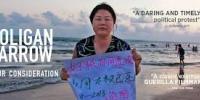
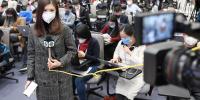
Nanfu Wang feels safe in New York. Surveillance, that essential preoccupation of the documentarian in America, is a chokehold from which she has been temporarily released. From her Brooklyn apartment, the Chinese filmmaker prepares for the release of her debut feature documentary, Hooligan Sparrow.
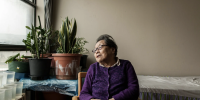
Gao Yaojie (Chinese: 高耀潔, Gao Yaojie; 19 December 1927 – 10 December 2023) was a Chinese gynecologist, academic, and AIDS activist based in Zhengzhou, Henan, China. Gao was honoured for her work by the United Nations and Western organizations whilst spending time under house arrest.
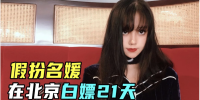
In her 2021 graduation project from the Central Academy of Fine Arts (CAFA), Chinese performance artist Zou Yaqi staged a provocative social experiment titled “21-Day Survival Challenge.” For three weeks, Zou assumed the persona of a wealthy socialite, using counterfeit luxury items, strategic self-presentation, and social engineering to access elite spaces in Beijing—such as five-star hotel lobbies, first-class airport lounges, and high-end restaurants
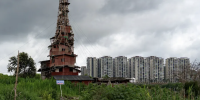
The structure teeters over fields of knee-high grass, looking like a cross between a camping tent and a giant wedding cake. Eleven stories of dark red wooden rooms, diminishing in size as they ascend, balance atop one another, seemingly held together by only the thicket of cords that stretches from the peak to the ground.
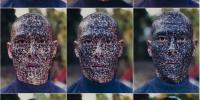
One of the most critical artists on the contemporary art scene is Zhang Huan. His works are of great social insight and unique in how he applies his artistic expression. He thus makes them an almost visual feast with a peek into the multilevel structure of modern society. One such work is the masterpiece "Family Tree," which shows how art can mould our social cognition through multilayered symbolism and profound imagery.
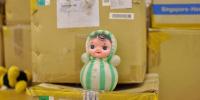
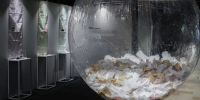
Song Dong's Waste Not consisted of a single installation comprising over 10,000 commonplace, domestic items of daily life that had been used and amassed by the artist’s mother (Zhao Xiangyuan) over fifty years.
Just the other day, we were hearing about Samsung getting in legal trouble over patent violations with Apple. A federal court decision ruled that Samsung owes Apple more than $1 billion in restitution.
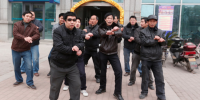
In early January, constructions workers in Wuhan, China staged a Gangnam Style protest in front of their employer's building. Using the Gangnam Style dance, the men sought to bring media attention to their mounting unpaid wages.
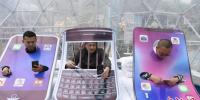
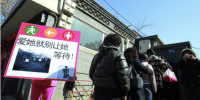
March 20, World Sleep Day is approaching, Chongqing Fuling wine town square placed 2 transparent sleep house, staff in the form of performance art to call on people to "put down the phone, sleep at ease". It is reported that the purpose of World Sleep Day is to make people pay attention to the importance of sleep and sleep quality, to remind people to pay attention to sleep health and quality.
“Rose Boy” (玫瑰少年) refers to Yeh Yung-chih, a 15-year-old junior high school student in Taiwan who died on April 20, 2000, after years of bullying due to his non-conforming gender expression. Though the official cause of death was ruled accidental—he allegedly slipped in a school bathroom—the circumstances surrounding his death, including prior complaints from his mother about repeated verbal and physical harassment, drew widespread public attention.
The world is shocked by China’s dog meat festival and by videos showing that animals are eaten alive in restaurants in Guangdong. But in that country of 1.3 billon people, a massive shift in ideology is happening. Our friends at PETA Asia are helping millions of people see that animals are not ours to eat, wear, experiment on, use for entertainment, or abuse in any other way.
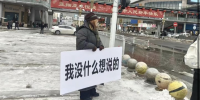
Feb 23 2024, on the streets in Henan, China, a girl holds a big sign with the black text "I've got nothing to say" on a white background, walking around in city center and malls. She live-streamed her walk and her account was banned after a few hours.
Students at art colleges across China are taking a strong stance in the midst of the largest wave of protests to have gripped the country since 1989. As demonstrations against the government’s strict Covid-19 policies erupted across the country over the weekend, students rallied on campuses to create protest art and graffiti.
The New Culture Movement was initiated by Chen Duxiu, Li Dazhao, Lu Xun, Hu Shi, Cai Yuanpei, Qian Xuan and other writers who had received Western education (called the new-style education at the time). It is an ideological and cultural innovation and literary revolutionary movement.
The “Occupy Men’s Toilets” movement, initiated by Chinese feminist activists including Li Tingting (Li Maizi) and Wu Rongrong, emerged in 2012 as a creative, non-violent protest against gender inequality in access to public facilities.
“Girl’s Day” in China was supposed to be a way for boys on college campuses to show the girls how much they care. This year it went too far.
Have you heard about “Girl’s Day?” It’s a big holiday for Chinese college students. Every year on March 7, students throughout the country celebrate the day as a campus version of International Women’s Day.
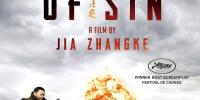
"May you live in interesting times" is the familiar Chinese saying, usually spat out as a curse. You can see why in "A Touch of Sin," a film by renowned director Jia Zhang-ke. That kind of time is now, in the history of his country. With four vignettes inspired by real-life "ripped from the headline" events, he shows what the great economic expansion of China is doing to the majority of its people.
Simple Wedding Movie is an organization in China that cares about love and marriage and offer marriage service. It made a short video with the theme: experience getting old before getting married. Most people would get married in a young and beautiful age. During that time, they are young and beautiful. Because of that, young couple may more likely to have passion and love for each other.
Two pairs of dusty, pastel-orange roller skates. A ram's skull. Several meters of tangled, bright red rope. They aren't the sort of items you'd find in the great fashion houses of Europe or on North American catwalks.
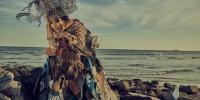
But, for unconventional Chinese designer and performance artist Wan Yunfeng, they are perfect.
From his small apartment in eastern Beijing, Wan makes fashion that only he wears.
The outbreak of the coronavirus has brought international scrutiny down on China’s political system. Again. A few commentators have applauded the efficiency of the Chinese Communist Party’s response, but most have zoomed in on its weaknesses. Some have even blamed the party itself for the outbreak, calling the disease a “Communist coronavirus” or “the Belt and Road Pandemic.”
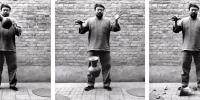
Dropping a Han Dynasty Urn (1995) by Ai Weiwei is a highly provocative work of art. This series of three black and white photographs portray the artist holding a 2,000-year-old Han dynasty urn that, frame by frame, he drops, it falls, and shatters. As much a work of photography as a work of performance art, in each still an unaffected Ai looks directly at the camera aware of his destructiveness.
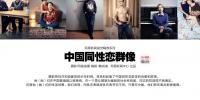
A Straight Journey is a documentary of Chinese homosexual people. It is the first time for Chinese gays and lesbians to make their debut and speak out via one of the largest Chinese Internet service providers. Two Chinese photographers Masa and Mojo took a journey across 11 China's cities making portraits of 48 gays, lesbians and their families from 2014-2015.
"100 Questions About Sex from Children" is an annual touring sex education exhibition founded and curated by Se A, a leading advocate of inclusive sex education in China. Since its launch in 2021, the exhibition has been held in major cities such as Shenzhen and Guiyang, with plans to expand into regions where sex education and gender awareness remain underdeveloped.
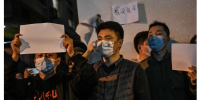
Protests erupted in cities and on campuses across China this weekend as frustrated and outraged citizens took to the streets in a stunning wave of demonstrations against the government’s “zero covid” policy and the leaders enforcing it.
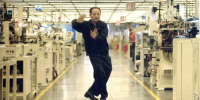
Whose Utopia? was made by the Chinese artist Cao Fei and filmed at the OSRAM lighting factory in Foshan in the Pearl River Delta in southern China during 2005 and 2006. It was commissioned as part of a project entitled ‘What Are They Doing Here?’ that was run by the Siemens Art Program from 2000 to 2006 and involved Chinese artists undertaking six-month-long residencies at industrial facilities across the country.