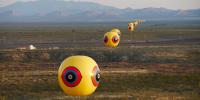
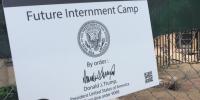
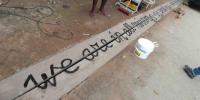
The Repellent Fence is a social collaborative project among individuals, communities, institutional organizations, publics, and sovereigns that culminate with the establishment of a large-scale temporary monument located near Douglas, Arizona and Agua Prieta, Sonora. This 2 mile long ephemeral land-art installation is comprised of 26 tethered balloons, that are each 10 feet in diameter, and float 100 feet above the desert landscape.
In the fall of 2011, Urbano’s teen artists and artist-in-residence Neil Horsky partnered with professional artists,
educators, librarians, and historians to undertake a critical investigation of
Boston’s Freedom Trail. During the
investigative process teen artists questioned the assumptions, accuracy,
comprehensiveness, and impartiality of public presentations of the city’s
ODBK is an activist organization that aims to create a more equal, diverse, inclusive, transparent and democratic art world. ODBK seeks to do this by diversify and increase the number of people who understand and engage with contemporary art.
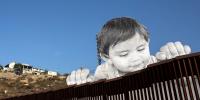
"One morning, when JR awoke, an image lingered from his dreams: The wall along the U.S.-Mexico border, and above it a young kid peering curiously over. A child just 1 year old, who has "no idea that's a wall that divides people — he has no idea of the political context," JR imagined.
ONGOING ORGANIZATION:
CALLED: Iranti [pronounced írantì] is the Yoruba word for ‘memory’. Largely found in South West Nigeria and parts of Benin Republic, the Yoruba people consider memory a prized form of intelligence which determines how often one remembers what they see and hear.
The city of Douala in Cameroon had a huge problem associated with malfunctioning water drainage systems. This is due the fact that in many illegally constructed areas of the town, the sewers are without cover, and after heavy rainfall, this would generally lead to floods and related threats to public health.
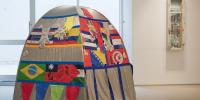
With a grand total of 0 permanent residents and an average winter temperature of --56.2°F, Antarctica is a bit more than your average “no man’s land.” This didn’t deter artist duo Lucy + Jorge Orta, however, who took an expedition to the territory in 2007 on commission from The End of the World Biennale. Nine years later, the duo’s cumulative work created during the program is finally on display in NYC at Jane Lombard Gallery.
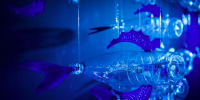
New Zealander artist George Nuku has presented his latest work as an installation that imagines the state of the world's oceans 100 years in the future where plastics have totally changed the marine environment.
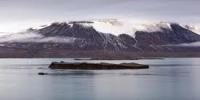
Nowhereisland was an island which journeyed from the High Arctic region of Svalbard to the south west coast of England in summer 2012. As it made this epic journey, it travelled through international waters, whereupon it became the world's newest nation - Nowhereisland - with citizenship open to all.
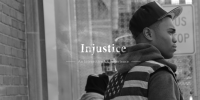
Injustice is an interactive VR experience themed around racially motivated police brutality. Guests witness an act of racial discrimination in front of them, forcing them to make moral and ethical decisions on the spot. Injustice is an experience aimed at exploring the emotional impact of VR space vs. traditional film.
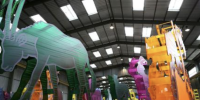
On September 19,2015 in Paris, 140 animals sailed up the River Seine to bring awareness to climate change, ahead of the COP21 UN meeting in December. French artist Gad Weil created this pop art piece from fully recyclable acrylic sheets, and installed the animals on top of a barge in front of the Eiffel Tower.
If the way to one’s heart really is through the stomach, Rirkrit Tiravanija must have more than his share of admirers. Now at GAVIN BROWN, the Buenos Aires-born artist with a history of dishing out tasty edibles in his exhibitions invites viewers to enjoy a bowl of soup in his interactive show, Fear Eats the Soul.
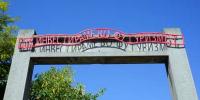
A site specific intervention аs part of the group exhibition Sculptural, organized and partly financed by the Museum of Contemporary Art, Skopje. The text INVEST IN FUTURISM is a quotation of a gaffe uttered by the Macedonian PM on public TV stating his plans to incorporate contemporary art in their right wing populist programme and the infamous project Skopje 2014.
Howardena Pindell presented her solo exhibition, “Rope/Fire/Water”, her first video in 25 years and a project utilized by the artist since the 1970s that The Shed commissioned and displayed in late 2020 and into early 2021. “Rope/Fire/Water” mines the history of violence against African-Americans and features Pindell’s personal anecdotes and anthropological and historical data related to lynchings and racist attacks in the United States.
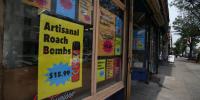
Brooklyn deli re-brands as artisanal emporium to protest rent hike
The owners of an imperiled Boerum Hill deli have staged an “artisanal takeover” of their 25-year-old corner store, re-branding products with yuppified names and jacking up prices to illustrate the kind of shop that could afford the 250-percent rent hike they say the store’s landlord is demanding.
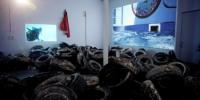
"Nearly 2 million decaying Goodyear tires lie submerged off the coast
of South Florida, decrepit hunks of rubber that have gradually succumbed
to the pressures of tides and tropical storms. The steel cables that
once strung them along the ocean floor have snapped, and many have
drifted into the natural reefs only 70 feet away, permanently scarring
them. What is now a 36-acre underwater junkyard was once the
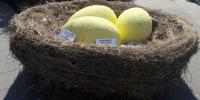
Anonymous urban artists set up art installations, large nest eggs, at several locations in Skopje, wanting to alarm the growing number of trees in the city.
In the nest read a message "You cut all the trees, where do we make nests? Birds".
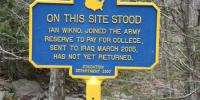
For the past few years, I've been creating what I call "art of social conscience:" tv spots, viral emails, paintings and posters, but none of it has engaged viewers as much as this series of "historical" markers, each one a small story containing a discrete point of view.
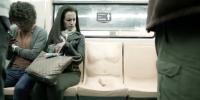
In a conceptually odd but undeniably memorable PSA campaign, the Mexico City Metro has installed a “penis seat” in one of its subway cars, featuring a molded likeness of a man’s torso and penis, to get male riders thinking about the sexual harassment that women endure every day.
The seat is labeled “For men only.”
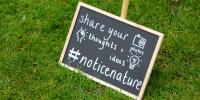
Notice Nature was a public engagement action undertaken by participants in the Erasmus+ funded training 'Creativity and Change: Empathy 2 Action - nurturing response-able global citizens' which took place in Cork from 8th - 13th April 2017. The team members were Marie-Michele Tessier, Aoife Dare, Ann Foulds, Zsofi Toth and Claire Faithorn.
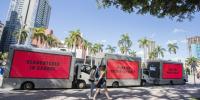
An online activist group is mimicking the critically acclaimed film Three Billboards Outside Ebbing, Missouri to troll Sen. Marco Rubio, R-Fla., with three rolling billboards in Florida calling for gun control.
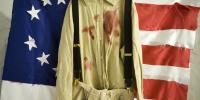
The Spanish artist Santiago Sierra is planning to immerse a British flag in blood donated by indigenous peoples from countries colonised by the British Empire.
The resulting artwork, titled Union Flag, is intended to be an “acknowledgement of the pain and destruction colonialism has caused First Nations peoples, devastating entire cultures and civilisations,” the artist said in a statement.
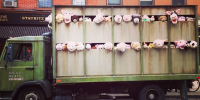
Sirens of the Lambs
By Banksy
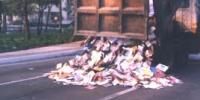
A slaughterhouse delivery truck touring the meatpacking district and then citywide for the next two weeks.
http://www.banksyny.com/#
Video here:
http://www.youtube.com/watch?v=WDIz7mEJOeA
Aníbal López, also known by his government identification number A-153167, is a pioneer of performance art in Central America. ArtBus describes his work as, "Generally aimed at immersing viewers into the region’s social and political tensions, his works combine the dry language of 1960/1970s conceptual art with the revolutionary ethos of a Latin American guerrillero.