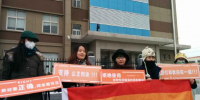
In November 2015, Chinese LGBT activist Chen Qiuyan met with government officials in Beijing after months of campaigning to have the Ministry of Education remove textbooks which identify homosexuality as a mental disorder.
In 2001, the Chinese Society of Psychiatry removed homosexuality from its list of recognized mental disorders, after the Chinese government decriminalized consensual homosexual acts in 1997.
Women around the world fed up with long lines for the ladies’ restroom have a new folk hero: a Beijing college student leading her own version of an “occupy” movement in southern China.
Nanjing, a picturesque city lying by the Yangtze River, owes its fame to its favorable geographic position, galaxy of talents and profound historical background. Having served as the capital of ten dynasties in ancient China, its splendour has remained and even enlarged with an extended population up to 600,000 when the government of the Republic of China set up its capital there in 1927.
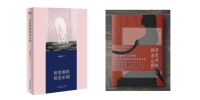
Fang Si-Qi’s First Love Paradise, a 2017 novel by Taiwanese writer Lin Yi-han, has become one of the most haunting and politically charged literary works in the Chinese-speaking world. Although presented as fiction, the novel closely mirrors Lin’s own lived experience of being groomed and sexually abused by a private tutor during her adolescence.
Song Dong's Waste Not consisted of a single installation comprising over 10,000 commonplace, domestic items of daily life that had been used and amassed by the artist’s mother (Zhao Xiangyuan) over fifty years.
It may have been a while since you’ve set foot in an internet cafe, but a pop-up one on the Lower East Side offering free tea on top of free wifi is well worth a visit for a lesson in online freedoms.
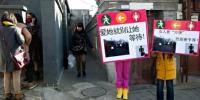
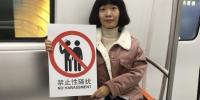
Zheng Xi 郑熹, a Ph.D. candidate with a focus on gender studies at Zhejiang University in Hangzhou. Zheng has launched a campaign asking city governments around China to display anti-sexual-harassment logos, complete with a groper’s “salty-pig hand” visual (etymological context here), alongside other commonly displayed public safety logos on places like subway trains and buses.
One of the oldest forms of human expression is art, so it’s no surprise that art is constantly used to critique another of humanity’s oldest practices, violence and war. In the world of art activism, the power of creativity and innovation has been used to create commentary about war since the beginning of time. Art that speaks out against the atrocities of violent conflict embodies empathy, care, and a plethora of other human emotions.
The Xuzhou chained woman incident, also known as the Xuzhou eight-child mother incident, is a case of human trafficking, false imprisonment, sexual assault, severe mistreatment, and subsequent events that came to light in late January 2022 in Xuzhou's Feng County, Jiangsu, People's Republic of China.
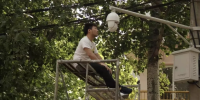
Ge Yulu’s artistic practice playfully pulls at the strings of a social system that, although seemingly all-encompassing, is in fact a malleable structure consisting of individual human beings. For his 2016 project Eye Contact, Ge positioned himself in front of a surveillance camera and stared directly into the lens for hours, then negotiated with a security guard to buy the footage.
The New York-based artist has created a free-to-download poster in support of the ESEA community. Produced in response to the Covid-related surge in anti-Asian hate crimes, it can be used in a variety of ways to raise awareness and support the cause.
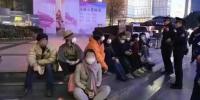
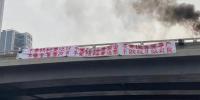
In the south-western city of Chengdu, by all accounts a city on the edge coping with heavy pollution but also with authorities scrambling to put a lid on simmering discontent. That night police detained a number of artists who managed to stage a silent demonstration, while wearing face masks.
BEIJING – Before Yue Xin became a central figure in China’s burgeoning movement against sexual harassment, she recorded herself singing a revamped version of the 1960s pop classic “Que Sera Sera.”
“Will we be equal? Will we be free?” sang the Peking University senior in a voice clip posted online, putting her own spin on Doris Day’s “Will I be pretty? Will I be rich?”
More than 30 South Korean college students shaved their heads in front of the Japanese embassy in Seoul on Tuesday to protest Japan's decision to release water from its crippled Fukushima nuclear plant into the sea.
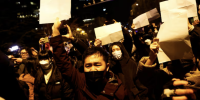
Police periodically dispersed crowds, who chanted and held placards but did not stop the event from taking place, though there is an anti-pandemic ban on gatherings larger than 10 people.
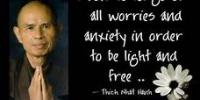
Thich Nhat Hanh reads his poem "For Warmth" in Vietnamese, Krista Tippett reads the translation in English, excerpted from the episode "Mindfulness, Suffering, and Engaged Buddhism."
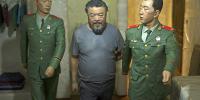
In June 2011, the Beijing Local Taxation Bureau demanded a total of over 12 million yuan (US$1.85 million) from Beijing Fake Cultural Development Ltd in unpaid taxes and fines, and accorded three days to appeal the demand in writing. According to Ai's wife, Beijing Fake Cultural Development Ltd has hired two Beijing lawyers as defense attorneys.
In March 2016, Chinese feminist activists had planned to launch a crowdfunding campaign against sexual harassment advertisements, and they worked hard to raise 40,000 yuan in a month and a half. However, after perfunctory, evasive, and rejection by the relevant departments, anti-sexual harassment advertisements finally failed to go online.
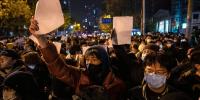
The White Paper Movement was a large-scale, decentralized protest movement that erupted across China in late November 2022, initially sparked by a student demonstration at the Communication University of China, Nanjing.
In Shanghai, a vigil grew into a street protest where many held blank sheets of white paper in a symbol of tacit defiance.
In Beijing, students at Tsinghua University raised signs showing a math equation devised by the Russian physicist Alexander Friedmann, whose surname in Chinese is a homonym for “free man.”
As the No. 59 bus hurtled down Ratchadamnoen Klang road in Bangkok's Old Town, its passengers diverted their attention from the intense midday heat to a small crowd on the concrete below. About 25 people were marching and chanting, photographers scuttling in front of them.
In the series The History of Korean Women, Cho's suggests that the cost of that gain cannot be paid for by a cultural amnesia masking the pain and suffering of previous generations. Here the semantic emphasis is on the official - the status of women and their contribution to the survival and growth of Korea. Their efforts have gone uncelebrated due to their relegated status within a five hundred year old social system.
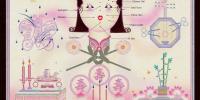
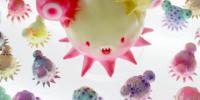
Lu Yang attempts to bring the negative notion of Cancer cell into a “Kimo Kawa” object of love and/or pain and hopes to open a dialogue that brings awareness to the acceptance and tolerance of living with cancer cells.
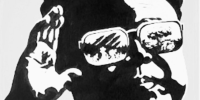
"Sun Mu is not the artist’s actual name. It’s a nom de plume that uses a combination of two Korean words that translate to ‘The Absence of Borders’. It not only represents what he feels is the transcendence of art but also the literal military demarcation line that keeps the Korean people separated.